
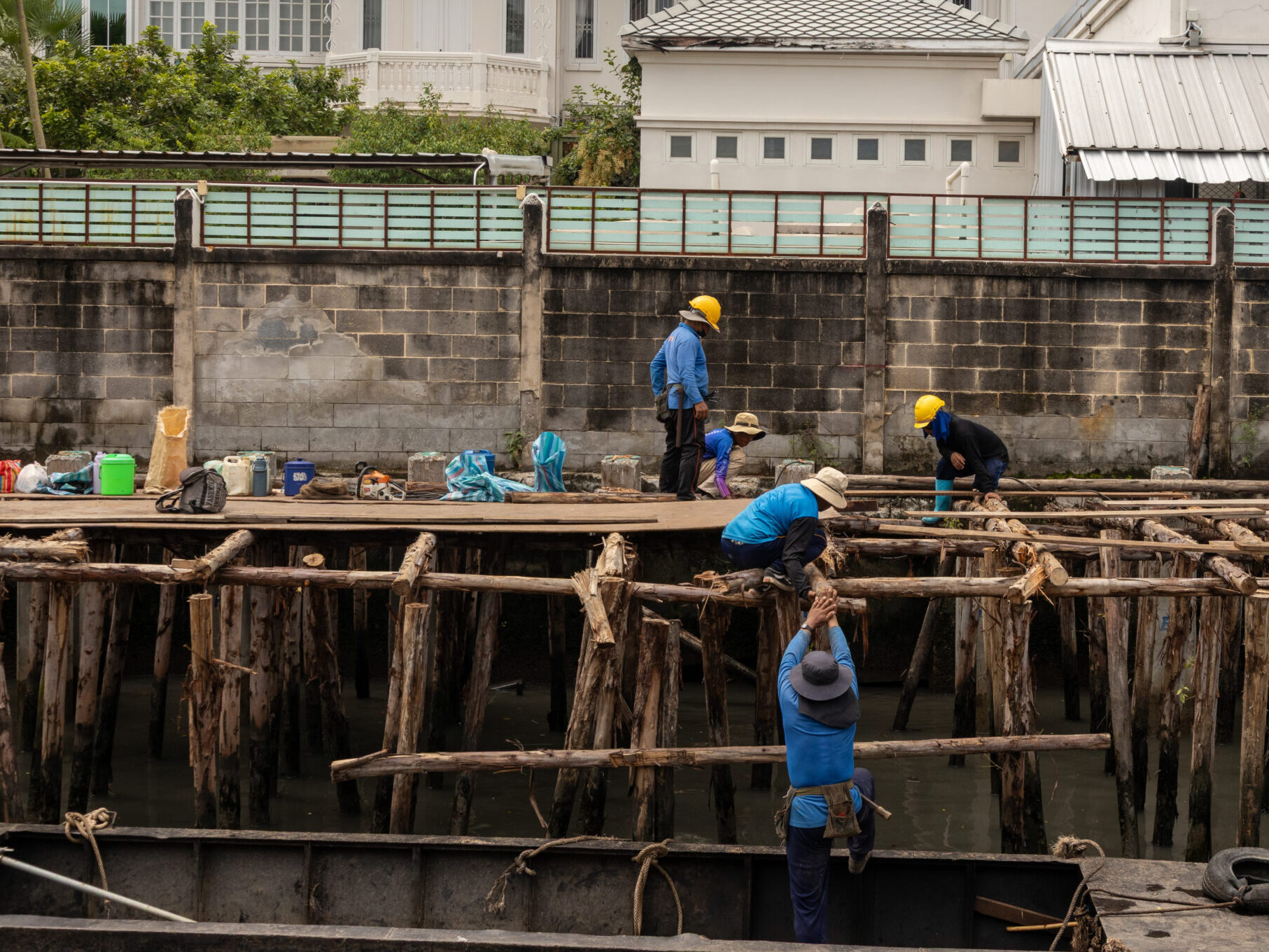
November 17, 2026 • 2:25 pm ET Nicole Goldin Bottom lines up front With new actors creating a buyer’s market, the current landscape of Western positive economic statecraft is fragmented.As reinforced by the IMF-World Bank meetings in Bangkok, Thailand, ASEAN offers a particularly instructive lens on what PES can look like.PES may offer development cooperation something it has struggled to sustain: a narrative that resonates with economic security priorities without abandoning development objectives. Introduction Official development assistance fell 23 percent in 2025, the steepest decline on record. Positive economic statecraft (PES)—the deliberate use of grants, concessional finance, preferential trade, guarantees, and technical assistance to shape sovereign behavior and align interests—was conceptualized in a macro and geoeconomic landscape that has changed considerably. The global economy is increasingly fractured as geopolitical tension and conflict are driving shake-ups in the world order. Debt distress across the Global South now limits how recipient governments can respond to inducements. The field of development finance actors extends well beyond traditional Western donors. And the 2026 annual meetings of the International Monetary Fund and World Bank convene in Bangkok, Thailand, at precisely this inflection point. The Association of Southeast Asian Nations offers a particularly instructive lens on what PES looks like under these conditions: The region is simultaneously a target of deliberate US and European economic statecraft, a practitioner of its own multidirectional approach, and a place where development finance and geoeconomic competition intersect with industrial policy—illuminating both the potential and the limits of PES as a development cooperation approach. 1. The moment for positive economic statecraft In 2023, ahead of the annual meetings of the International Monetary Fund (IMF) and World Bank in Marrakech, Morocco, the positive economic statecraft (PES) framework launched by the Atlantic Council suggested that incentive-based economic tools—grants, concessional finance, preferential trade, guarantees, budget support, project finance, and technical assistance—could shape government behavior and align interests through inducements rather than coercion.1Nicole R. Goldin and Mrughank Bhusari, “Positive Economic Statecraft: Wielding Hard Outcomes with Soft Money,” In Transatlantic Economic Statecraft, Atlantic Council GeoEconomics Center, September 22, 2023, atlanticcouncil.org/in-depth-research-reports/report/us-eu-uk-need-shared-approach-to-economic-statecraft/. In the three years since, the logic of PES has sharpened even as the macro and geoeconomic landscape it was conceptualized in has changed considerably. The global economy is more fractured; geopolitical tension and conflict have reshaped the world order in ways the original framework did not fully anticipate. Official development assistance (ODA) has been contracted sharply. Debt distress across the Global South limits what recipient governments can absorb. And the field of development finance actors now extends well beyond the Western donors that the Atlantic Council’s initial approach had chiefly in view. These shifts are global, but they have clear implications for PES policies and practice. The 2026 IMF–World Bank annual meetings, convening in Bangkok for the first time in thirty-five years, underscore this point.2International Monetary Fund, “IMF-World Bank Annual Meetings, Bangkok 2026,” n.d., imf.org/en/news/seminars/campaigns/2026/10/thailand-2026, accessed June 2026. The IMF has framed the gathering as recognition of the region’s central role in global economic and financial stability. The Association of Southeast Asian Nations (ASEAN) is therefore a useful lens for exploring development finance and cooperation through a PES framework; it is simultaneously a target of deliberate US and European economic statecraft, and a practitioner of increasingly sophisticated statecraft of its own—as seen, for example, in ASEAN’s emerging free trade agreements (FTAs) discussed further below. Development finance, geoeconomic competition, and industrial policy visibly intersect in the region in ways that reveal both the potential and the limits of PES as an approach to development cooperation. In an environment where aid budgets are contracting and domestic constituencies prioritize national interest, PES may offer development cooperation something it has struggled to sustain: a narrative that resonates with economic security priorities without abandoning development objectives.3Nicole R. Goldin, “Why 2024 Will Be a Big Year for Positive Economic Statecraft,” Atlantic Council, Econographics, February 1, 2024, atlanticcouncil.org/blogs/econographics/why-2024-will-be-a-big-year-for-positive-economic-statecraft/; Nicole Goldin, “Pivoting Development for a New Era,” United Nations University Centre for Policy Research, March 11, 2025, https://unu.edu/cpr/blog-post/pivoting-development-new-era Many toolkit elements have long been part of development cooperation but not routinely theorized as a strategic instrument. PES requires intentionality and a government actor; it is not simply the reversal of punitive measures (i.e., lifting sanctions or removing tariffs). As posited in 2023, PES operates through two mechanisms: tactical PES, conditioning near-term transfer on specific behavioral commitments; and structural PES, pursuing longer-horizon, values-based realignment. This brief traces how PES is playing out in a new development cooperation and geoeconomic landscape, using ASEAN to illustrate key dynamics and sectoral applications. It unpacks Western PES toward the region and the emerging credibility gap between inducements on offer and the behavior they seek. It also considers ASEAN as a practitioner, looking at how governments shape the terms on which incoming PES lands, and in some cases reverse the intended direction through standards-alignment and market-access statecraft of their own. It then explores how PES tools are being deployed through sectors—critical minerals, manufacturing, clean energy, health—exposing where development finance and industrial policy rationales converge, and where that convergence breaks down. The brief concludes with policy implications stemming from its analysis. 2. The development finance landscape: What has shifted In 2023, the PES blueprint was situated in the context of responding to the polycrisis—COVID-19, conflict, climate change—and mitigating global challenges and risks. Understanding PES, particularly in ASEAN in 2026, requires consideration of evolving dynamics. For one, a sharp contraction in ODA is a key reshaping factor. ODA fell 23 percent in 2025—the steepest decline on record—with another 6.9 percent projected for 2026.4Organisation for Economic Co-operation and Development, “ODA Projections for 2026 and the Near-Term: Implications for Vulnerable Countries and Sectors,” OECD Policy Briefs, OECD Publishing, June 19, 2026, doi.org/10.1787/d7c74fa2-en. The drop is principally due to bilateral cuts among the major Group of Seven (G7) donors, including the complete dismantling of the US Agency for International Development (USAID). One consequence of this retrenchment is that low- and middle-income countries are even more loudly calling for a wholesale reimagining of development cooperation grounded in mutual benefit and shared risk rather than donor-dominated interests or obligation.5For example, Organisation for Economic Co-operation and Development, “The Future of Development Co-operation,” Conference, Paris, May 11-12, 2026, oecd.org/en/events/2026/05/the-future-of-international-development-co-operation.html; Africa Forward, Conference, Nairobi, May 11-12, 2026, https://africaforwardsummit.go.ke/; Global Partnerships Conference, London, May 19-20, 2026, https://www.gov.uk/government/news/global-partnerships-conference-to-build-new-international-coalitions-to-tackle-shared-challenges. Grant withdrawal is more than a financing question; it is a credibility signal. To many recipient governments, shrinking grant envelopes are seen as strategic retreat, bringing more caution for any inducements that follow. As traditional donors retrench, other actors are stepping in—bilaterally and through multilateral, regional channels. Saudi Arabia and the United Arab Emirates, for example, together provided nearly US$80 billion in development finance outflows in 2024; India, Brazil, and Nigeria are forming South-South cooperation frameworks; while Japan and South Korea are active in Indo-Pacific minerals and clean energy.6Nicole R. Goldin and Irfana Khatoon, Understanding Middle Powers in Development Cooperation, United Nations University Centre for Policy Research, February 2026, unu.edu/sites/default/files/2026-04/Understanding%20middle%20powers%20in%20development%20cooperation.pdf. ASEAN set up a collective economic statecraft platform, the Geoeconomics Task Force, in May 2025, signaling an interest in fostering coordinated regional agency.7Evelyn Goh and Jascha Ramba, “Geo-economics, Southeast Asia Style,” East Asia Forum, March 22, 2026, eastasiaforum.org/2026/03/22/geo-economics-southeast-asia-style/. Recipient governments now navigate among multilateral development bank (MDB) windows, bilateral development finance institutions (DFIs), Gulf sovereign wealth funds, South-South cooperation, and Chinese policy bank successors, each with different concessionality, conditionality, and speed. The move from one-sided toward more negotiated terms is giving recipients the leverage to advance a self-determined approach. China remains a key player in the PES landscape, but its nature is changing, seen especially in how China’s Belt and Road Initiative (BRI) has recalibrated. While still lending at record levels in 2025—reaching $124 billion by June—the direction has swung from predominantly infrastructure projects to those focused on energy and minerals.Large-scale sovereign infrastructure lending by the China Development Bank and Export-Import Bank of China has fallen sharply since its 2016 peak toward near collapse. By 2024, China’s two policy banks recorded just $6.1 billion across twenty new sovereign loans worldwide, roughly one-tenth of peak-era volumes, with the portfolio pivoting toward lending to national and regional development banks rather than direct infrastructure. By 2022, 60 percent of China’s overseas lending portfolio was owed by borrowers in financial distress, and infrastructure project lending fell from 75 percent to under 25 percent of China’s overseas portfolio by 2023 as engagement shifted toward energy and critical minerals.8See Rebecca Ray, Diego Morro, Alice Ni, Mengdi Yue, and Riza Zhapabayeva, “Peer-to-Peer Lending: China’s Overseas Development Finance Pivots to National and Regional Development Banks,” Global Development Policy Center, Policy Brief, Boston University, June 2025, bu.edu/gdp/files/2025/07/GCI-PB-26-CODF-2025-FIN.pdf; Sebastian Horn, Bradley C. Parks, Carmen M. Reinhart, and Christoph Trebesch, “Debt Distress and the BRI: Who Gets Bailed Out and Why,” American Economic Association Papers and Proceedings, 2023, sccei.fsi.stanford.edu/china-briefs/debt-distress-chinas-bri-who-gets-bailed-out-and-why; Alex Wooley, “Chasing China: How Beijing Is Reshaping Its Overseas Lending Portfolio,” AidData, November 18, 2025, aiddata.org/blog/chinas-massive-overseas-lending-portfolio-shifts-course. China’s lighter footprint in Southeast Asia has created openings only partially filled by Western alternatives with less scale and speed than BRI, and that many still view skeptically for their conditionality. More than two-thirds of the world’s population live in countries that did not join Western sanction coalitions against Russia, underscoring that many nations remain open to continued Chinese engagement.9Daleep Singh, “Forging a Positive Vision of Economic Statecraft,” Atlantic Council, New Atlanticist, February 22, 2024, atlanticcouncil.org/blogs/new-atlanticist/forging-a-positive-vision-of-economic-statecraft/. Multilateral institutions are also remodeling their tools. For example, the World Bank’s Evolution Roadmap to streamline its plumbing,10World Bank Group, Evolving the World Bank Group’s Mission, Operations, and Resources: A Roadmap, December 18, 2022, https://documents1.worldbank.org/curated/en/099845101112322078/pdf/SECBOS0f51975e0e809b7605d7b690ebd20.pdf. See also Hans Peter Lankes, Annalisa Prizzon, and Chris Humphrey, “One Year On, the World Bank Must Focus on How to Implement Its Evolution Roadmap,” ODI Global, October 12, 2023, odi.org/en/insights/one-year-on-the-world-bank-must-focus-on-how-to-implement-its-evolution-roadmap/. the Asian Development Bank’s 50 percent capital increase in 2025, and the IMF’s Resilience and Sustainability Trust all aim to deliver higher amounts of policy-linked concessional financing more quickly.11International Monetary Fund, “Resilience and Sustainability Trust,” n.d., imf.org/en/topics/resilience-and-sustainability-trust, accessed July 2026. See also John Hicklin, The IMF’s Resilience and Sustainability Trust: How Conditionality Can Help Countries Build Resilience, Center for Global Development, March 18, 2024, cgdev.org/publication/imfs-rst-how-conditionality-can-help-countries-build-resilience. Yet it is not certain whether these reforms will make offers more credible and coordinated or simply expand capacity without strategic coherence. At the same time, debt distress has become an equally challenging consideration. Sovereign debt levels across much of the Global South have reached historical highs, with interest payments outpacing ODA in many countries. Governments trapped in debt are likely less able to invest in growth or resilience and are more exposed to instability and external influence. And, at the same time, the Group of Twenty’s Common Framework has moved slowly, and IMF and World Bank debt treatment tools remain insufficient at scale. Governments unable to service existing obligations cannot readily absorb new conditioned borrowing. Here is where transparent and timely debt restructuring linked to reform sits within positive statecraft, as it seeks to restore fiscal stability while reducing downstream risks for creditors and neighbors. Lastly, as grants and development assistance dwindles, efforts to instead mobilize investment and augment private capital transactions via public institutions (including bilateral and multilateral development finance architecture) have intensified across the US International Development Finance Corporation (DFC), International Finance Corporation (IFC), Multilateral Investment Guarantee Agency, and their European counterparts, amplifying guarantee instruments and blended finance as tools of both development and statecraft. It is important to distinguish, however, that blended finance functions as PES only when the concessional tranche is conditioned on a sovereign policy commitment versus simply de-risking a commercially viable project without conditioned sovereign behavior. The gap between capital “mobilized” and capital actually deployed productively in the Global South remains large, and concentration in geoeconomically salient sectors risks crowding out social investment in health and education. 3. Twin dynamics: Credibility and reciprocity The credibility gap The landscape above means Western PES actors find themselves in a situation in which they have less legitimacy as reliable partners just as BRI’s recalibration has made the investment and project market (and the associated influence these deals can bring) more open and competitive. Taking advantage, however, requires offers strong enough to be chosen over the alternatives, and credibility has been eroded by declining aid budgets, donor fatigue, and inconsistent delivery. That pattern is familiar wherein donors pledge financing at a certain scale, on a certain timeline, and with a certain grant-loan mix and then deliver less, more slowly, and on harder terms, even as they continue asking recipient governments for the same policy commitments. Western PES may be less likely to succeed under these conditions. Figure 1 Preferential trade, another important instrument in the PES (and development) toolkit, illustrates the tension. While they can yield mutual economic benefit, free trade agreement terms, rules-of-origin preferences, and market access conditions for supply-chain alignment or governance reform can also be politically sensitive at home—a dynamic especially seen in the G7. The 2025 to 2026 US stance toward ASEAN (for example, reciprocal tariffs followed by narrow bilateral carve outs) has been widely read in the region as leverage rather than reward driven, with resulting deals viewed as ASEAN’s “least-worst option.”12Barbara Weisel, “For ASEAN Members, Trump’s Bilateral Trade Deals May Be the Least-Worst Option,” Carnegie Endowment for International Peace, October 27, 2025, carnegieendowment.org/emissary/2025/10/malaysia-cambodia-trade-deal-trump-tariffs-asean-skeptical. The EU’s Global Gateway raises a related credibility question at greater scale. A volume of over 250 flagship projects already valuing above a €300 billion target signals ambition, yet African and Asian partners note a concentration in minerals and energy over social sectors, and caution repackaging preexisting projects rather than generating additional finance.13Paul Okumu and Daniele Fattibene, “The Global Gateway Three Years Later: An African Reality Check for the Next Commission,” European Think Tanks Group, September 23, 2025, ettg.eu/global-gateway-three-years-later/. The core issue is whether the policy designed to mobilize significant capital is enough of a specific, additional, recipient-aligned incentive to rationalize behavioral change—a recurring challenge in development cooperation. Another challenge is coherence. The DFC, the EU’s Global Gateway, the United Kingdom’s British International Investment, and other DFIs often compete rather than coordinate, and in a buyer’s market, incoherence is not a compelling selling point. China’s BRI, for all its structural difficulties, has been coherent in its offer. In essence, there are two elements to the credibility gap and both matter to ASEAN governments weighing their options. One is delivery, whether the inducement is proportionate and timely. The other is coherence, whether the offer makes sense as a whole. The gap itself reinforces why ASEAN governments practice their own statecraft, running multiple deals simultaneously precisely because no single Western offer is reliable or comprehensive enough on its own. The credibility gap is also seen in development finance, visibly in Just Energy Transition Partnerships (JETPs), for example. JETPs combine grants, concessional loans, guarantees, and technical assistance qualified on host-country energy transition assurances such as coal phase-downs and renewable energy targets.14Gautam Jain and Ganis Bustami, “Realizing the Potential of Just Energy Transition Partnerships,” Columbia Center on Global Energy Policy, March 3, 2025, energypolicy.columbia.edu/publications/realizing-the-potential-of-just-energy-transition-partnerships/. Yet implementation records reveal a disparity between ask and offer. In ASEAN, Indonesia’s JETP lost the $1 billion it had been promised in March 2025—the inducement shrank after the behavioral commitment had already been made, while less than 3 percent of Vietnam’s JETP pledged finance comes as grants and the package has been criticized as externally designed, prompting ASEAN to launch its own Plan of Action for Energy Cooperation for 2026 to 2030.15Alexander Csanadi and Daniel Helmeci, The Just Energy Transition Partnership Crossroads, Carnegie Endowment for International Peace, October 20, 2025, carnegieendowment.org/research/2025/10/the-just-energy-transition-partnership-crossroads. See also James Guild and Indra Overland, “Why Southeast Asia’s Just Energy Transition Partnerships Have Stalled,” The Diplomat, May 29, 2026, thediplomat.com/2026/05/why-southeast-asias-just-energy-transition-partnerships-have-stalled/. JETPs may be politically safe for the donors-investors but they risk illegitimacy with the hosts when the package is (or is perceived to be) externally designed without consultation, grant light, and slow to execute. Australia as a PES player in ASEAN Australia is a significant and growing development partner in the region, and though the specific ask is less apparent, many of its programs may be seen to some extent through an intentional PES lens. Canberra’s Comprehensive Strategic Partnership with ASEAN announced at the 2024 ASEAN-Australia Special Summit included more than A$500 million in new ODA and non-ODA initiatives.16Australian Government, Department of Foreign Affairs and Trade, “Development Cooperation in Southeast Asia,” n.d., dfat.gov.au/geo/southeast-asia/development-cooperation, accessed August 2026. Australia’s flagship Aus4ASEAN Futures program is funding more than thirty-five projects, including providing direct support to the ASEAN Digital Economy Framework Agreement discussed below. In this way, Australia is positioned as a financer of one of ASEAN’s collective PES policies. Its Partnerships for Infrastructure has built forty-one partnerships on energy, transport, and telecommunications, while the Mekong-Australia Partnership targets subregional resilience and economic integration in a corridor where China is also making a strong play for influence. Reciprocity and responsive PES The increasing financing options that ASEAN governments have give them more scope to turn the credibility gap into leverage and an ability to practice reciprocal PES. The same multipolar landscape that makes Western PES harder to deliver credibly—competing DFIs, Gulf sovereign wealth, South-South cooperation, Chinese policy bank successors—gives recipient governments a genuine buyer’s market. Notably, most ASEAN member states remain lower or upper-middle income, still building fiscal capacity, infrastructure, and industrial bases. This means there are real development considerations: whether the terms extracted from competing offers translate directly into jobs and revenue, and the pace of structural transformation necessary for growth.17World Bank, “World Bank Country and Lending Groups,” fiscal year 2027 classification, effective July 2026, datahelpdesk.worldbank.org/knowledgebase/articles/906519-world-bank-country-and-lending-groups. ASEAN’s own economic blueprint, ASEAN Economic Community Strategic Plan 2026–2030, includes this goal explicitly, with narrowing development disparities as a core regional objective.18ASEAN, ASEAN Economic Community Strategic Plan 2026–2030, adopted at the forty-sixth ASEAN Summit, May 26, 2025, Objective 6.1 (“Proactively narrow the development gap”), asean.org/wp-content/uploads/2025/05/07.-AEC-Strategic-Plan-2026-2030_adopted.pdf. As a result, ASEAN governments manage multiple offers simultaneously and, increasingly, deploy their own standards-alignment and market-access requirements in response. Multi-alignment is becoming a deliberate aspect of reciprocal PES. ASEAN governments use competition among the United States, China, the European Union, Japan, and Gulf states to gain investment, technology transfer, supply-chain positioning, and institutional voice. Indonesia, for example, joined the group of emerging economies known as BRICS in January 2025 while pursuing accession to the Organisation for Economic Co-operation and Development—both expand access to new markets, diversified financing windows, and governance frameworks.19Pongphisoot Busbarat, Kuik Cheng-Chwee, Radityo Dharmaputra, Krisna Gupta, and Nguyen Ngoc Manh, ASEAN Goes BRICS: Understanding the Attraction of BRICS for ASEAN Countries, Friedrich Naumann Foundation, February 4, 2026, shop.freiheit.org/download/P2@2074/1060801/2026-02-05%20ASEAN%20Goes%20BRICS.pdf. Malaysia entered into a US critical minerals memorandum of understanding (MOU) while upgrading its ASEAN-China FTA20Chhay Lim, “Beijing Profits from US Drift in Southeast Asia,” East Asia Forum, May 16, 2026, eastasiaforum.org/2026/05/16/beijing-profits-from-us-drift-in-southeast-asia/. and Thailand brought in almost $40.5 billion in the first half of 2026 by cultivating China, Japan, Singapore, and the United Kingdom as parallel investors.21Albert Chang with Kamaruzaman Kamarudin, “Southeast Asia Quarterly Economic Review: Tech Tailwinds Drive a Two-Speed Region,” McKinsey & Company, September 4, 2026, mckinsey.com/featured-insights/future-of-asia/southeast-asia-quarterly-economic-review. Domestic frameworks that simplify processes for investment help compound this leverage. Vietnam’s 2025 Decree 19 streamlines high-tech investment licensing; Malaysia’s Golden Pass scheme and the Philippines’ CREATE MORE Act both aim to position their economies as preferred links in trade and supply chain reconfiguration.22Rohini Mohan, “India Should Adopt Pro-Investor Ideas from Southeast Asian Countries,” The Straits Times, Asia News Network, February 19, 2026, asianews.network/india-should-adopt-pro-investor-ideas-from-southeast-asian-countries-2026-economic-survey/. Such frameworks allow governments to set terms, evaluate offers, and bypass conditions that do not conform with (or are seen as in conflict with) their national strategies. For emerging markets and developing economies (EMDEs), this could be a means of working geoeconomic competition in their favor and ensuring it translates into jobs, technology transfer, and industrial upgrading. Inducements designed without adequately accounting for recipient equities are more likely to be taken on at will—or used as leverage with other partners they now have—than to elicit the desired behavior. Trade illustrates this same two-way dynamic. In 2026, Vietnam, Malaysia, Thailand, and the Philippines have each pursued new or upgraded FTAs—with the EU, South Korea, European Free Trade Association, and other partners—as part of a deliberate diversification strategy that treats market access not as a concession but as leverage.23Shay Wester, “Southeast Asia Is Building Economic Buffers against a More Volatile World,” Asia Society Policy Institute, April 29, 2026, asiapolicy.asiasociety.org/p/southeast-asia-is-building-economic. The 2025 ASEAN-China FTA upgrade benefits China with deepened ASEAN integration and positioning as a champion of open trade against US protectionism. It also gives ASEAN strategic extraction in the ability to capture supply-chain integration value from China while managing rules of origin to preserve US access.24Lim, “Beijing Profits from US Drift in Southeast Asia.” In this way, the policy tool acts as PES in one direction and as a bargaining chip in the other, complicating the donor-side design of a trade-based incentive. ASEAN also practices PES collectively as part of its reciprocal and responsive strategy. For example, the Digital Economy Framework Agreement (DEFA), expected to be formally signed in November 2026, will harmonize data flows and digital trade across eleven member economies, effectively setting standards that external actors must meet to access a market projected to reach $2 trillion by 2030.25Asia House, Annual Outlook 2026, 2026, asiahouse.org/publications/annual-outlook-2026/. ASEAN Plus Three’s Chiang Mai Initiative Multilateralization (CMIM), a $240 billion currency swap initiative establishing a financial safety net with up to 40 percent accessible without an IMF program, similarly mitigates the need for or vulnerability to externally conditioned finance.26AMRO, “Regional Financing Arrangements,” n.d., amro-asia.org/about-us/regional-financing-arrangements/, accessed July 2026. Together, DEFA and CMIM suggest a regional architecture being deliberately put together to enable multi-alignment, raising the bar that external PES must clear to garner genuine behavior change rather than tactical accommodation. For economies where poverty reduction, job creation, and digital transformation indicators lag, the value of PES tools extends from (and may rely on) geoeconomics to the growth and development outcomes the tools could eventually produce. 4. Sectoral stakes: Development finance meets industrial policy The dynamics outlined above become even more apparent in sectors where the offered inducements and the corresponding ask(s) are transparent and concrete—a loan, a mineral export commitment, an equity stake, or a megawatt of generation capacity. In sector-specific deals and initiatives, development and geoeconomic interests converge in PES, and it is clear whether governments are setting, negotiating, or just accepting terms as presented. Four sectors in ASEAN—critical minerals, clean energy, manufacturing and electronics, and health—help illustrate this. Critical minerals is a sector where economic security and development imperatives align. The October 2025 Malaysia-US critical minerals MOU is a good example of transactional PES where Malaysia vows not to restrict exports, and the US promises investments in higher-value processing in return—a specific inducement for a specific policy commitment. An emerging Australia-Malaysia-Japan-US corridor of battery anode material and rare earth processing illustrates how independent, bilateral PES-based initiatives can come together to advance a more durable supply-chain architecture.27See Goh and Ramba, “Geo-economics, Southeast Asia Style.” And Indonesia, which holds 42 percent of the world’s nickel reserves and is projected to grow battery capacity from 10 gigawatt-hours in 2024 to 140 by 2030, is setting its industrial policy to help control and optimize which external actors invest, under what governance and environmental terms, and with what share of value retained in-country.28Denis Depoux, Masashi Onozuka, Andrew Yi, and David Zhu, Asia’s Supply Chain Reconfiguration, Roland Berger, October 3, 2025, rolandberger.com/en/Insights/Publications/Asia-s-supply-chain-reconfiguration.html. In clean energy, the complexities of PES in bridging development finance with strategic objectives are especially visible. JETPs look to align energy transition goals, industrial development, and geoeconomic positioning within a single mechanism. The inducement is multi-government financing through concessional lending, grants, and guarantees, and the ask is measurable, including coal’s phase-down timelines, renewable energy targets, and reduced dependence on Chinese energy infrastructure and technology. But as discussed earlier, implementation has not necessarily borne out as planned or promised and the credibility gap between what was pledged and what was delivered reflects the difficulty of designing an instrument to serve three objectives simultaneously without adequate resourcing. ASEAN’s own emerging Plan of Action for Energy Cooperation for 2026 to 2030 is, in effect, the recipient-side counterpart in this sector to DEFA in digital—a regional architecture built to respond to and expand space for nonbinary engagement with external, incoming PES. Manufacturing and electronics show development finance actively shaping supply-chain reconfiguration rather than reacting to natural market forces. Foreign direct investment in supply-chain-intensive manufacturing across Southeast Asia jumped nearly 150 percent to $44 billion in 2024, viewed by some as explicitly making supply chains part of economic-security architecture.29Association of Southeast Asian Nations and United Nations Trade and Development, ASEAN Investment Report 2025, October 25, 2025, unctad.org/publication/asean-investment-report-2025. See also Apoorba Banerjee, “Southeast Asian Manufacturing: No Longer Immune from Geopolitics,” Lowy Institute, November 2025, lowyinstitute.org/the-interpreter/southeast-asian-manufacturing-no-longer-immune-geopolitics. Within this context, the DFC’s Southeast Asia pipeline and the IFC’s investment in Vietnamese electronics manufacturing appear intentional about which countries and which segments of the value chain to incentivize and support.30Emir Zainul, “US Investment Arm Targets Malaysia for Strategic Deals under US$205 Bil Mandate,” The Edge Malaysia, July 7, 2026, theedgemalaysia.com/node/809702. See also VOA, “U.S. Seeks to Expand Business Presence in Southeast Asia,” July 16, 2026, editorials.voa.gov/a/u-s-seeks-to-expand-business-presence-in-southeast-asia/8172638.html; International Finance Corporation, “IFC Investment to Boost Viet Nam’s Electrical and Electronics Industry,” September 24, 2025, ifc.org/en/pressroom/2025/ifc-investment-to-boost-viet-nam-s-electrical-and-electronics-industry-creating-jo. Malaysia’s National Semiconductor Strategy, along with $7.4 billion in approved US company projects in 2024, is deepening integration into US-aligned semiconductor supply chains.31Mike Lauer, “International News from the Field: Southeast Asia,” Association for Manufacturing Technology, April 1, 2025, amtonline.org/article/international-news-from-the-field-southeast-asia-02. At the same time, the concentration of initiatives in middle-income ASEAN countries—Vietnam, Malaysia, Thailand, Indonesia—also raises distributional development concerns as lower-income countries such as Cambodia and Laos are at risk of being left behind. Health shows a different pattern and crystalizes the credibility gap. The COVID-19 pandemic elevated health as a national and economic security priority; arguably, however, that narrative did not stick. Development assistance for health fell 51 percent in 2025 to a fifteen-year low, from $80 billion in 2021 to $39 billion, driven mostly by US cuts.32Institute for Health Metrics and Evaluation, “Financing Global Health 2025,” July 15, 2025, healthdata.org/news-events/newsroom/news-releases/funding-lifesaving-global-health-programs-forecasted-reach-15. See also Allison Krugman, “The State of Global Health Funding: August 2025,” Think Global Health, July 31, 2025, thinkglobalhealth.org/article/state-global-health-funding-august-2025. World Health Organization surveys of 108 low- and lower-middle-income countries found that maternal care, vaccination, and disease surveillance was reduced by as much as 70 percent as a result.33World Health Organization, “Countries Are Already Experiencing Significant Health System Disruptions,” News Release, April 10, 2025, https://www.who.int/news/item/10-04-2025-countries-are-already-experiencing-significant-health-system-disruptions—who. ASEAN is bearing a large brunt of this as seven of the ten countries whose HIV programs relied on direct funding from the US President’s Emergency Plan for AIDS Relief (PEPFAR) are its members.34UNAIDS, “Asia Pacific Countries Risk Rising HIV Infections Following United States Development Aid Funding Freeze,” February 13, 2025, https://unaids-ap.org/2025/02/13/asia-pacific-countries-risk-rising-hiv-infections-following-united-states-development-aid-funding-freeze/. When the January 2025 work stoppage hit, PEPFAR was said to be exempted, but this waiver did not hold up in practice. Cambodia’s HIV program depended on USAID for nearly all its funding, and was forced to lay off staff and leave hundreds of clients without care; clinics on the Thai-Myanmar border serving thousands faced closure.35APCOM, “Relentless: Rights, Health and Wellbeing of Key Populations under Threat from PEPFAR Freeze,” February 2025, apcom.org/relentless-pk-under-threat-pepfar-freeze/; Radio Free Asia, “Freeze to US Aid Hits Cambodia, Laos and Myanmar Hard,” January 29, 2025, rfa.org/english/laos/2025/01/29/southeast-asia-us-funding-freeze-impacts/. Pulling back allocated health investments in a way that threatens lives, diminishes development outcomes, and weakens global health security generates precisely the fragmentation that PES is meant to counter and undermines the legitimacy that cooperation with developing country partners depends on. 5. Policy implications Even among those debating the future of development cooperation,36See, for example, the Future of Development Cooperation Coalition, https://devcoalition.org/; the United Nations’ Development Cooperation Forum, https://financing.desa.un.org/what-we-do/ECOSOC/development-cooperation-forum/DCF; and the World Economic Forum’s Global Future Council on Reimagining Aid, https://initiatives.weforum.org/global-future-council-on-reimagining-aid/home. there is generally agreement that the finance and geoeconomic landscape is unlikely to return to an earlier picture. Fractured geopolitics, shrinking ODA, rising debt distress, multipolar finance, and increasingly sophisticated statecraft require a recalibration of how Western governments, MDBs, and international finance institutions (IFIs) design and deploy positive cooperation. As seen in ASEAN, EMDE governments are not necessarily passive recipients as much as they are strategic actors navigating a competitive marketplace of offers for foreign aid and investment. To be effective, PES must be credible, coherent, competitive, and aligned to partners’—in this case, ASEAN’s—own priorities and architectures. From a development perspective, a key question is whether PES can produce real outcomes—jobs, fiscal capacity, energy and digital infrastructure, social services and protection—along with the economic and national security objectives mutually sought. Design PES for a multipolar landscape PES instruments must assume governments have choices. Like in ASEAN, partner countries (and groups) can concurrently draw on MDB windows, Gulf sovereign wealth, South-South cooperation, Japanese and Korean DFIs, and Chinese banks in real time. As a result, offers must be structured to be preferred, not merely available. This requires clearer value propositions on competitive terms, and inducements and benefits that reflect the (necessarily evolving) short- and long-term strategic and development priorities of low- and middle-income countries. Focus on delivery-driven versus announcement-driven PES Many ASEAN governments have experienced proposed benefits that shrink, slow, or harden after commitments are made. To overcome the resulting credibility constraint, PES should prioritize reliability over volume by offering deals with fewer incentives that can be delivered faster, with transparent financing ratios, predictable timelines, and clear sequencing. Delivery performance and results rather than headline pledges can help restore trust and make inducements more compelling to recipient governments. Increase structural PES Structural inducements such as preferential trade, standards cooperation, digital governance, and long-term market access facilitate industrial upgrading, supply chain positioning, and technology transfer—all of which are critical to growth and sustainable development. The prominence and use of these instruments in PES portfolios should deepen, in targeted and context-relevant ways. In ASEAN, for example, this could mean digital trade agreements, green economy access, and rules of origin that support ASEAN’s integration into diversified supply chains. Align PES with partner-owned plans and priorities Cooperating governments increasingly reject externally designed frameworks that do not reflect their national strategies or priorities. ASEAN’s frameworks such as the DEFA, CMIM, and ASEAN Economic Community Strategic Plan illustrate the strength and coherence of locally led policies and plans. PES that is more aligned and gives agency will land more credibly and reinforce regional integration. Initiatives and agreements should be co-designed with countries and regional institutions, not routed around them, and should support the standards, digital rules, and financial safety nets that regions are building for themselves. Truly cooperative approaches improve legitimacy, speed execution, increase efficiency, and ensure that inducements support domestic development goals and plans. PES efforts should incorporate joint steering mechanisms, shared monitoring, and benchmarks defined by partners (recipients). Rebalance sectoral allocations to avoid geoeconomic distortion and support development Current PES practice is heavily concentrated in sectors with geoeconomic salience such as minerals, energy, and manufacturing but not necessarily those that deliver broad-based development outcomes. Guarantees, trade, and blended finance that include social sector floors could help ensure that health, education, and resilience are not crowded out. A balanced PES portfolio strengthens both economic security and human development. Deploy debt management within PES tools As discussed, debt distress limits the ability of governments to absorb new conditional finance. In many cases, policy reform cannot be successful if fiscal space is not first restored or established. Transparent, timely debt restructuring or liquidity support linked to reform can be a robust incentive that reduces risk for creditors, strengthens macroeconomic stability, and enables governments to pursue development priorities without exacerbating vulnerability. Improve coherence across Western DFIs With new actors creating a buyer’s market, the current landscape of Western PES is fragmented across DFIs, bilateral aid agencies, MDBs, IFIs, regional and multilateral organizations, and others often operating in parallel or even at odds or with conflicting purposes. To improve coherence (and therefore appeal), a shared PES platform characterized by aligned timelines, sectoral priorities, and monitoring frameworks could increase credibility and reduce duplication. Coordination is itself a form and tool of PES. These implications will be tested in ASEAN in real time as shifting landscapes and dynamics become more forceful, and as more external actors compete against an increasingly capable and demanding set of cooperating governments. What happens next here is a preview of what positive economic statecraft can and cannot deliver in a fractured world. I will be watching from Bangkok at the annual meetings, and beyond. about the author Nicole Goldin is a nonresident senior fellow with the Atlantic Council’s GeoEconomics Center. Previously she was global head, inclusive economic growth at Abt Associates, a global research, evaluation, and project consulting firm. Related reading Issue Brief Oct 6, 2026 The new geoeconomics of Bretton Woods By Amin Mohseni-Cheraghlou, Martin Mühleisen, Nicole Goldin, Hung Tran, and Nisha Narayanan Trade, investment, technology, finance, energy, and critical minerals are increasingly intertwined with national security. But globalization is not ending—it is becoming more contested and fragmented. Issue Brief Aug 3, 2026 ASEAN-5 in an era of geoeconomic realignment: Opportunities and risks in a fragmenting global economy By Amin Mohseni-Cheraghlou ASEAN-5 is poised to become an increasingly important engine of global growth, supported by young populations, improving human capital, abundant resources, and deep integration into global supply chains. Yet fragmentation, trade tensions, climate risks, infrastructure gaps, and regulatory constraints could limit this potential, making coordinated reforms essential to securing resilient and sustained regional economic progress. Explore the program At the intersection of economics, finance, and foreign policy, the GeoEconomics Center is a translation hub with the goal of helping shape a better global economic future. Image: Workers stand on timber supports and temporary platforms during canal-side construction along Khlong Saen Saeb in Bangkok, Thailand, on September 11, 2026. Khlong Saen Saeb serves as a transport route through Bangkok, while Bangkok Metropolitan Administration records show reinforced-concrete embankment works continuing along sections of the canal through September 2026.
Positive economic statecraft in a fractured world
Full Article
Original Source
Read the full article at Atlanticcouncil →KhanList aggregates and links to publicly available news content. We do not host full articles from third-party sources. Always verify important information with original sources.