
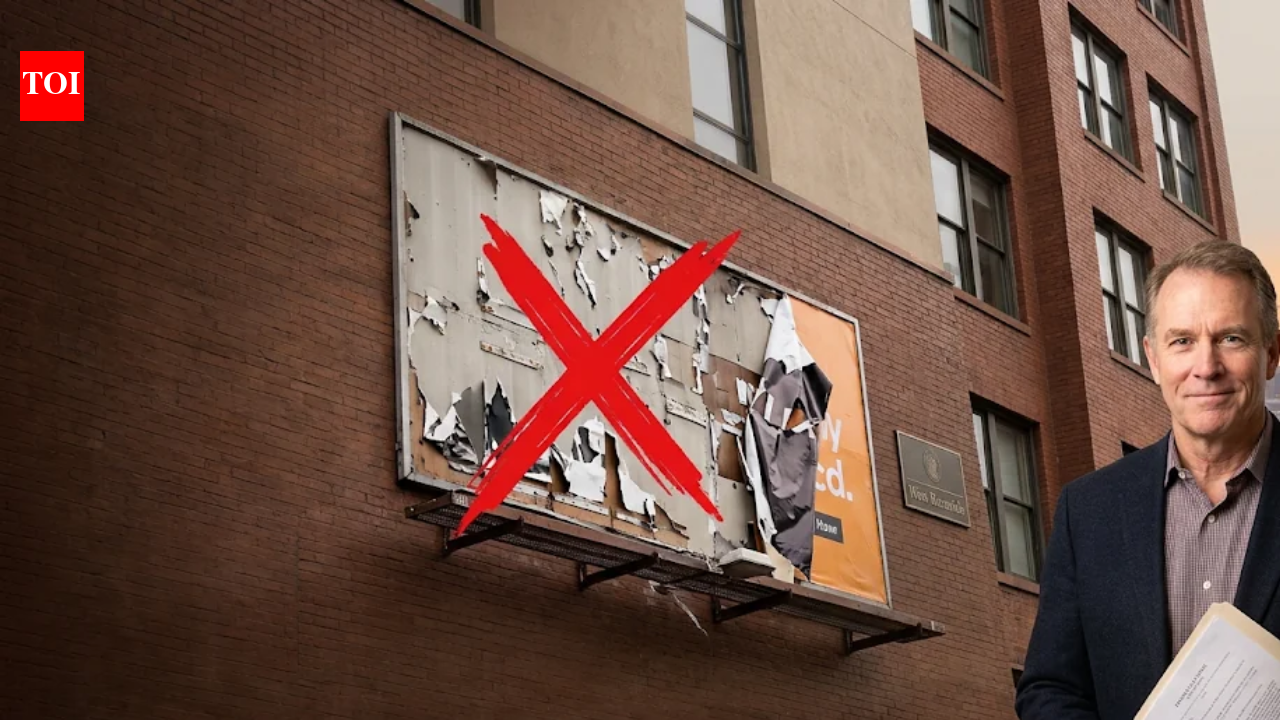
A Portland building owner has kept a $1,237,191.92 jury award against an outdoor advertising company after an appeals court found that the company acted unfairly. The company gave up a state sign permit instead of returning it when its lease ended. In a ruling issued on November 12, 2026, the Oregon Court of Appeals upheld the trial court's decision in favour of building owner Jim A. Atwood, his trust, and J.A. Atwood Corporation against Lamar Obie Company, LLC. In an opinion written by Presiding Judge Darleen Ortega, the appeals court found that a jury could reasonably decide that Lamar had broken its duty to act fairly and honestly under the lease agreement. The company had removed the legal approval needed to display commercial advertisements on Atwood's property.The dispute involved a large brick wall on the west-facing side of Atwood's building on West Burnside Street in downtown Portland. The wall faced a parking lot at street level and could be seen by traffic heading east. According to Oregon Court of Appeals records, the wall had displayed commercial advertisements for decades. Rather than selling advertising space himself, Atwood rented the wall to advertising companies. These companies sold the space to advertisers and shared the money with him. In 2009, Atwood leased the wall to Onsite Advertising Services, LLC. According to an earlier 2025 Oregon Court of Appeals ruling in a related administrative case, In re Jim A. Atwood Trust, a system of cables, anchors, bolts, and lights was installed on the brick wall after 2009. This allowed printed vinyl advertisements to be stretched across the wall. Atwood paid back his tenant for the installation costs through lower rent.Highway designation triggers permit disputeThe legal problems began when West Burnside Street, also known as Highway 596, became part of the National Highway System and was designated a state highway. This change brought the wall sign under the Oregon Motorist Information Act. The law required the owner to obtain a state permit from the Oregon Department of Transportation (ODOT) by June 30, 2015. Because the wall was larger than the current size limits for highway signs, it could only continue displaying advertisements with a special state permit. This permit was available for older signs that did not meet current rules. In 2014, the lease was transferred to OnDisplay Advertising, LLC, which applied to ODOT for the permit.To complete the application, OnDisplay needed written permission from the property owner. According to the 2025 appeals court ruling written by Judge Powers, Atwood signed a consent letter stating that the "permit shall be in the name of: OnDisplay Advertising, J A Atwood, J A Atwood Corporation, their successors and assigns, as his or its interest may appear." A few days later, while the application was still being reviewed, Lamar Advertising bought OnDisplay's assets. These included the lease for the wall and the rights to the permit application. However, when ODOT issued the permit in 2015, it listed only OnDisplay as the owner. After OnDisplay informed the agency about the sale, ODOT changed the permit to list Lamar alone. It did not add Atwood's name or notify him about the change.Surrendered permit leaves brick wall unusableLamar continued to operate the advertising sign under the lease until 2019, when its business relationship with Atwood broke down. According to case summaries published by legal research platform CREdocket and Oregon appeals court records, Atwood told Lamar that he was ending the lease. He also asked the company to transfer the ODOT permit to him. Lamar refused to sell or transfer the permit. Instead, the company removed the vinyl advertisement, cables, and lights from the wall. It left only the anchors and bolts behind and asked ODOT for a relocation credit. Under Oregon law, a relocation credit allows a permit holder to remove a sign and move it to another location later. However, the existing sign must first be taken down.ODOT inspectors confirmed that the advertising equipment had been removed from the freshly painted brick wall. The agency then granted Lamar the relocation credit without informing Atwood. According to CREdocket's report on the November 12 ruling, Lamar could not even use the credit itself. However, giving up the permit permanently ended Atwood's ability to display commercial advertisements on his own building. Since the wall was larger than current state rules allowed, ODOT later rejected Atwood's application for a new permit. The Court of Appeals upheld that decision on administrative grounds in June 2025.Jury verdict survives nine appellate challengesAfter losing access to the state permit system, Atwood filed a civil lawsuit against Lamar. He argued that the company had broken its duty to act fairly and honestly under the lease agreement. Oregon law includes this duty in every contract. A jury agreed with Atwood and awarded him $1,237,191.92 in damages. The amount included compensation for advertising income he was expected to lose in the future. Lamar appealed the decision on nine separate grounds. The company argued that Atwood's expectations about the permit were not reasonable under the law. It also claimed that the award for future lost income was based on guesswork and that the trial judge had given the jury incorrect instructions.The Oregon Court of Appeals rejected every argument that was properly brought before it. Presiding Judge Ortega wrote that the jury could reasonably find that both sides had a shared and reasonable understanding of the agreement. Based on the 2014 consent letter and their business dealings, the parties could have expected that whichever company held the lease would not take away the permit the landlord needed to keep using the wall for advertising. The appeals panel also found that Atwood had provided enough evidence of future lost advertising income for the jury to consider it. The judges found no mistakes in the trial judge's instructions to the jury. Along with the civil lawsuit against Lamar, court records show that Atwood also filed a separate civil case against ODOT. That case involves constitutional and other legal claims related to the state's handling of the advertising permit.
Portland owner wins $1.24m after sign firm leaves advertising wall unusable
Full Article
Original Source
Read the full article at Timesofindia →KhanList aggregates and links to publicly available news content. We do not host full articles from third-party sources. Always verify important information with original sources.