
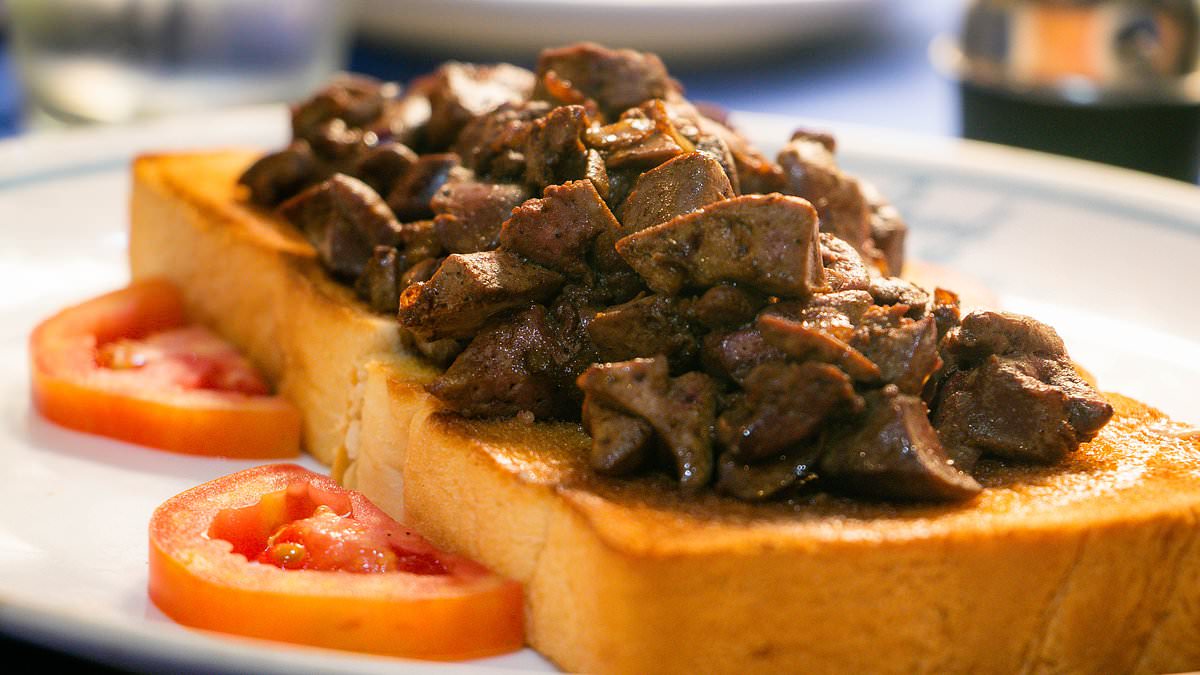
Long before the days of smashed burgers and truffle fries, British pub menus were filled with adventurous seafood bites and hearty offerings.From Coq au Vin to Devilled Kidneys on toast and Spam fritters, a trip down to your local in decades gone by was for far more than just a pint - with the great British boozer highly renowned for its humble 'pub grub'.However, according to a new study by the University of Exeter, the dizzying variety of fish dishes enjoyed by previous generations has largely disappeared over the last century.Researchers found that Britons have now ditched the once-popular delicacies of lobster, oysters and herring. In their place, the nation has become hooked on just five species: cod, haddock, tuna, salmon and prawns.Together these species now contribute about 80 per cent of all the fish eaten in the UK, despite most being imported from abroad.Yet fish is not the only once-adored food that is now scarcely seen in a British pub - with the no-nonsense meals of the 1980s and 1990s considered the height of easy dining and comfort food.Read on to reminisce over your favourite forgotten pub meals and the delicious delicacies that you wish would make a comeback at your local boozer...Gammon steak with pineapple A staple of British pub menus in the 1980s, gammon steak with a ring of pineapple was popular among many hungry diners looking for a filling evening mealA staple of British pub menus in the 1980s, gammon steak with a ring of pineapple was popular among many hungry diners looking for a filling evening meal. With the occasional addition of a fried egg, most Britons would choose to pair the traditional meat with a portion of peas or chips.However, it sadly faded out of popularity in replacement of shifting trends. Reflecting this, last April JD Wetherspoon announced it was axeing gammon from its menus across the UK and instead replacing them with gourmet burgers and Korean-style chicken. Chicken kiev The delicious chicken breast coated with herb and garlic butter and flour, egg and breadcrumbs was Britain's first chilled ready meal, served on M&S' shelves in 1979 for just £1.99It was almost impossible to visit a dinner party in the 1980s without seeing a chicken kiev on the menu.The delicious chicken breast coated with herb and garlic butter and flour, egg and breadcrumbs was Britain's first chilled ready meal, served on M&S' shelves in 1979 for just £1.99.Over time, the once signature pub meal became an oven-cooked and frozen supermarket staple - shifting away from high-end restaurant menus and those across British boozers.It does, however, remain a hugely popular item on the supermarket shelves due to its enduring comfort food feel and seen as a budget-friendly midweek dinner. Coq au Vin A classic French comfort food which translates to 'rooster in wine', this rustic hearty stew contains mature rooster in a sauce that consists of red wine, chicken stock and a touch of brandyA classic French comfort food which translates to 'rooster in wine', this rustic hearty stew contains mature rooster in a sauce that consists of red wine, chicken stock and a touch of brandy. In the 1970s and 1980s, French cuisine was considered the height of 'bistro' dining, yet the long preparation time and shift towards gastropubs saw them slowly fade from menus across the nation. Instead, pub-goers were more interested in steak and ale pies, pork belly and high-end fish and chips. However, coq au vin has continued to be stocked on supermarket shelves in the form of ready meals. Welsh rarebit Comprising of hot cheese sauce served over toasted bread, traditional Welsh rarebit was seen by many as the peak of comfort foodsComprising of hot cheese sauce served over toasted bread, traditional Welsh rarebit was seen by many as the peak of comfort foods.By the 1980s, it was seen as a signature dinner dish across the UK and even rose to prominence in northern France and the United States.Yet nowadays, Welsh rarebit is virtually non-existent in British pubs. Instead, a focus on streamlined offerings saw burgers and pies grow in popularity, while younger people felt less compelled to order the homemade comfort foods of days gone by.Devilled Kidneys on toast Featuring lamb or pigs kidneys cooked in a sauce that consisted of pepper, mustard and Worcestershire sauce, there was a time where Devilled Kidneys were seen as a signature dish in British pubs and restaurantsFeaturing lamb or pigs kidneys cooked in a sauce that consisted of pepper, mustard and Worcestershire sauce, there was a time where Devilled Kidneys were seen as a signature dish in British pubs and restaurants.A light supper or hearty starter, this offering was seen as a wider part of the no-nonsense pub grub that kept Britons full in no time.However, a shift away from eating offal meats combined with a move towards modern breakfast preferences saw the dish move out of fashion. Instead, now, it only occasionally features as a retro starter dish in traditional British restaurants. Spam frittersA staple on the British pub menu of the 1980s, spam fritters consisted of a thick slice of spam coated in savoury batter. Initially created during the Second World War, spam fritters are typically served with chips and mushy peas and dipping sauces such as brown sauce, ketchup or mustard. However, a shift in attitudes away from post-war food culture towards fresher and more diverse options saw spam fritters decline in popularity.They are now only typically available in fish and chip shops, rather than a good old British pub.Jam roly-poly A jam roly-poly was bound to cause excitement on the pub menu – comprising steamed suet pastry swirled with sticky raspberry jam. It was washed down, of course, with a bowlful of warm custardA jam roly-poly was bound to cause excitement on the pub menu – comprising steamed suet pastry swirled with sticky raspberry jam. It was washed down, of course, with a bowlful of warm custard.Cheap, filling and highly comforting, the pudding was a staple in mid-20th century dinners and was a perfect way to finish a hearty pub meal.Yet by the early 2000s, a shift towards healthier desserts and shorter preparation times saw younger generations ditch the classic deserst, and eventually it became less of a signature pub offering. Liver and onionGrowing to prominence in the 1950s through to the 1980s, liver and onion was considered by many as a classic 'pub grub' component.A decisive option due to its strong flavour and texture, the dish sees liver slices soaked in milk or buttermilk before being seared in butter oil or bacon fat and paired with onions.Sadly, the rise of gastropubs saw liver and onion become less popular within British pubs, and is scarcely seen today. Sherry trifle An indulgent deasert that often draws connotations of Christmas, birthdays or Sunday dinners, the classic sherry trifle fell out of fashion within commercial pubs despite once being considered a stapleAn indulgent dessert that often draws connotations of Christmas, birthdays or Sunday dinners, the classic sherry trifle fell out of fashion within commercial pubs despite once being considered a staple.Made with layers of sponge cake that are then soaked in sweet sherry or fruit, custard and whipped cream, this delightful dessert is typically served in a clear glass bowl.However, while it is experiencing a slight revival in high-end restaurants and hotels, ultimately the trifle is no longer a common item on a pub's dessert menu.This is, in part, due to the time-consuming baking process and instead a move towards low-effort offerings such as a sticky toffee pudding or crumbles.Spotted Dick Spotted Dick is a traditional British baked pudding, historically made with suet and dried fruit and often served with custardSpotted Dick is a traditional British baked pudding, historically made with suet and dried fruit and often served with custard.The spotted part of the name refers to the currants, which resemble spots, and 'dick' is believed to derive from the word dough.A hearty, filling and inexpensive comfort food, British pub diners adored tucking into this warm dessert after an evening's meal.While it has not entirely disappeared from British pub menus, by the late 20th century modern offerings saw old-fashioned options no longer considered as appetising. Instead, nowadays, the likes of cheesecakes, fruit tarts and trendier desserts are more common offerings. Rice pudding Rice pudding was another staple of British school pubs in the 60s and 70s. Most cultures have their own version of a rice pudding – like 'kheer' in India or Arroz con dulce from Puerto RicoRice pudding was another staple of British school pubs in the 60s and 70s. Most cultures have their own version of a rice pudding – like 'kheer' in India or Arroz con dulce from Puerto Rico.In the UK, it is typically prepared with short-grained rice or 'pudding rice', milk, cream and sugar. It can be flavoured with vanilla, nutmeg, raisins or served with a dollop of jam on top.Sadly, it soon gained an unfavourable reputation and took a lengthy period of time to prepare - and it is scarcely seen on a British pub menu in the present day. Brown Windsor soup This traditional, thick meat and root vegetable soup was once one of Britain's most popular meals and widely considered an appetiser of choice for British royalty for centuriesThis traditional, thick meat and root vegetable soup was once one of Britain's most popular meals and widely considered an appetiser of choice for British royalty for centuries. However, now it is scarcely seen across British pubs. And, indeed, hardly even seen in restaurants either.Instead, public attitudes appear to have shifted - and now it is widely seen as a stodgy and gravy-heavy broth that is unappealing in the present day.
Popular British pub meals from the 1960s, '70s and '80s that don't exist on menus anymore - as study reveals Britons have ditched once-popular seafood options
Full Article
Original Source
Read the full article at Dailymail →KhanList aggregates and links to publicly available news content. We do not host full articles from third-party sources. Always verify important information with original sources.