
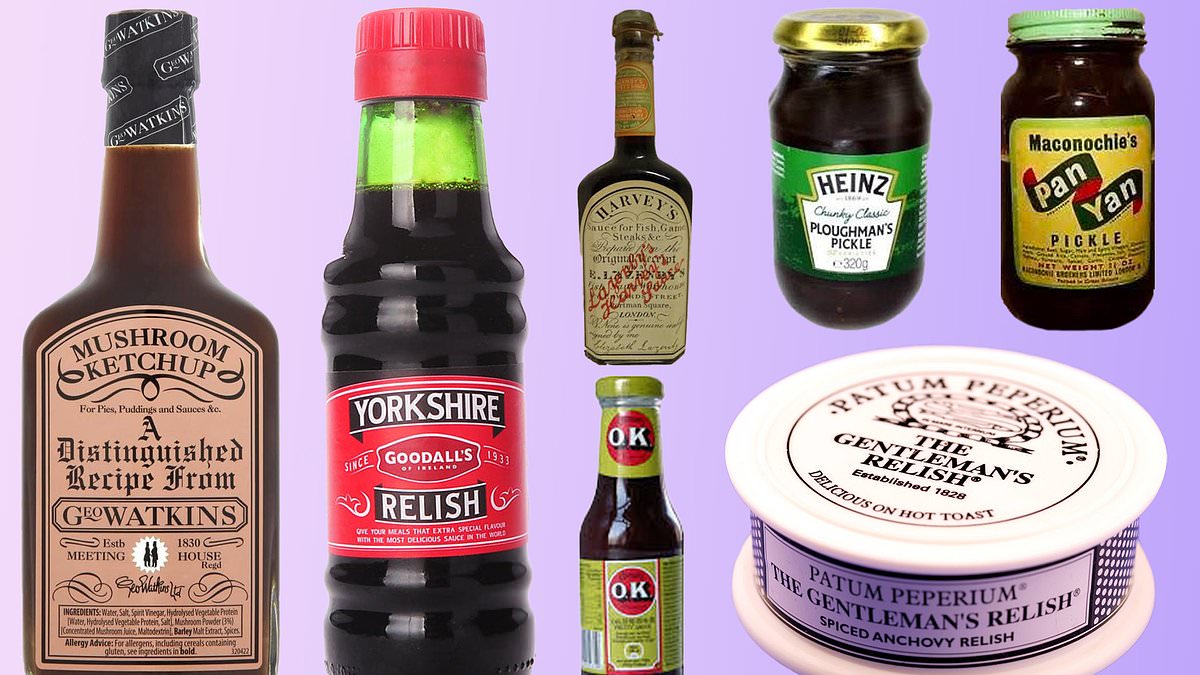
Most Britons simply wouldn't dream of tucking into their fish and chips or a burger without a generous helping of ketchup or mayonnaise.But now, the future of these tasty sauces could be set to change - with a UK ban on single-serving plastic sachets of ketchup, mayonnaise, sugar, salt, oil and vinegar being considered in line with EU rules.While the European Union has implemented a strict ban on single-serve packaging to combat plastic waste, the UK Department for Environment, Food and Rural Affairs (Defra) has confirmed that the EU ban will not automatically apply to the rest of the UK, though a domestic consultation on alignment is currently being planned.It would mark a devastating departure from the traditional way in which Britons enjoy some of their favourite condiments with ease.Yet in addition to a change in condiment serving rules, there are also a number of delicious sauces and pastes that are no longer served altogether across Britain. Gentleman's Relish, which was a staple of traditional pantries since 1849, was axed in April due to dwindling sales, with its manufacturer announcing that production was 'no longer commercially viable'.In 2024, Heinz devastated shoppers when it discontinued the Ploughman's Pickle - a delightful spread often used in cheese sandwiches, while it also bid farewell to its signature Firecracker Sauce in 2023.Read on to reminisce over your favourite forgotten condiments that you wish would make a comeback at your local boozer....Gentleman's Relish It was as eccentrically Victorian as monocles, pith helmets and puttees and even outlasted six monarchs and two world wars. But in April, the beloved Gentleman's Relish was discontinued after 177 yearsIt was as eccentrically Victorian as monocles, pith helmets and puttees and even outlasted six monarchs and two world wars. But in April, the beloved Gentleman's Relish was discontinued after 177 years, devastating firm fans around the country. The paste was created in 1828 by John Osborn, an English grocer who lived in Paris, from a mixture of anchovy fillets, rusk, butter and a secret selection of herbs and spices.However, he didn't market it until 1849, when it was launched at the Paris Food Show.To make it seem distinguished, he called it Patum Peperium, a sort of mock Latin for pepper pate.The paste consisted of around 60 per cent anchovy and is typically enjoyed spread on hot buttered toast.James Bond author Ian Fleming was a fan, and would order the paste when dining at Scott's, the historic London restaurant, served on toast with scrambled egg – a dish known as Scotch woodcock.Pan Yan Pickle Once a signature spread that could be used in sandwiches, pork pies and salads, Pan Yan Pickle featured a sweet and spicy taste that soared to popularity across BritainOnce a signature spread that could be used in sandwiches, pork pies and salads, Pan Yan Pickle featured a sweet and spicy taste that soared to popularity across Britain.Created by the Maconochie brothers in 1907, Pan Yan was a 1950s bestseller and adored for its versatility and the brand was trusted by many in post-war food culture.Yet by the 1990s, the brand had changed corporate hands multiple times - throwing its future into disarray. In 2002, Premier Foods, who had acquired the Branston business, discontinued Pan Yan Pickle, much to the sheer dismay of the nation.Then, in 2008, an appeal by then Radio 2 DJ Chris Evans calling for Pan Yan Pickle's return raised spirits that there could be a change after thousands of listeners had phoned in to reminisce over the discontinued item. Premier's pickle manager Jamie Crofts said at the time: 'I've never experienced anything like it. Our computer system was getting clogged up by emails, we were getting sackfuls of letters and it was even hard to get any other work done, because so many people were ringing up.' Following the public appeal, Premier Foods were forced to admit that the original recipe for the beloved condiment had been lost in the aftermath of a fire that destroyed the Branston pickle factory in Suffolk. Mr Crofts asked that any Britons who had a remaining jar of the pickle send it to him so that the ingredients could be analysed and re-created by the company's laboratories. However, the item is still no longer sold to this day. Heinz Ploughman's Pickle A delicious condiment typically used in cheese sandwiches, Ploughman's Pickle sauce was a thick and tangy brown relish that consisted of diced vegetables and fruit slow-cooked in vinegar, sugar and spicesA delicious condiment typically used in cheese sandwiches, Ploughman's Pickle sauce was a thick and tangy brown relish that consisted of diced vegetables and fruit slow-cooked in vinegar, sugar and spices. The British delicacy was created by Branston Pickle in 1992 in Staffordshire and soon became a firm favourite across British supermarkets, pubs and restaurants. Yet its most frequent use was in a tasty cheese-and-pickle sandwich, also fondly known as part of a British pub's 'Ploughman's lunch' that was served with a crisp cold beer. Given its widespread popularity across the nation, few could have predicted the devastating news that came from Heinz in 2024 - announcing that it had permanently discontinued the beloved condiment for good.OK Sauce First launched in the 1880s by George Mason & Co in London, OK Sauce was a dark and peppery British brown sauce that was often a staple addition to a Saturday night Chinese takeaway or with the likes of meat pies, sausages and chipsFirst launched in the 1880s by George Mason & Co in London, OK Sauce was a dark and peppery British brown sauce that was often a staple addition to a Saturday night Chinese takeaway or with the likes of meat pies, sausages and chips.Its distinct flavouring that relied upon blended tomatoes, vinegar and exotic spices saw it strongly rival HP Sauce and it even held a Royal Warrant, helping to cement its positioning. By the 1970s, it felt near impossible to enter a British home that did not have OK Sauce on the kitchen table ready to be consumed for family meals. Yet in the mid-1990s, OK Sauce was tragically discontinued and taken from the supermarket shelves, with other brown sauce rivals reigning supreme. Mushroom Ketchup Long before the days of tomato ketchup, mushroom ketchup was all the rage across Britain - consisting of a savoury, thin brown consistency that was made from fresh mushrooms and warm spicesLong before the days of tomato ketchup, mushroom ketchup was all the rage across Britain - consisting of a savoury, thin brown consistency that was made from fresh mushrooms and warm spices.Ultimately, however, it was mainly phased out in replacement of sweeter tomato ketchups in the 19th and 20th centuries, championed by the likes of Henry Heinz.Yet many Britons still fondly enjoyed the nostalgic taste of mushroom ketchup, with Geo Watkins known as the nation's sole remaining national producer of the historic condiment. In October, shoppers were left devastated when Geo Watkins confirmed they had permanently discontinued mushroom ketchup - meaning that the once-beloved item is no longer stocked in any UK supermarkets.Yorkshire Relish Sauce A delightful, tangy Victorian-era savoury condiment, Yorkshire Relish was created in Leeds in 1865 by Robert Goodall and soon became one of the most acclaimed bottled sauces across BritainA delightful, tangy Victorian-era savoury condiment, Yorkshire Relish was created in Leeds in 1865 by Robert Goodall and soon became one of the most acclaimed bottled sauces across Britain.Acting as a suitable alternative to Worcestershire sauce, it was often added to meals in a bid to create greater flavour and texture - and by 1870 was famously advertised as the 'most delicious sauce in the world'.Yet by the 1980s, its mainstream popularity was beginning to fade, with its factory in the heart of Leeds shut down in 1985. The historic British condiment was permanently discontinued in 2001.Harvey's Fish Sauce / Lazenby's Sauce Created by Chef Peter Harvey in 1793, Harvey's Fish Sauce was a thin, brown-black fish condiment that featured anchovies, soy sauce, mushroom and the likes of garlic and vinegarCreated by Chef Peter Harvey in 1793, Harvey's Fish Sauce was a thin, brown-black fish condiment that featured anchovies, soy sauce, mushroom and the likes of garlic and vinegar. By 1900, it had been rebranded as Lazenby's Sauce and experienced a surge in popularity - inspiring Maggi Lazenby Worcestershire Sauce and other pantry specialties. In the 1960s, Lazenby's Sauce found its fate when Nestle acquired Crosse & Blackwell (who owned the E. Lazenby Brand). By the late 1960s, the historic factory had closed, while British consumers were shifting towards the likes of brown Worcestershire sauce, eventually resulting in Lazenby's Sauce being discontinued.
Popular British condiments from '60s, '70s and '80s that have disappeared from supermarkets and pubs - as ketchup and mayonnaise sachets risk becoming banned due to new EU laws
Full Article
Original Source
Read the full article at Dailymail →KhanList aggregates and links to publicly available news content. We do not host full articles from third-party sources. Always verify important information with original sources.