
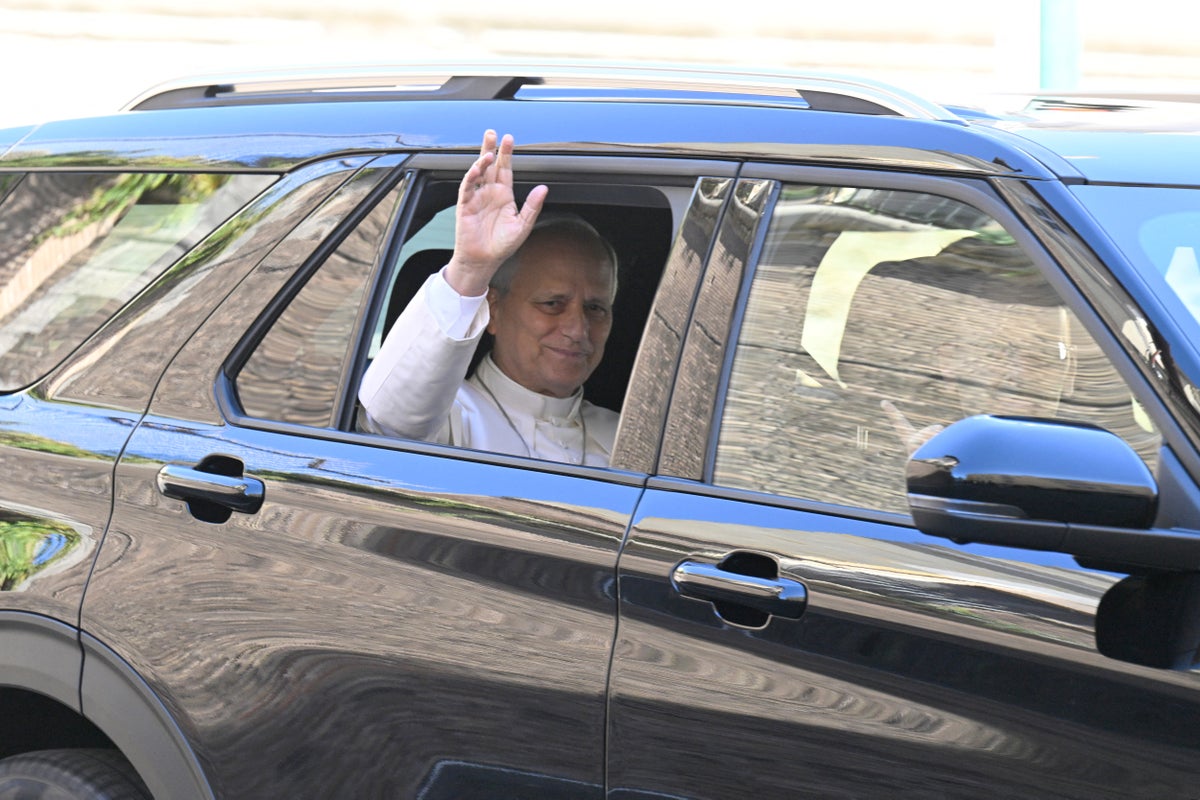
Pope Leo XIV has resumed eating normally, started walking, and begun respiratory exercises after surgery to remove a cancerous mass from his lung, according to the Vatican.The 71-year-old pontiff’s recovery is proceeding as expected, his medical team reported on Wednesday. Dr. Luigi Carbone and thoracic surgeon Dr. Stefano Margaritora released a joint update confirming that initial blood work and a chest x-ray demonstrated a stable post-operative recovery."The Holy Father underwent respiratory physiotherapy and has begun walking in his room. He resumed his regular diet and had breakfast and lunch," they reported. "Recovery is proceeding as planned."Tuesday's operation determined that the American pope has lung adenocarcinoma, the most common form of lung cancer. While specialists noted that additional testing is required to determine whether the disease has spread or demands further treatment, those diagnostic results were not ready on Wednesday.The quick disclosure of the diagnosis—coming just hours after a surgical procedure announced by Leo himself—underlines a distinct shift in how the American pontiff handles public information regarding his personal health.Pope Leo XIV waves from the window of a car as he leaves the Vatican before being admitted to Rome's Gemelli University Hospital for surgery (AFP/Getty)Vatican officials previously confirmed the 90-minute operation was successful and without complications. Doctors are waiting for full test results before deciding on a subsequent treatment path. The Vatican press office pointed to the medical report's mention of a "radical" removal of the lobe, indicating surgeons extracted all suspicious tissue to eliminate remaining traces of the disease.Anatomy of the lungs consists of three lobes on the right side and two on the left. Following the removal of a single lobe, the remaining lung tissue can gradually adapt, particularly in patients who maintain active lifestyles. Leo is known for his physical fitness, engaging in weekly tennis matches and regular swimming.Surgeons also removed select lymph nodes for evaluation to check for potential spread, though those lab results have not yet been released.Should testing reveal the cancer has spread, the findings will guide the choice of therapy, according to Dr. Stephen Liu, a lung cancer specialist at Georgetown’s Lombardi Comprehensive Cancer Center who is not involved in the pope's care. Treatment options include standard chemotherapy, a combination of chemotherapy and immunotherapy, or targeted therapy using daily pills designed for specific cancer profiles.Dr. Liu noted that adenocarcinoma carries the most favorable prognosis among lung cancers."While we know the diagnosis, we now need to know the stage," Liu said. "We now need to know how big it is, how many spots in the lung are involved. Is it just one nodule, or more than one, and the lymph nodes, are they cancerous?"Dr. PierCarlo Gentile, head of radiation oncology at Rome’s San Pietro Fatebenefratelli Hospital, indicated that the video-assisted minimally invasive chest surgery performed on the pope typically allows patients to resume walking within 48 to 72 hours. Complete surgical recovery generally takes 15 to 20 days, while post-operative issues like infections are uncommon.Pope breaks with tradition of secrecy surrounding health issuesThis level of disclosure breaks with a historical tradition of papal privacy regarding illness. Leo first disclosed the existence of the lung growth during his live Sunday address, sharing the news with viewers at the conclusion of his blessing."That was truly a revolution. It was like he was reading a medical bulletin himself," said Giovanni Maria Vian, a church historian and former editor-in-chief of the Vatican newspaper L'Osservatore Romano.Historically, the Vatican maintained strict silence on papal health matters, reflected in the traditional Italian saying: "The pope is fine until he’s dead." St. John XXIII’s stomach cancer was kept secret until his death in 1963, and St. John Paul II’s struggle with Parkinson's disease was formally acknowledged only after he died in 2005. Pope Francis was more open, granting an interview to an Argentine doctor for a book on his health, though information remained closely guarded during his final months.Vian, who worked with the Vatican communications department from 2007 to 2018, noted that this culture of secrecy was rooted in institutional defense and European traditions around medical privacy."In theory, the pope has an absolute power, so you can understand that there are many people who would aspire to that absolute power," he said. Secrecy about a pope's health, therefore, "is a legitimate defense of both the pope in question and the institution itself."Despite the open announcement, Leo did not share every detail on Sunday; Tuesday's medical update confirmed that doctors had already suspected cancer based on preliminary testing prior to the operation.The Vatican has cleared Leo’s official schedule through Oct. 20. However, no decision has been announced regarding his planned travel to South America next month.Surgeons frequently advise post-operative patients to refrain from air travel for three weeks, a timeline that would barely allow the pontiff to make his scheduled Nov. 6-17 trip to Uruguay, Argentina, and Peru. The demanding travel schedule covers over 31,000 kilometers (19,000 miles), featuring 12 flights, two helicopter journeys, and significant altitude shifts in Peru."If it is stage 1, he can complete these trips. If more treatment is needed, I would likely advise against the trips," Liu said.Subscribe here to get the latest updates from The Independent.
Pope Leo is back on his feet after lung surgery and cancer diagnosis
Full Article
Original Source
Read the full article at Independent →KhanList aggregates and links to publicly available news content. We do not host full articles from third-party sources. Always verify important information with original sources.