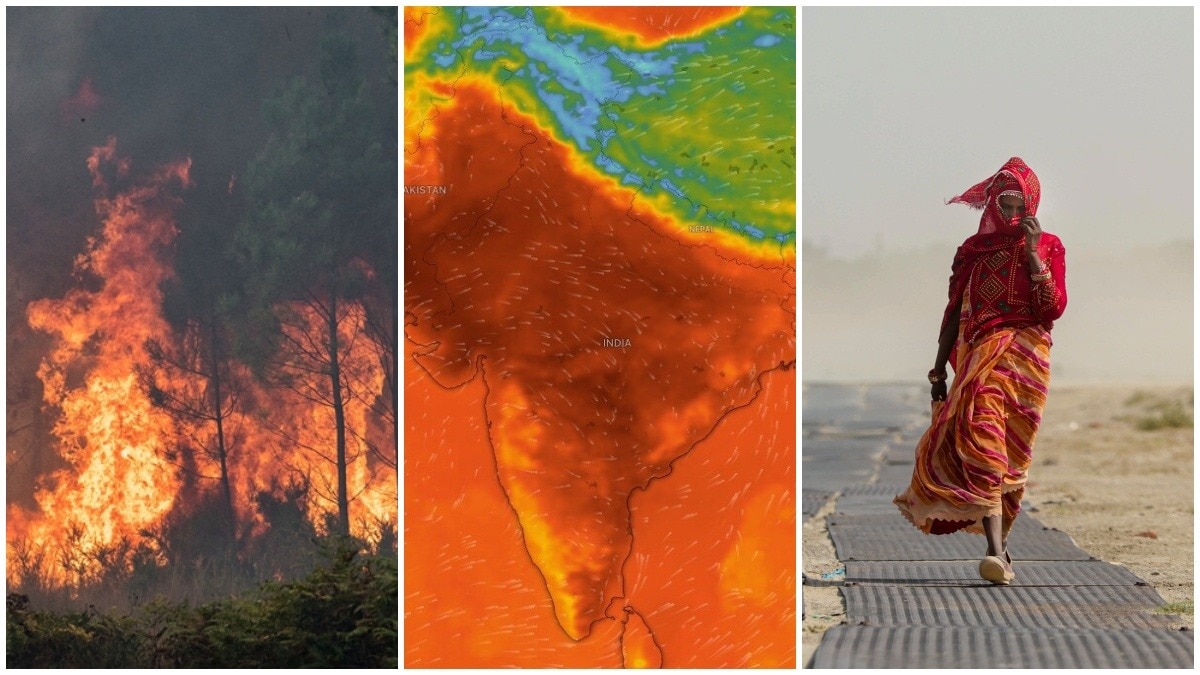
Scientists say a strengthening super El Nino is loading the atmosphere with heat and may delay the peak impact until 2027. That lag, combined with greenhouse-driven warming, could intensify extreme weather and push global temperatures to a new record.The strengthening El Nino is expected to alter atmospheric circulation over much of the planet. (Photo: Windy/PTI)After 2024 smashed global temperature records to become the hottest year ever observed, scientists expected 2026 to eclipse it as a powerful El Nino began taking shape across the Pacific Ocean. But nature appears to have one more twist in store.Instead of claiming the top spot, 2026 is now expected to end as the second-warmest year on record. The real heat is still building, and scientists say 2027 is increasingly likely to become the hottest year in the 175 years of modern climate observations.The reason lies thousands of kilometres away beneath the tropical Pacific Ocean, where one of the strongest El Nino events ever recorded is rapidly gathering strength. 2026 was supposed to break every heat record. Now scientists are warning about 2027. (Photo: Windy) Massive reservoirs of heat that have been trapped beneath the western Pacific for years are now surfacing, injecting extraordinary amounts of energy into Earth's atmosphere. Combined with the relentless warming caused by greenhouse gas emissions, the phenomenon is expected to push global temperatures beyond anything humanity has measured before. Climate experts say the current El Nino is evolving differently from even the legendary 1997-98 event. While both feature subsurface temperature anomalies approaching 8°C, this year's warming extends across a much broader swath of the Pacific, leaving significantly more heat available to fuel global warming and extreme weather.In the 175 years since reliable records began, scientists say no El Nino has intensified this quickly or shown such an expansive reservoir of heat this early in its life cycle. If forecasts hold, the world could be on the brink of witnessing its hottest year ever in 2027. A SUPERCHARGED El NinoThe National Oceanic and Atmospheric Administration (NOAA) has officially declared the onset of El Nino, the warm phase of the El Nino-Southern Oscillation (ENSO), during which sea surface temperatures across the central and eastern equatorial Pacific become significantly warmer than average.Seasonal forecasts indicate the event will continue strengthening through the remainder of the year. NOAA estimates there is a 60% probability that temperature anomalies in the central and eastern Pacific will exceed 2 degrees Celsius before the year ends, placing this episode among the strongest El Nino events on record.NOAA has officially declared the onset of El NioEl Nio is the warm phase of ENSO, during which surface waters in the central and eastern tropical Pacific become warmer than usual.As the distribution of warm water in the Pacific shifts, atmospheric circulation also pic.twitter.com/swIIkmUaMy— Windy.com (@Windycom) June 12, 2026One reason scientists are particularly concerned is the extraordinary amount of heat already stored beneath the Pacific Ocean."The ocean is essentially charging the atmosphere," climate experts explain. As deep warm water rises to the surface, it releases massive amounts of energy that reshape global weather patterns and elevate worldwide temperatures.Researchers have drawn comparisons between the current event and the historic 1997-98 El Nino, widely regarded as one of the strongest ever observed.Both events feature subsurface Pacific Ocean temperature anomalies approaching 8 degrees Celsius, making them close "twins" in terms of the heat stored below the ocean surface.However, scientists caution that this year's event is not an exact repeat.The warm anomalies in 2026 extend across a broader region of the Pacific, meaning there is even more heat available to enter the atmosphere. That additional energy could amplify global temperature records and produce weather impacts that differ significantly from those experienced nearly three decades ago.Some climate researchers believe this could ultimately become the strongest El Nino since reliable observations began around 1850.WHY 2027 WILL LIKELY BE HOTTER THAN 2026Although El Nino develops during 2026, its greatest effect on global temperatures typically occurs several months later.The world's climate system takes time to respond as the ocean transfers heat into the atmosphere. As a result, the strongest warming usually peaks in the year following the onset of El Nino.This lag explains why many climate models project 2027, not 2026, to set a new global temperature record. 2026 is now expected to end as the second-warmest year on record. (Photo: PTI) At the same time, the long-term warming caused by greenhouse gas emissions continues to raise Earth's baseline temperature, meaning every strong El Nino now begins from a much warmer starting point than similar events decades ago.WEATHER PATTERNS TO FEEL THE IMPACT ACROSS THE GLOBEThe strengthening El Nino is expected to alter atmospheric circulation over much of the planet.Meteorologists expect a sprawling "standing wave" of rising air to remain anchored over the exceptionally warm tropical Pacific through at least August, disrupting the position of jet streams and shifting rainfall patterns thousands of kilometres away.Historically, El Nino tends to bring:Higher global temperatures, increasing the likelihood of record-breaking heatwaves.Above-normal rainfall across western and southern South America, parts of East Africa, and the southern United States.Drier conditions over northern and eastern Australia, Indonesia, parts of Southeast Asia, southern Africa, and portions of Central America.A weaker southwest monsoon across South Asia, although regional weather systems can still influence seasonal rainfall.Changes in tropical cyclone activity, including fewer Atlantic hurricanes but more storms across the eastern and central Pacific, while typhoon formation in the western North Pacific often shifts farther east.Meteorologists also expect the unusually warm Pacific waters to fuel several powerful hurricanes and typhoons during the coming months by providing additional heat and moisture to developing storms.A WARNING FOR A WARMING WORLDScientists stress that El Nino alone is not responsible for rising global temperatures. Instead, it acts as a natural amplifier of a climate system already warmed by decades of fossil fuel emissions.As greenhouse gases continue trapping heat in Earth's atmosphere, every major El Nino now has the potential to push the planet beyond previous temperature records.If current forecasts hold, 2027 will not only become the hottest year in the 175-year instrumental record but also serve as another stark reminder of how natural climate variability and human-induced global warming are combining to intensify extreme weather worldwide.For scientists, the current "super" El Nino is no longer just a regional ocean phenomenon, it is rapidly becoming one of the defining climate events of the decade.- EndsPublished By: Sibu Kumar TripathiPublished On: Jul 27, 2026 07:00 IST
Poor monsoon, mega El Nino, still 2026 won't be the hottest year. It's 2027
Full Article
Original Source
Read the full article at Indiatoday →KhanList aggregates and links to publicly available news content. We do not host full articles from third-party sources. Always verify important information with original sources.