
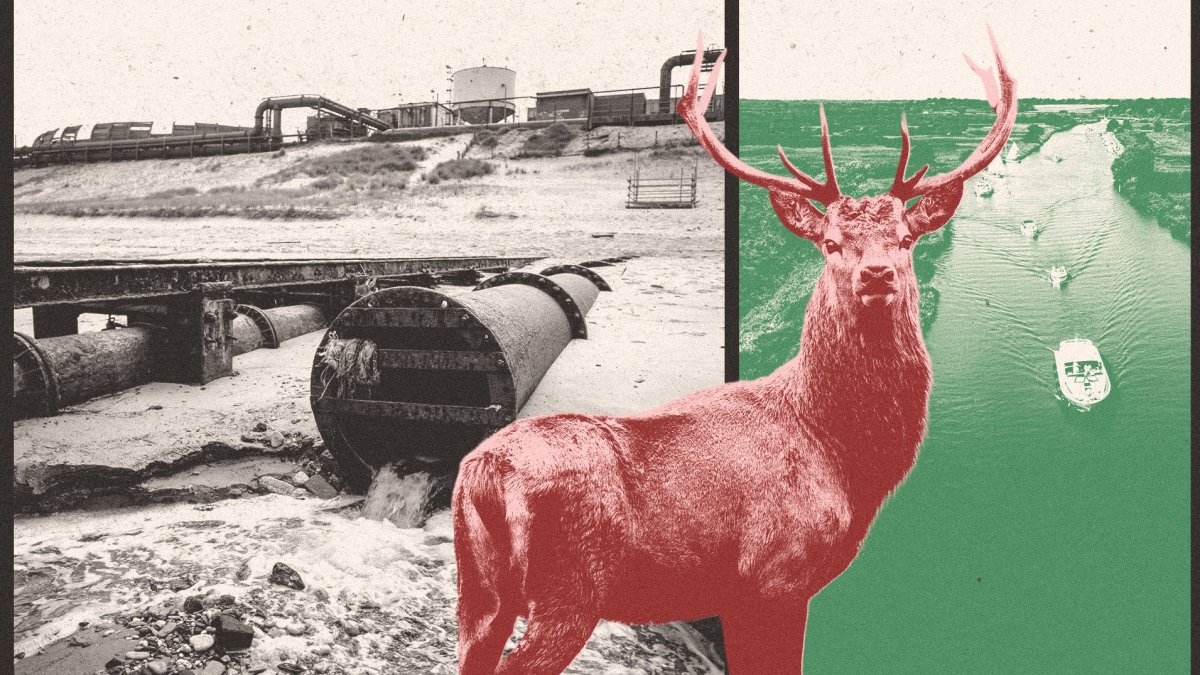
Housing developers will be allowed to pollute rivers in Norfolk with sewage in exchange for paying for conservation measures such as culling deer under Labour’s new plans to speed up housebuilding. Previously, housebuilding in the region has only been allowed if a development does not add to existing pollution in waterways. That is about to change. Housebuilders will now be able to pay £2,675 per home into a Nature Restoration Fund for measures such as “deer management” and the creation of wetland habitats in exchange for building new homes. Ministers describe the plan as a “win-win” for nature and housebuilding, but environmentalists have described it as “ecologically illiterate” and damaging to Norfolk’s rare chalk streams. Shorts The Government’s own proposals admit the scheme will lead to an increase of sewage pollution in the region, but argue the conservation benefits being funded will result in an overall benefit for the environment. The proposals have been set out as part of an Environmental Delivery Plan for Norfolk, which is the first of dozens of such plans being created under the Planning and Infrastructure Act, which was passed last year as part of Labour’s pledge to build 1.5 million new homes by 2029. New homes allowed to pollute rivers For more than four years, housebuilding surrounding the River Wensum and Norfolk Broads has been heavily constrained due to “nutrient neutrality” rules that state a new development can only be built if it does not add to existing pollution in the waterways. The rules were put in place by Natural England in response to excess levels of nitrogen and phosphorus in the region’s waterways. These nutrients typically make their way into rivers via the sewage system or due to animal waste being washed off from farms. The rivers in question are chalk streams, a rare type of habitat that is fed by underground chalk aquifiers. Described as “England’s rainforests,” the rivers should be home to highly diverse ecosystems, but nutrient pollution is suffocating acquatic life. For years, housebuilders have had to offset the impact of new developments by purchasing credits from companies that improve water quality in the rivers, for example by creating a wetland or upgrading septic tanks. However, developers complained the process is overly bureaucratic, unpredictable and expensive. New levy to fund culling of deer The Government’s solution is to stop looking at the environmental impact of developments on a case-by-case basis and to get builders to pay for restoration projects on a wider scale. These projects do not necessarily need to address the environmental damage caused by a new development, instead the Government makes an assessment over whether the benefits of a funded conservation project outweigh the damage being caused. Environmental charities have raised concerns this approach is too subjective and could lead to irreplaceable habitats being destroyed for unrelated improvements elsewhere. The plans for Norfolk, which are currently open for consultation, will see the funding of several initiatives in the region, including a 3,700 hectare deer culling programme, designed to reduce the impact the overpopulation of deer has on local habitats. Other initiatives that will be funded include the creation of new wetlands and the restoration of 1km of the River Wensum. The River Wensum is the longest and most significant chalk stream in the county, protected as a Special Area of Conservation (Photo: Gary Smith/Loop Images/Universal Images Group via Getty Images) Environmental lawyers and charities have raised concerns that many of these initiatives do not relate directly to nutrient pollution and the Government’s own plan admits that pollution in the rivers will increase. “This approach is ecologically illiterate,” said Alexa Culver, Legal Counsel at RSK Wilding, which advises developers on how to meet their environmental requirements and has been involved in facilitating nutrient neutrality projects. She said “no amount of deer or habitat management can recover irreplaceable habitats and chalk streams” without the source of nutrient pollution being “choked off first”. The UK’s largest environmental charities, including the National Trust, RSPB and Wildlife Trusts, were strongly opposed to the Planning and Infrastructure Bill as it passed through Parliament last year. They argued the law would weaken environmental protections, however said some of their concerns were addressed by amendments to the bill. Richard Benwell, chief executive of Wildlife and Countryside Link, a coalition of more than 90 organisations, said there were some “good” points in Norfolk Environmental Delivery Plan, including “upfront investment to get conservation actions working quickly”. However, he said the plan “must be strengthened with measures on water efficiency, greener farming, and sustainable drainage to ensure those benefits aren’t undermined from the outset by increasing pollution in rivers”. Housebuilders welcome proposals Labour is under pressure to meet its pledge to build 1.5 million news homes by 2029, with developers warning the target is unlikely to be met. Earlier this month The i Paper revealed the Office for Budget Responsibility was considering downgrading its growth forecast for the UK economy due to the increasing unlikelihood that the target will be met. James Stevens, director for cities at the Home Builders Federation, welcomed the first Environmental Development Plan, saying it meant developers “will be able to contribute towards the mitigation and restoration of natural habitats within a system with robust checks to ensure monies are spent appropriately”. The Nature Restoration Fund will be overseen by Natural England, which Stevens said “removes the need for applicants to negotiate for credits with private sellers on a site-by-site basis, reducing bureaucracy, complexity and uncertainty”. However, the HBF has previously questioned why housebuilders are being forced to pay for nutrient management, when farming and poorly maintained sewerage infrastructure has been found to be the main sources of the pollution. Water companies have been given until 2030 to upgrade their wastewater treatment works in the areas impacted by nutrient neutrality rules. A Government spokesperson said: “The public rightly want to live in communities with healthy green space and thriving waterways, and that is exactly what these plans will deliver with measures like habitat creation and river restoration. “This will mean more homes to fix the housing crisis, but not at the expense of nature. Both are a core focus of this government, and they will no longer be traded off against one another. “A larger, strategic approach to nature recovery in Norfolk will achieve far more than piecemeal schemes ever could. It will deliver a genuine boost for nature, with local communities at its heart.”
Pollute rivers if you like – so long as you pay for deer cull, housebuilders told
Full Article
Original Source
Read the full article at Inews →KhanList aggregates and links to publicly available news content. We do not host full articles from third-party sources. Always verify important information with original sources.