
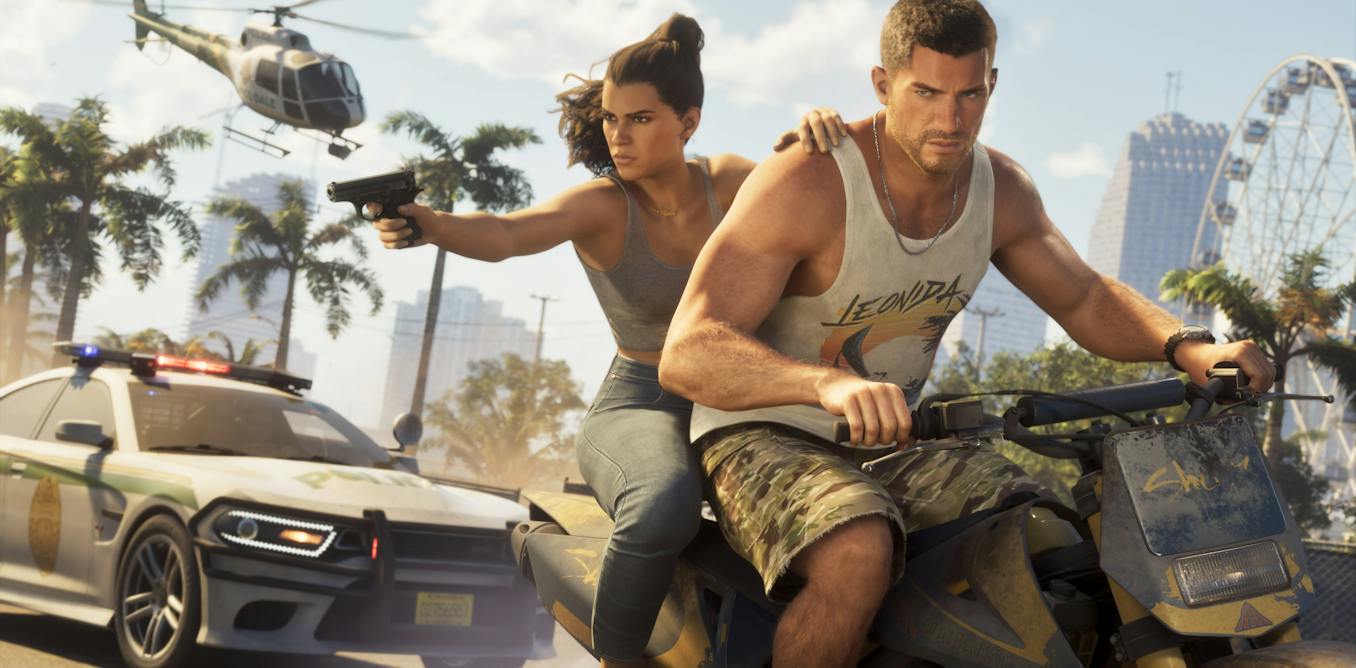
Grand Theft Auto VI’s (GTA VI) record-shattering release has been accompanied by an explosion of social media content parodying the popular, yet controversial, video game. The phenomenon has extended to police agencies across North America, many of whom have appropriated the game’s imagery and iconography to capitalize on the cultural moment. Toronto police incorporated the game’s imagery into their officer recruitment strategy. Canadian and American agencies alike have used GTA VI imagery to showcase militarized policing. Presenting militarized imagery in a GTA-inspired, cartoonish manner infantilizes the consequences facing people and communities who bear the brunt of paramilitary policing tactics. Other law enforcement agencies took the opportunity to leverage the GTA VI trend to warn the public not to replicate game play in real life, while simultaneously celebrating the release of the game. Although there is no single, consistent pattern in how police agencies use GTA VI imagery, their posts share an underlying paradox. How GTA critiques the justice system Behind the gunfights, high-speed chases and mayhem of GTA lies a pointed critique of racism, capitalism, imperialism and masculinity, among other structures of social inequality. The series has always been critical of police, drawing attention to abuses of power and systemic racism in law enforcement. Consider 2004’s Grand Theft Auto: San Andreas, set in Los Santos, a fictionalized version of Los Angeles, in the early 1990s. The game’s opening scene sees a parodied version of an infamous LAPD unit stealing from and attempting to plant evidence against the main character. The game concludes with a parodied version of the L.A. riots stemming from the failed prosecution of its main antagonist: a corrupt police officer. The story of GTA San Andreas served as a substantive cultural critique of racism and the myth of equal opportunity. GTA VI similarly features its protagonists, Jason and Lucia, navigating police corruption as they move through the criminal underworld. The story, however, is more complex than an impoverished couple simply turning to crime to pursue material wealth. A still from the video game ‘Grand Theft Auto VI,’ featuring protagonists Lucia Caminos, left, and Jason Duval. (Rockstar Games) The game begins with Lucia imprisoned after a failed robbery motivated by financial desperation. Her eventual release, facilitated by prison overcrowding, leaves her facing the same socioeconomic challenges that contributed to her incarceration. She and Jason must also navigate life without custody of their infant son. Here, the game draws attention to the prison-industrial complex and the challenges incarcerated women face upon release, including family reunification. The paradox of police social media posts celebrating GTA VI is difficult to ignore given that police services have called for harsher sentencing and more restrictive bail conditions — a policy decision that will further amplify the over-representation of racialized women in prisons. Police support for harsher sentencing also overlooks the devastating consequences of incarceration and how imprisonment manufactures the conditions for more crime. The police use of GTA imagery is therefore rather foolish and inept in its portrayal of game that satirizes the justice system. Mixed messages about crime control Through a series of GTA-inspired memes, police agencies have warned gamers to keep the lawlessness and crime “in the game.” Police in York Region even used real aerial footage from their helicopter pursuing suspects overlaid with cartoonish text resembling GTA’s visual style. These messages imply a connection between video games and violent crime — an area of research where there is no clear consensus. Suggestions of a link between violence and video games also further distract from the many structural issues that criminologists identify as the root causes of crime. GTA encourages violence against police as a part of its gameplay. The message to keep crime in the game tacitly endorses violence against police, sending contradictory messages to the public. There is a history of police concerns expressed over entertainment media and video games that encourage violence against police. In the context of such fears, it’s puzzling that police would use GTA imagery to promote the semblance of crime control given the implied suggestion by police in their social media posts that gamers might replicate such behaviour in the real world. Police social media as propaganda Researchers have drawn attention to how police social media can serve as propaganda and be used to convey a curated image to the public. Police GTA VI-themed posts foremost convey a message of police agencies that are attentive to the latest viral trends, but little more. It is unclear exactly how public safety is improved or what messaging is being communicated to the public given the paradoxical relationship between what police purport to represent and the encouragement of crime and violence in GTA gameplay. Police will almost certainly continue latching onto viral trends for the purposes of their social media engagement. Doing so raises broader concerns about the function of police social media and its purpose beyond the appeal of online platforms as sources of public information. The otherwise clumsy police appropriation of GTA imagery provides an important occasion for questioning police efforts to condition the public and cultivate self-promotion.
Police are borrowing GTA VI’s imagery, but the game has spent decades satirizing them
Full Article
Original Source
Read the full article at Theconversation →KhanList aggregates and links to publicly available news content. We do not host full articles from third-party sources. Always verify important information with original sources.