
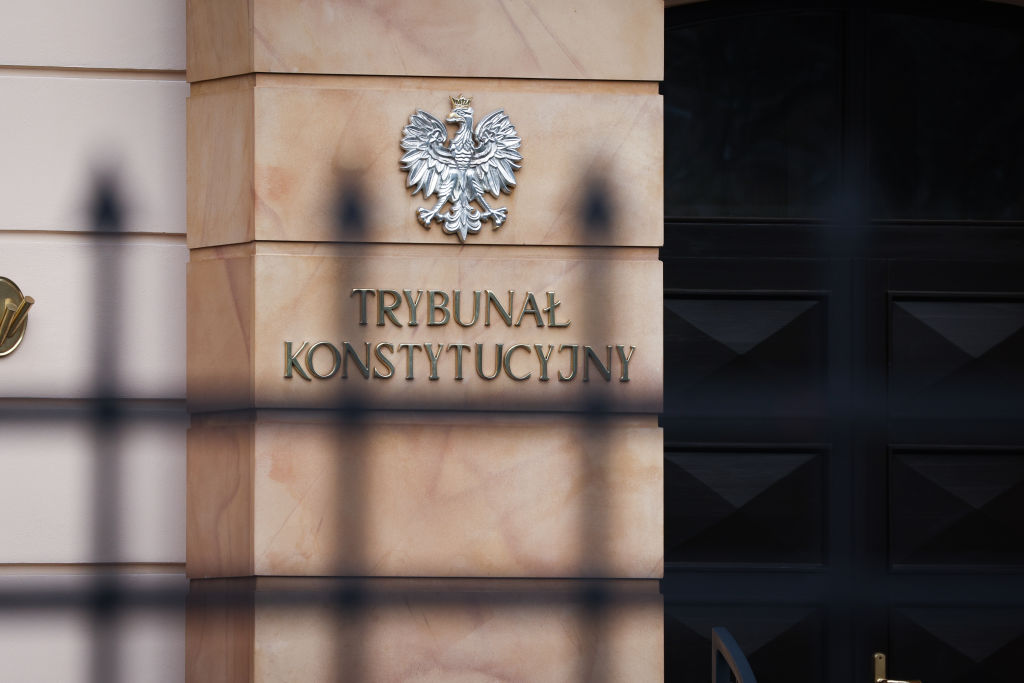
Poland has entered its greatest constitutional crisis since 1989. At its heart lies the issue of control of the Constitutional Tribunal, which determines whether legislation is compatible with Poland’s constitution. In 2015, Poland’s then centrist government appointed five judges to the Constitutional Tribunal shortly before losing parliamentary elections. The incoming Law and Justice (PiS) government challenged those appointments and selected its own judges. During its term in office, PiS embarked on judicial reforms that, according to critics, compromised judicial independence. Following Prime Minister Donald Tusk’s election victory in 2023, the new government pledged to restore judicial independence. This resulted in a conflict with President Karol Nawrocki, leading the government to bypass the Tribunal. Tusk and Nawrocki are in a standoff over a basic question: Can judges break the law if it is politically expedient to do so? Tusk claims it is necessary to employ “militant democracy” to correct the “lawlessness” of the of the previous government. By rejecting lawful options to end the standoff, however, his government is acting outside of its authority and undercutting America’s ability to showcase Poland as a model NATO ally. Tusk Answered a Stalemate by Bypassing the Law The Polish parliament elects judges to the Constitutional Tribunal, but they must first take an oath before the president. This oath is a legal condition of office, not a formality. When Nawrocki declined to swear in four appointees, Polish law offered Tusk no way to compel the Tribunal. Rather than accept the stalemate, the government had the nominees take their oaths before the speaker of the lower house instead of the Nawrocki. It was a dubious expedient. Pro-Tusk judges then claimed a Tribunal majority, voted to suspend the Tribunal’s president, Bogdan Swieczkowski, and his deputy for 30 days, and barred them from the premises. PiS surrounded the building with protesters and called it a judicial “coup.” Nawrocki denounced the moves as an unconstitutional attack on the Polish Republic. Lawful Options Exist, but Tusk Refuses Them Tusk has defended his action, saying: “Restoring the rule of law is our duty. After years of PiS-led lawlessness, this is a difficult process, sometimes painful, and it requires decisive action. There is no other way.” Yet lawful alternatives do exist. Members of his own coalition have proposed a constitutional amendment to “reset” the court. Additionally, former Prime Minister Mateusz Morawiecki has proposed a no-confidence vote to replace Tusk’s coalition with a caretaker government until national elections next year. Both would be lawful and settle the dispute through democratic processes. Washington Should Press for a Lawful Settlement Poland is America’s largest and most important ally in NATO’s east, and the Trump administration has held it up as an “example for other European nations that must step up and commit more resources for national security.” By acting outside its legal authority, the Tusk government erodes Poland’s standing as a model for others. U.S. Ambassador to Poland Thomas Rose has so far called for all sides to deescalate. That is not enough. Secretary of State Marco Rubio should publicly call for a mutual standstill: end the suspension of Tribunal President Swieczkowski, withdraw the police cordon, and freeze rulings by the disputed judges until the parties settle. Calling on the Tusk government to follow Poland’s laws and norms, and to resolve its political differences without the use of riot police, is not interference in Poland’s political affairs. It is the basic expectation that the United States has for all covenant allies in NATO. The EU Commission has backed Tusk, who was formerly the president of the European Council. Yet the EU Commission alone is unlikely to facilitate a breakthrough. This leaves the United States. The White House should name a senior envoy acceptable to both camps — ideally a veteran former assistant secretary and/or ambassador — to convene Tusk, Nawrocki, and Law and Justice leaders around the lawful routes available to them. Peter Doran is adjunct senior fellow at the Foundation for Defense of Democracies (FDD). For more analysis from the authors and FDD, subscribe HERE. Follow FDD on X @FDD. Follow Peter on X @PeterBDoran. FDD is a Washington, DC-based, nonpartisan research institute focusing on national security and foreign policy.
Poland’s Greatest Crisis Since 1989 Requires a Stronger U.S. Response
Full Article
Original Source
Read the full article at Fdd →KhanList aggregates and links to publicly available news content. We do not host full articles from third-party sources. Always verify important information with original sources.