
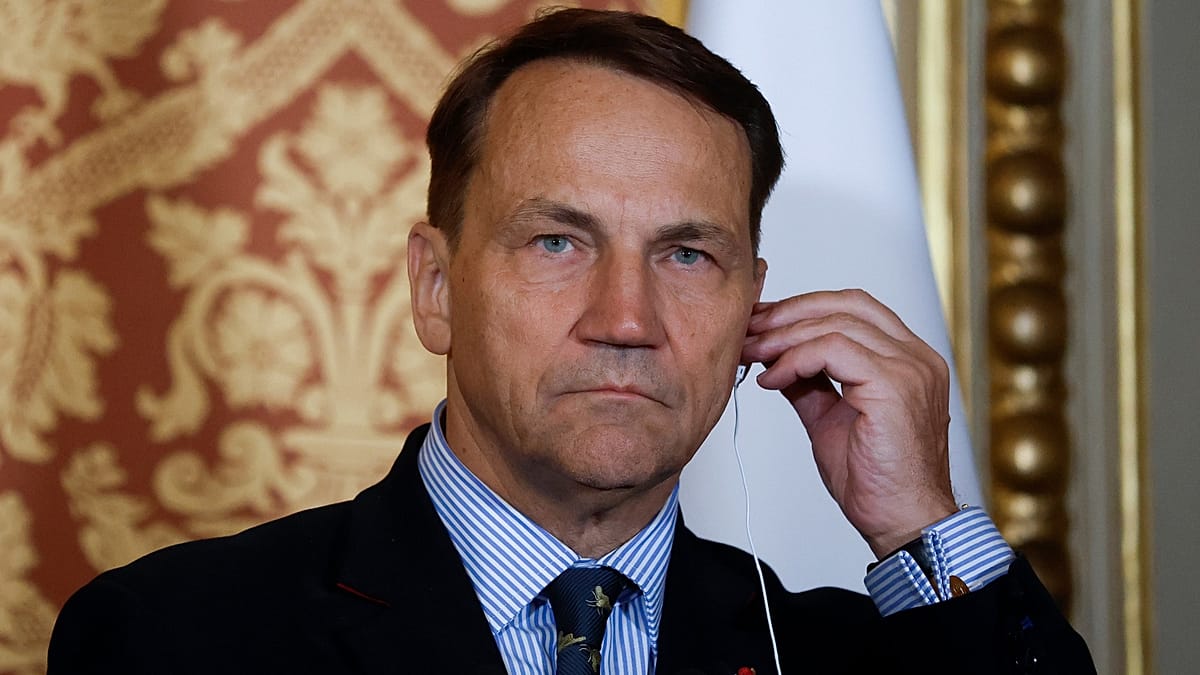
Poland has warned its European allies against negotiating an end to Russia's war in Ukraine without taking account of Eastern Europe's security interests, as the region most directly exposed to the conflict's spillover effects. ADVERTISEMENT ADVERTISEMENT "The last thing we want is Western Europe dealing with Russia, over the heads of the east Europeans," Polish Foreign Minister Radosław Sikorski said on Thursday during a discussion with journalists in Warsaw attended by Euronews. "You cannot leave Eastern Europe and Scandinavia out of the conversation. We are about 120 million people. Finland borders Russia; Norway borders Russia; the Baltics border Russia; and Poland borders Russia and Ukraine." Eastern European countries spent years urging their Western counterparts to treat Russia first and foremost as a security threat. Their warnings went largely unheeded even after Russia illegally annexed Crimea from Ukraine in 2014, and were not widely acknowledged until the full-scale invasion in February 2022. Speaking to the same group, Polish Prime Minister Donald Tusk urged his European counterparts to be "very careful" about Russian President Vladimir Putin's "real intentions" and "realistic" about the US-led diplomatic process. "In winter, Putin might have fewer incentives to get a deal," Tusk said. Russia has launched a sustained campaign of airstrikes against Ukraine's energy infrastructure, seeking to inflict widespread suffering during the colder months. Meanwhile, Moscow has stepped up hybrid attacks against some of Ukraine's staunchest supporters. Earlier this week, Poland launched a large-scale operation along its border with the Russian exclave of Kaliningrad to thwart possible acts of sabotage. "According to our sources and those of allies, Russia's threat will continue to grow, and we can expect an escalation. Of course, the first targets are the Baltic states and Poland," Tusk said, noting his country was "well prepared" for all scenarios. "It's very difficult to differentiate hybrid war, cyber war and this provocation close to Russia and Kaliningrad. We can see all those things happening at the same time." Officials in Warsaw expect little will come of the US-led negotiations unless Putin demonstrates a genuine willingness to end his war. Washington's approach of offering Moscow economic deals as diplomatic incentives to settle has roiled European allies. A plan to restart Russian flows to Europe, reportedly floated by US negotiators, has proved particularly controversial. Polish Energy Minister Miłosz Motyka called the idea "absurd" and said a return to Russian gas would make Europe vulnerable again to Putin's blackmail, run counter to US economic interests and further damage transatlantic relations. "If someone is deluding themselves by thinking they can buy time by buying Russian gas, it's a very short-sighted and a very expensive game to play," he said, pushing back against right-wing parties in Europe that demand a comeback to Russian fuels. "We're going to stick to our positions. We're not going to change it regardless of who's in power." Poland backs Meloni Warsaw's warning comes ahead of the resumption of trilateral talks between Ukraine, Russia and the US at a technical level next week in Abu Dhabi. This was preceded by a 90-minute phone call between Finnish President Alexander Stubb, Norwegian Prime Minister Jonas Gahr Støre and Putin. France, Germany and the UK, the so-called E3, together with the European Commission and NATO, are ready to joinmultilateral talks after Abu Dhabi. The same formation met this week with US representatives to advance the work on security guarantees and post-war recovery for Ukraine. The developments are the strongest signals yet that Europe is willing to speak directly with Russia to find a settled solution to a war poised to redefine the continent's security architecture for generations to come. But the overture has infuriated Italian Prime Minister Giorgia Meloni, who sent a scathing letter to European Council President António Costa complaining about the "disarray" in formats and demanding the appointment of a unifying envoy. "We are doing nothing but serving the interests of those who want this war to continue. And I think it is unacceptable, given that human lives and the future of our security are at stake," Meloni wrote in the letter. "We are not willing to accept that commitments be negotiated, in the absence of a mandate, that our nation will then be called upon to assume." In his reply, Costa agreed to put the issue to the table at next week's informal summit in Dublin, Ireland, which will take place right after the Abu Dhabi meeting. Asked about Meloni's letter, Sikorski expressed his agreement. "We need to have a legitimate representation of Europe in the process because we pay for this war. We have a much bigger stake in the war because it's our security, particularly when the Russians go back to the ultimatums of 2021," he said, referring to the demands sent by Moscow to NATO before the war. "The question is which body or which format is the right one." The foreign minister, like Costa in his reply, pointed to the framework laid out by the Treaty of Lisbon, which says the common foreign policy must be led by either the European Council president (Costa) or the High Representative (Kaja Kallas). "The Treaty of Lisbon says we have a united foreign policy: once you go outside of the treaty, it gets very tricky," Sikorski said. "My preference would be to stick to the treaty and maybe include the British. But we are in the process." But the US, which organises the talks, appears to have taken a preference for the European Commission, which oversees funding for Ukraine and sanctions on Russia. Bjoern Seibert, Commission President Ursula von der Leyen's powerful chief of cabinet, has emerged as an active interlocutor with US special envoys Steve Witkoff and Jared Kushner. Overnight, Kushner published a long social media post about the future of European security architecture and the need to overcome "decades of mistrust".
Poland warns allies: Don't negotiate with Russia over Eastern Europe's head
Full Article
Original Source
Read the full article at Euronews →KhanList aggregates and links to publicly available news content. We do not host full articles from third-party sources. Always verify important information with original sources.