
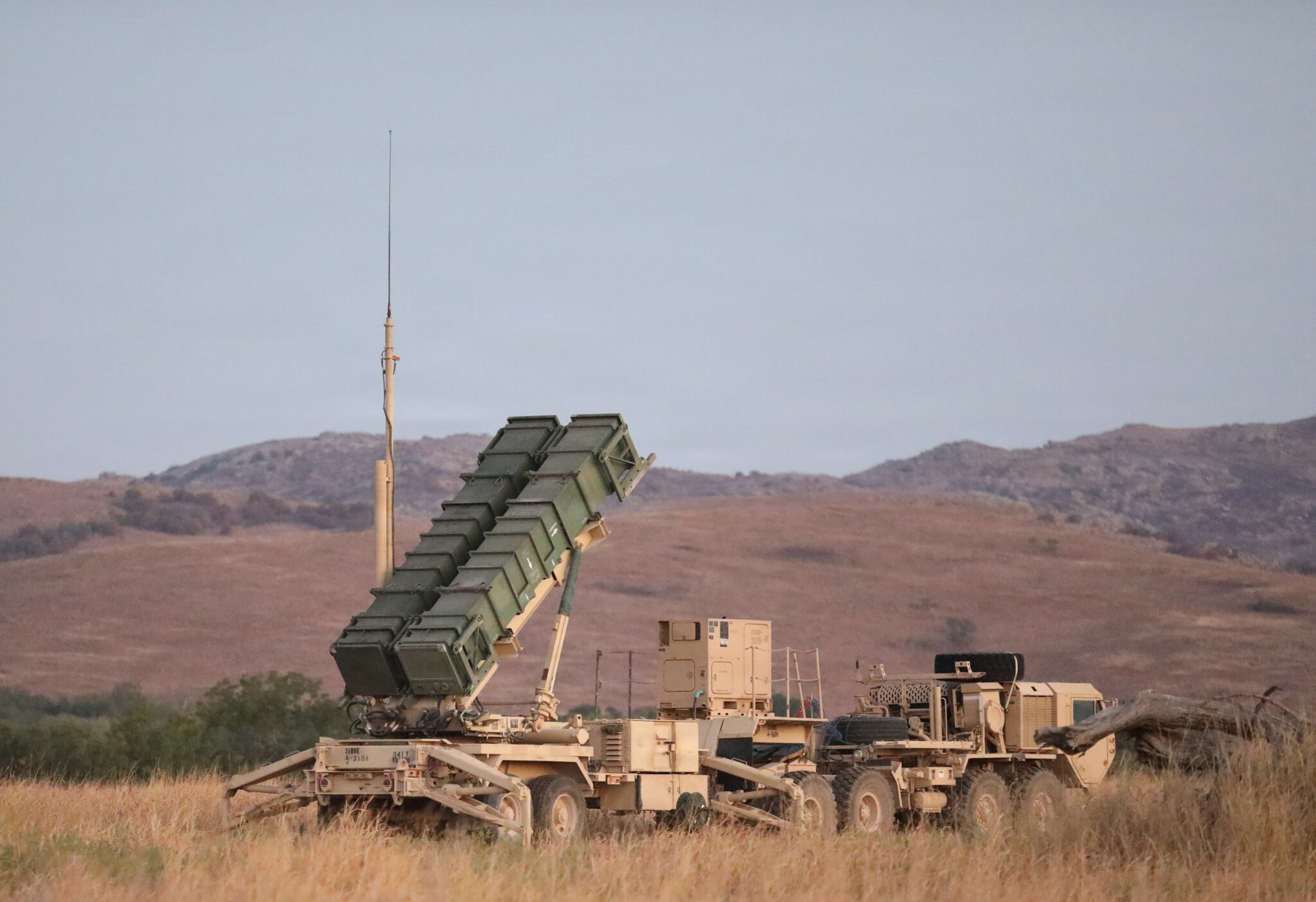
The Pentagon announced Tuesday that Poland has been selected to host Europe’s first dedicated maintenance hub for the Patriot air defense system’s Patriot Advanced Capability-3 (PAC-3) missiles. Once operational, the facility will allow these critical munitions to be serviced directly in Europe, improving readiness at a time when PAC-3 supply is struggling to keep pace with threats. American and Polish officials announced the facility on the margins of a NATO conference of national armaments directors. Magdalena Sobkowiak-Czarnecka, secretary of state at the Polish defense ministry, told reporters the facility would cost around 1 billion zlotys ($253 million) and take around a year to come online. Details such as its precise location will be hashed out over the coming months, she said. The hub will conduct “onsite repair, refurbishment, lifecycle support and re-certification,” Lockheed Martin, which produces the PAC-3, explained. Previously, missiles had to be shipped back to the United States, taking a year or more for replacement. The new facility will thus “dramatically shorten turnaround times” while “ensuring rapid surge capacity during crisis,” the Pentagon stated. Poland beat out offers from Germany, the Netherlands, and Sweden, though the Pentagon and Lockheed said they will still contribute to the supply chain. Those four countries and the United States had pledged to explore creating the facility at the NATO summit in Ankara last July. It is one of multiple initiatives aimed at establishing production and maintenance of American weapons in Europe. In 2018, under phase one of its “WISŁA” air defense program, Poland signed a $4.75 billion contract — at the time, the largest in the country’s history — to acquire two Patriot Configuration-3+ batteries. The Polish batteries comprise two fire units, each with four M903 launchers, along with the associated radar set, engagement control station, and other equipment. Warsaw launched the program’s second phase in 2022, seeking another six batteries. All told, Washington has approved the sale of as many as 852 PAC-3 MSE missiles to Poland, with deliveries ongoing. Poland announced that the first two batteries achieved full operational capability late last year, operated by its 37th Air Defense Missile Squadron. Looking ahead, Warsaw hopes the new maintenance facility will serve as a gateway to a greater Polish role in PAC-3 production, perhaps even with an assembly facility in Poland. Germany, home to a new plant that will assemble the older PAC-2 GEM-T, is also interested. At present, Japan is the only PAC-3 producer other than the United States. But Washington has expressed openness to establishing production in Europe, potentially involving Ukrainian industry, though this will not be a simple or quick process. Under offset agreements with Raytheon and Lockheed, Polish companies are currently manufacturing or preparing to produce M903 launchers and some components for PAC-3 missiles. These include attitude control systems, attitude control motors, heater control units, launcher cables, enhanced launcher electronics systems, junction boxes, motor controller units, and launch tubes. This is part of a broader Polish push to increase co-production with arms sellers as the country conducts a major defense build-up amid the war in Ukraine. Poland is currently spending almost 5 percent of GDP on defense, putting it ahead of schedule to meet the target that NATO allies set at the 2025 Hague summit. The US defense industry is Poland’s partner of choice, with around $20 billion in active Foreign Military Sale cases as of January 2025. Had the United States not selected Poland to host the PAC-3 maintenance facility, the decision likely would have caused friction with Warsaw, which is also purchasing substantial quantities of arms from South Korea. The effort to boost PAC-3 availability comes as the United States and its allies are running low on those and other critical munitions, a problem exacerbated by the Iran war. Although Lockheed aims to more than triple production by 2030, the shortage is currently delaying delivery to Poland and other US allies. Ukraine, which relies on the Patriot system to counter Russian ballistic missiles, has felt the consequences firsthand. Russia, meanwhile, has surged missile production since its 2022 invasion of Ukraine. For example, output of 9M723 ballistic missiles for the Iskander-M system has increased by more than an order of magnitude, with Russian industry currently churning out around 65 per month. Moscow’s wartime investments in expanding defense-industrial capacity will accelerate its rearmament after the current conflict ends. Decisions made now in the United States and Europe will likely determine whether NATO is ready for that potential threat. John Hardie is the deputy director of FDD’s Russia Program and a contributor to FDD’s Long War Journal.
Poland selected to host Patriot Advanced Capability-3 missile maintenance facility
Full Article
Original Source
Read the full article at Fdd →KhanList aggregates and links to publicly available news content. We do not host full articles from third-party sources. Always verify important information with original sources.