
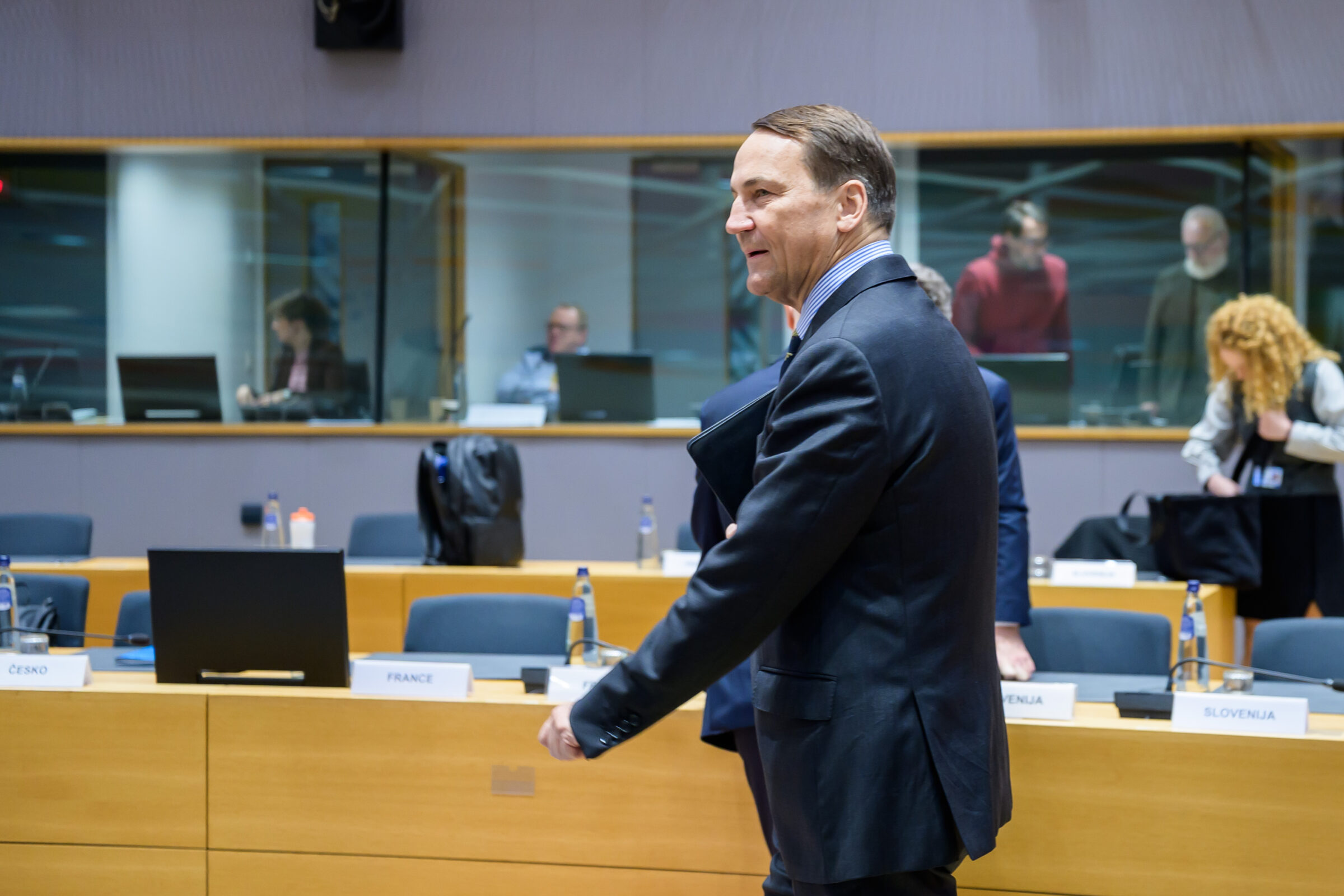
Poland has said the EU should expel more Russian diplomats after its attack on Germany, as Israel sanctions stay on the shelf despite French and Spanish appeals. “Our ally, Germany, has been attacked in what appears to be a series of actions of state terrorism,” said Polish foreign minister Radek Sikorski at an EU meeting in Ireland on Wednesday (2 September), after Germany accused Russia of a bomb plot at Leipzig airport. “We should make it more difficult for Russian diplomats and spies to operate around Europe. So closing consulates … insisting that Russian diplomats cannot leave the country to which they are accredited, reducing the numbers of Russian diplomats, many of whom are serving [intelligence] agents, and just gearing up for a time of crisis,” he said. “We are no longer in regular peacetime. You know, hybrid war is not just a nuisance on the internet … it now means assassination squads. It means arsons. It means blowing up moving trains”, he added. “We need to convince [Russian president Vladimir] Putin that such actions are not for free,” said Sikorski. Poland has closed all of Russia’s consulates already, but Vienna alone hosts 50 Russian diplomats, amid differing EU approaches to Russia diplomacy. Austrian foreign minister Beate Meinl-Reisinger called the Leipzig plot "the pinnacle of what a hybrid attack war on Europe means". Media reports indicated a Russian Leipzig culprit had entered Germany on a tourist visa issued by Italy, which also prompted EU foreign affairs chief Kaja Kallas and Irish foreign minister Helen McEntee to call for tighter visa restrictions. "I hope this convinces certain member states [France, Italy, and Spain] who have been against moving on visa restrictions," said Kallas, at the EU talks in the Druids Glen golf club near Dublin. "There was broad support to move with an EU visa entry ban for Russian ex-combatants and tougher visa restrictions for Russian tourists," she also said. Germany closed a Russian consulate in Bonn and a Russian House cultural centre in Berlin in reaction to the Leipzig incident, but German foreign minister Johann Wadephul said on Wednesday it would also push for extra Russia blacklistings in the 22nd round of EU sanctions, due in October. "I think there will be a large number of people who can now be sanctioned in addition," he said. Sikorski said 1,619 more Russian individuals and entities were to have been put under an EU visa ban and asset freeze even before the Leipzig affair. Lithuania and Sweden revived ideas to seize the Russian Central Bank's frozen assets in Belgium to help fund Ukraine. Meanwhile, European Commission president Ursula von der Leyen and Nato head Mark Rutte also voiced shock at the Leipzig escalation at a separate meeting in Brussels on Wednesday. "This was an attack using military-grade material carried out by Russian operatives on European Union soil. We will not tolerate it," von der Leyen said. Rutte said: "If Russia thinks we will be divided by the threat, or if they think we will be deterred from supporting Ukraine, they are mistaken". The EU foreign service quietly forced Russia to take back some 20 diplomats from Brussels over the summer. Europe previously expelled Russian diplomats in coordinated reactions to the attempted murder of Sergei Skripal in the UK in 2018 and Russia's full invasion of Ukraine in 2022. France and Sweden condemn Israel Meanwhile, Luxembourg, France, Portugal, Spain, and Sweden joined Ireland in publicly calling for EU sanctions on Israel. "We will plead for sanctions to be taken, new sanctions, against those responsible for the colonisation [of the West Bank] and its violence," said French foreign minister Jean-Noël Barrot, referring to a proposed ban on EU imports from illegal Israeli settlements. Swedish foreign minister Maria Malmer Stenergard and Luxembourg foreign minister Xavier Bettel said the EU should blacklist Itmar Ben-Gvir, an extremist Israeli government minister.
Poland calls for EU to expel more Russian diplomats after Leipzig bomb plot
Full Article
Original Source
Read the full article at Euobserver →KhanList aggregates and links to publicly available news content. We do not host full articles from third-party sources. Always verify important information with original sources.