
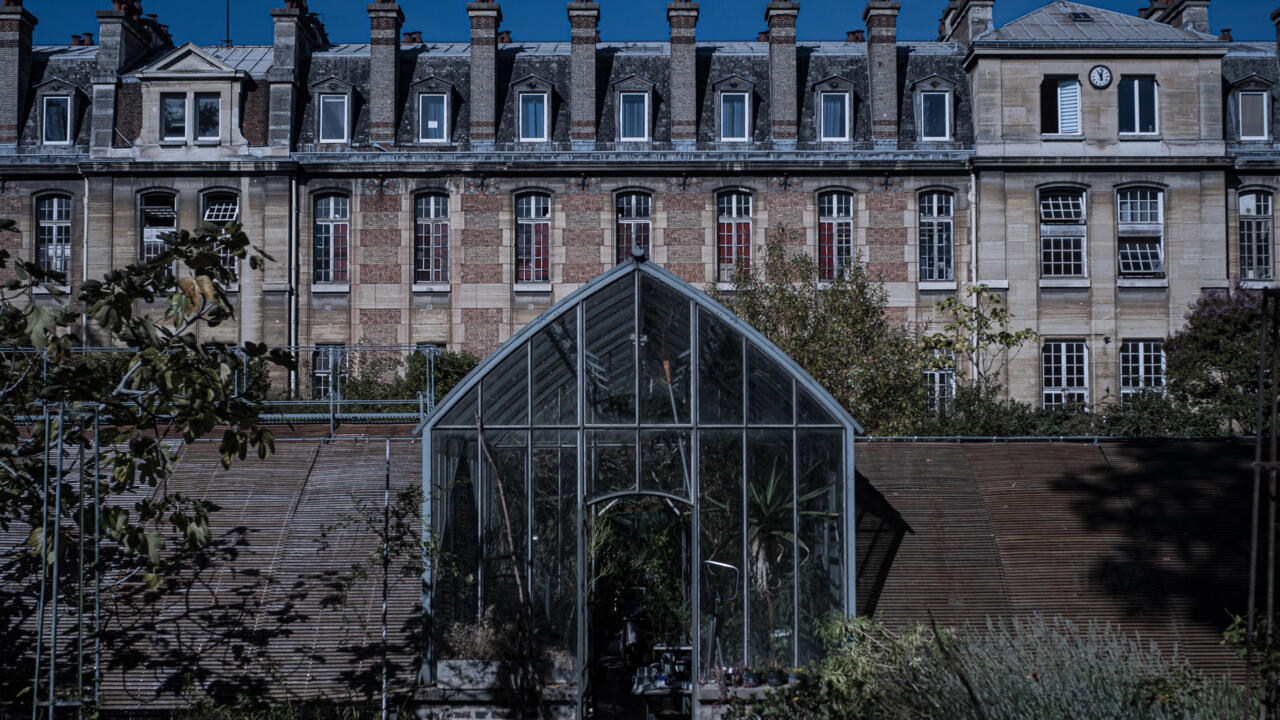
Paris – A stone's throw from the Jardin du Luxembourg on Paris's Left Bank, the Faculty of Pharmacy is home to a botanical garden which serves as an educational resource for students and a space for research – as well as a place where visitors can find biodiversity in the heart of the city. Issued on: 18/10/2026 - 09:59 3 min Reading time Accessed by passing between majestic buildings designed in the late 19th century by famed architect Charles Laisné – as well as others added during the 1960s – the botanical garden covers nearly 3,500 square metres. In the warmer months, students eat lunch at picnic tables in the shadow of the laboratory building, recognisable by its dozens of chimneys. “When they start their pharmacy studies, the students are welcomed into the garden,” says lecturer and researcher Florence Chapeland-Leclerc. “From their second session with us, they work in the lab with samples cut on site.” Heated debate over herbalism Relations between the pharmacy and herbalism sectors have long been fraught. France stopped issuing herbalist certification in 1941, and specialist shops have become increasingly rare – and are no longer permitted to recommend any particular plant for therapeutic purposes. While the debate remains heated between those who fear the revival of alternative medicine with no scientific basis and those who regret the loss of traditional knowledge, the Faculty of Pharmacy – part of Paris Cité University – draws on both practices. Here, a bachelor’s diploma in herbal medicine is awarded, aimed primarily at pharmacy assistants seeking to add another string to their bow, and also frequently at those looking to change careers. “The term ‘phytotherapist’ is in itself a misnomer. A pharmacist does not, in fact, have the status of a therapist,” points out Raphaël Grougnet, a lecturer and researcher specialising in pharmacognosy – an applied science which studies medicinal substances of natural origin, whether they come from plants, animals, fungi or micro-organisms. However, knowledge of plants and fungi is also an integral part of the training of community pharmacists, which culminates in a practical doctorate after five years of study, in addition to the foundation year common to many professions in the medical sector, including doctors, physiotherapists and dentists. By their second year, a pharmacy student must be able to identify 120 plant species. “These are the source of many medicines,” explains Grougnet. “Willow bark was known for its anti-inflammatory, antipyretic and analgesic properties [reducing fever and pain]. Aspirin was derived from it.” Psychedelic therapy gains ground in Europe, under strict conditions Dangerous mistakes In the garden, the beds are organised in two ways. The first corresponds to what is known as botanical systematics – the classification into families, genera and species established by Swedish botanist and physician Carl von Linné and subsequently revolutionised by Charles Darwin. The second method classifies plants according to their toxicity. While some plants are toxic at any dosage, others contain substances which, at certain doses, can be used medicinally. The botanic garden's greenhouses – designed by Gustave Eiffel’s workshops and faithfully restored between 2000 and 2002 – are dedicated to tropical species. The garden is an integral part of the neighbourhood’s heritage, and the interest shown by its neighbours – who regularly appear at the gates to watch plants being pruned – also reflects a renewed appreciation for plants, says Chapeland-Leclerc. Yet this interest, where knowledge is lacking, can lead to some dangerous mix-ups. “A common mistake is confusing wild garlic with lily of the valley, which is toxic to the heart, or saffron-coloured oenanthe with wild parsnip,” she explains. From ornitherapy to kissing trees, how can nature benefit human health? If in doubt, consulting a pharmacist can help avoid mistakes that have serious consequences. Chapeland-Leclerc said that while increasingly popular plant identification apps are fairly reliable, those for mushrooms remain inaccurate and should under no circumstances be trusted to classify which specimens are safe to consume. French pharmacies commonly offer to check the safety of foraged mushrooms – but Chapeland-Leclerc stressed that if you take yours to your local chemist, it's important to bring your entire haul. “Pharmacists still have a naturalist side to them that we might not necessarily realise,” she smiles. This article was adapted from the original version in French by Olivier Favier.
Poison and remedy: secrets of the botanic garden at Paris's Pharmacy Faculty
Full Article
Original Source
Read the full article at Rfi →KhanList aggregates and links to publicly available news content. We do not host full articles from third-party sources. Always verify important information with original sources.