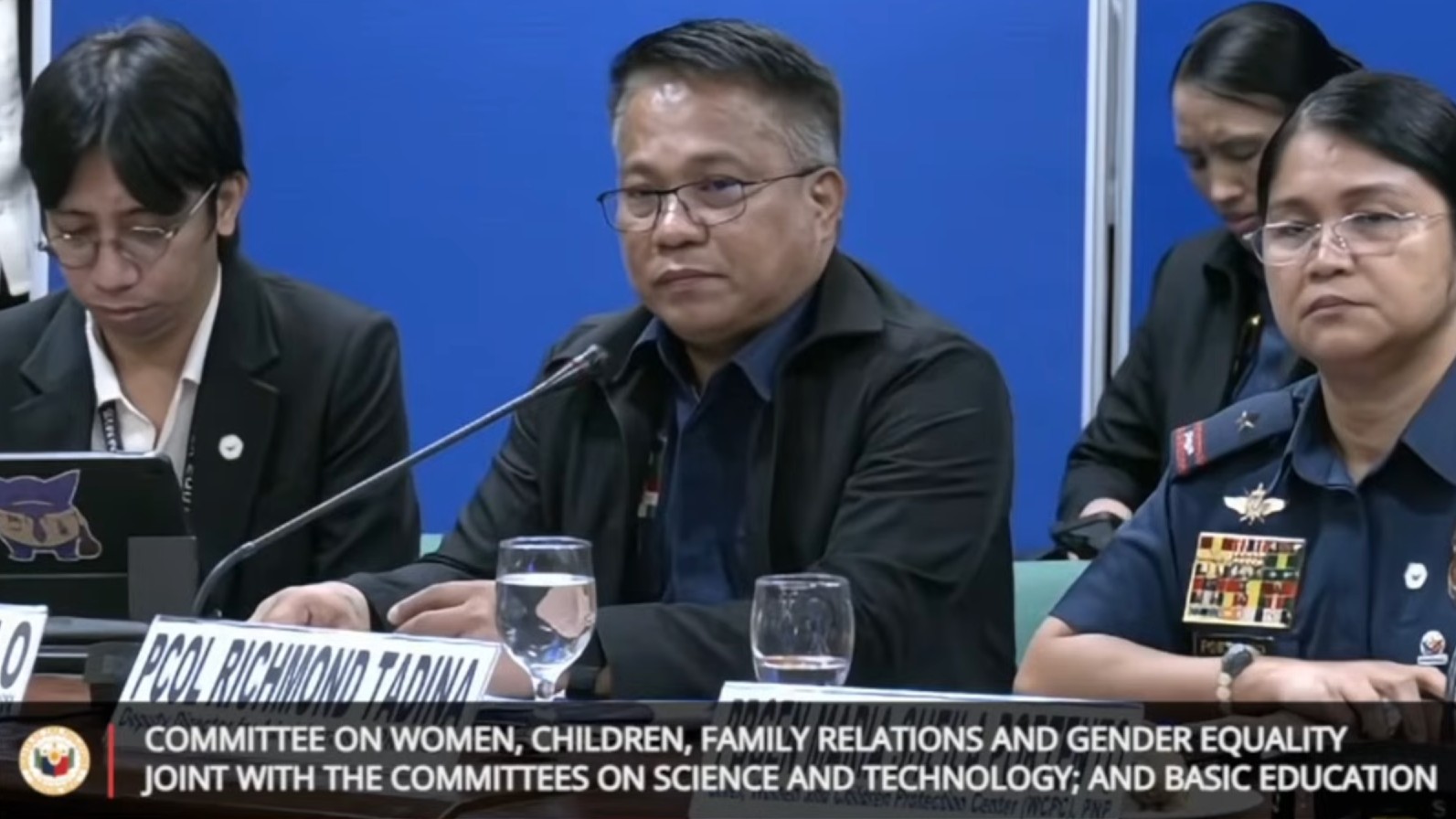
The Philippine National Police Anti-Cybercrime Group reported handling 74 cases of nihilistic violent extremism (NVE) and rescuing 42 minors, prompting Senator Risa Hontiveros to call for a coordinated response to this growing issue. Concerns were raised about the influence of foreign extremist ideologies on Filipino youth, with officials emphasizing the need to prevent copycat incidents and the spread of violent content online. The hearing highlighted jurisdictional challenges in addressing harmful online content, the need for improved digital forensics capabilities, and the push for the Child Online Safety and Protection Act to enhance accountability for internet platforms. This is AI-generated. Read the article for full context. Report any errors. MANILA, Philippines — The Philippine National Police Anti-Cybercrime Group (PNP-ACG) has handled 74 cases linked to nihilistic violent extremism (NVE) and rescued 42 minors in connection with these cases, officials told a Senate hearing on Thursday, August 20. The figure visibly shocked Senator Risa Hontiveros, who is leading the Senate inquiry into the Zamboanga school shooting and the broader threat of NVE. “This is terrible proof that this is a real problem,” Hontiveros said after hearing the number as she called for a more proactive, coordinated response to prevent NVE from becoming a pattern in the Philippines. Of the 42 minors rescued, 30 were aged 15 and younger, with many falling within the 12-to-15 age range, according to Police Colonel Richmond Tadina of the PNP-ACG. Their leads for these cases come from schools and parents, as well as referrals connected to Meta and the US Federal Bureau of Investigation (FBI). Tadina said the cases are a geographically “borderless” problem. The PNP-ACG has not seen or identified any local groomers. CICC Executive Director Aboy Paraiso noted the concern on how foreign extremist ideas can influence young Filipinos. “What we are trying to prevent here in the Philippines [are] the copycats and the influence of NVE,” Paraiso told the hearing. He said the ideology associated with NVE groups are mostly foreign to the Philippines, citing racism and white supremacy as examples. “But what happens is that our youth, when exposed to that, they either become [influenced] or become copycats,” Paraiso said. “That’s what we’re preventing here in the Philippines.” NVE is a loose online subculture that glorifies violence not in pursuit of a traditional political or religious objective, but as an end in itself. CICC: Video spread can cause further harm The hearing also turned to the livestream of the Zamboanga shooting, which remained on Facebook for 14 minutes. CICC said it gained visibility of the livestream about five minutes into the incident and reported it to Meta. Meta subsequently took the video down, but Hontiveros questioned why another 9 minutes passed before the livestream was removed. Paraiso said the problem was partly jurisdictional: the CICC does not have jurisdiction over social media, gaming, messaging, or streaming platforms whose parent companies are based abroad. He also said that while the CICC has trained itself and its partners to work with platforms’ community standards, the longer-term solution is for the Philippines to have greater jurisdiction over the platforms. The concern is not merely the original violence. Hontiveros raised the contagion effect — the possibility that violent material can be repeatedly shared, glorified, and used to influence potential copycats. Paraiso agreed that every second that such a video remains available can create harm, particularly when violence is rewarded with virality and sharing. The CICC asked Meta to take down the videos and preserve the data for investigators. Hontiveros admonishes absent Meta Meta was not present at the hearing. Hontiveros said the committee itself had found videos of the Zamboanga shooting still available on Meta’s platforms and pushed back against the idea that the CICC should be responsible for constantly finding and reporting them. “Meta itself has to do better,” Hontiveros said. She said the company has enormous reach and responsibility over its platform and should not leave the CICC to clean up harmful content. “Siguro hindi dapat CICC ang magligpit ng kalat ng Meta,” she said. “Linisin niyo ang kalat niyo, ang basura niyo sa inyong powerful platform, linisin niyo. Huwag niyo iwan lahat sa CICC.” (It shouldn’t be the CICC that cleans up after Meta. Clean your mess up, your trash on your powerful platform. Don’t leave it up to the CICC.) The CICC, for its part, continues to encourage the public to report videos and provide URLs so these can be relayed to Meta for takedown. Hontiveros also questioned whether Meta’s artificial intelligence systems could detect an active shooting without waiting for a user or government agency to report it. Paraiso said Meta’s detection systems are “hit or miss,” particularly for a livestreamed school shooting where there may be no specific text description or other parameter for the AI to detect. But he also noted the difficulty of relying on AI to detect such instances. AI may not be immediately capable of understanding the context of a video in real time, especially if it doesn’t have a text description. Issue of jurisdiction, need for more digital forensics tools Paraiso said the CICC is still waiting for the release of a cyber warrant before it can fully investigate the digital devices and online activity connected to the case. He warned that even after a warrant is issued, obtaining information from platforms can take time because of jurisdictional issues involving companies based overseas. “Based on experience, we ask for information. It takes about two months before the information gets back to us,” Paraiso said. He said the CICC is working with the Supreme Court to hasten the issuance of cyber warrants, including addressing what he described as a need to strengthen the judiciary’s capacity to assess evidence involving cyber warrants. Hontiveros appealed to the Supreme Court to recognize the urgency of the issue. The problem, Paraiso said, extends beyond social media. Authorities can encounter jurisdictional limitations involving messaging, gaming, and streaming platforms, making it harder to obtain information or act quickly when harmful activity is detected. He said the CICC wants stronger Philippine jurisdiction over such platforms. There is also an operational gap in the ability of authorities to examine digital devices once they have them. But lawyer Jewel dela Cruz of the Child Rescue Coalition pointed out that the government needs to examine whether law enforcement agencies have sufficient capacity and resources to conduct digital forensic examinations. Paraiso acknowledged that the CICC has licenses for digital forensic tools but said their availability is regionally limited. Because school shootings and other NVE-related incidents can happen outside Metro Manila, he argued that these capabilities need to be expanded to provincial and municipal law enforcement units. Along with addressing concerns on mental health, parental responsibilities, gun restrictions, and enhanced security protocols, Hontiveros stressed the importance of regulating digital spaces where NVE spreads. “Seryoso po natin itutulak ang Child Online Safety and Protection Act. Sa panukalang ito, paparusahan ang pag-iimpluwensya sa mga bata na gumawa ng karahasan, tataasan ang responsibilidad ng mga internet intermediaries, at papalakasin ang kapasidad ng law enforcement para mabilis na magresponde sa mga banta… Ang isang lipunan kung saan kailangan bunuin ng bata ang takot na mabaril para lang pumasok sa school ay hindi isang lipunan na dapat nating taggapin,” Hontiveros said. (Let’s push for the Child Online Safety and Protection Act seriously. With the proposal, we will punish those who influence children to commit violent acts, raise the responsibility of internet intermediaries, and strengthen law enforcement so they can respond faster to threats… A society where a child must deal with fears of being shot at school is not a society we can accept.) – Rappler.com
PNP: 74 cases linked to nihilistic violent extremism, 42 minors rescued so far
Full Article
Original Source
Read the full article at Rappler →KhanList aggregates and links to publicly available news content. We do not host full articles from third-party sources. Always verify important information with original sources.