
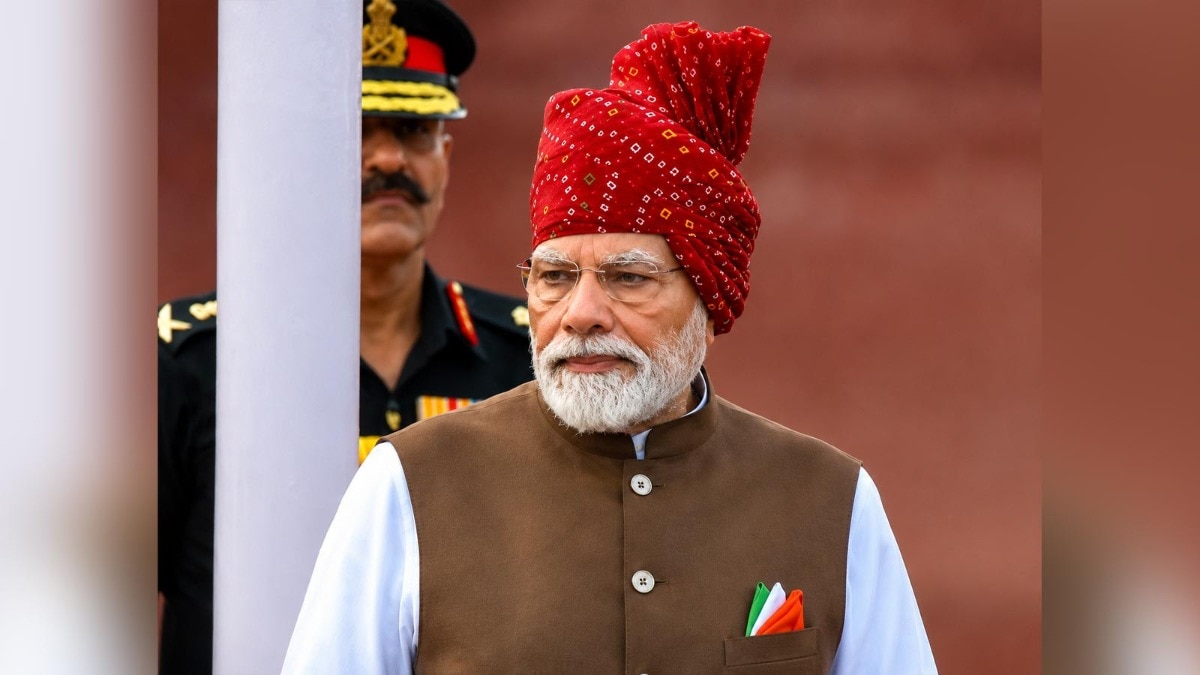
Prime Minister Narendra Modi, speaking from the Red Fort on Independence Day, said India was once counted among the world's 'Fragile Five' economies. What's the story behind the controversial label?PM Modi in Red Fort on Independence DayHighlighting the country's economic transformation over the past 12 years, Prime Minister Narendra Modi on Saturday said India was once counted among the world’s 'Fragile Five' economies. Speaking from the ramparts of the Red Fort as India celebrated its 80th Independence Day, the Prime Minister underlined that India has since emerged as the fastest-growing economy in the past 12 years."The world had dumped India's economy in the 'Fragile Five'. People's efforts have resulted in taking India to a major economy in the last 12 years," PM Modi said, taking a swipe at the Congress-led UPA era. Last year, India surpassed Japan to become the world's fourth-largest economy. It is now only behind the US, China and Germany.But what was the 'Fragile Five' and why was India included in the group? Stay with us, and we will decode its meaning for you.WHY INDIA WAS CALLED THE FRAGILE FIVE?The 'Fragile Five' term was coined by global investment bank Morgan Stanley in 2013 to describe the five emerging economies considered particularly vulnerable to external financial shocks. India was grouped along with Brazil, Indonesia, South Africa and Turkey. PM Modi and the BJP have frequently invoked this controversial label to contrast India's economic situation during the UPA era with its subsequent growth since 2014.India was included in the 'Fragile Five' grouping at a time when its economy was saddled with a combination of high inflation, a widening current account deficit, a falling rupee and heavy dependence on foreign capital. The trigger was the US Federal Reserve's move to withdraw its massive bond-buying program gradually (quatitative easing). This prospect of higher US interest rates prompted foreign investors to pull their money out of emerging markets.This left India exposed. In fact, such was the situation that India's current account deficit touched 5.1% of GDP in 2012. It basically means India was spending more on imports than it received in revenue from exports.This increased its vulnerability to liquidity shocks. Moreover, there was also a sharp fall in the rupee - it lost 12% of its value against the dollar in just a few months.A year later, in 2014, India moved out of the 'Fragile Five' grouping as its external balances improved and foreign exchange reserves strengthened. The IMF even declared that among the emerging economies, India stood out for bringing about the sharpest macroeconomic turnaround.- EndsPublished By: Abhishek DePublished On: Aug 15, 2026 08:01 IST
PM Modi invokes 'Fragile Five' in Independence Day speech. Who were they?
Full Article
Original Source
Read the full article at Indiatoday →KhanList aggregates and links to publicly available news content. We do not host full articles from third-party sources. Always verify important information with original sources.