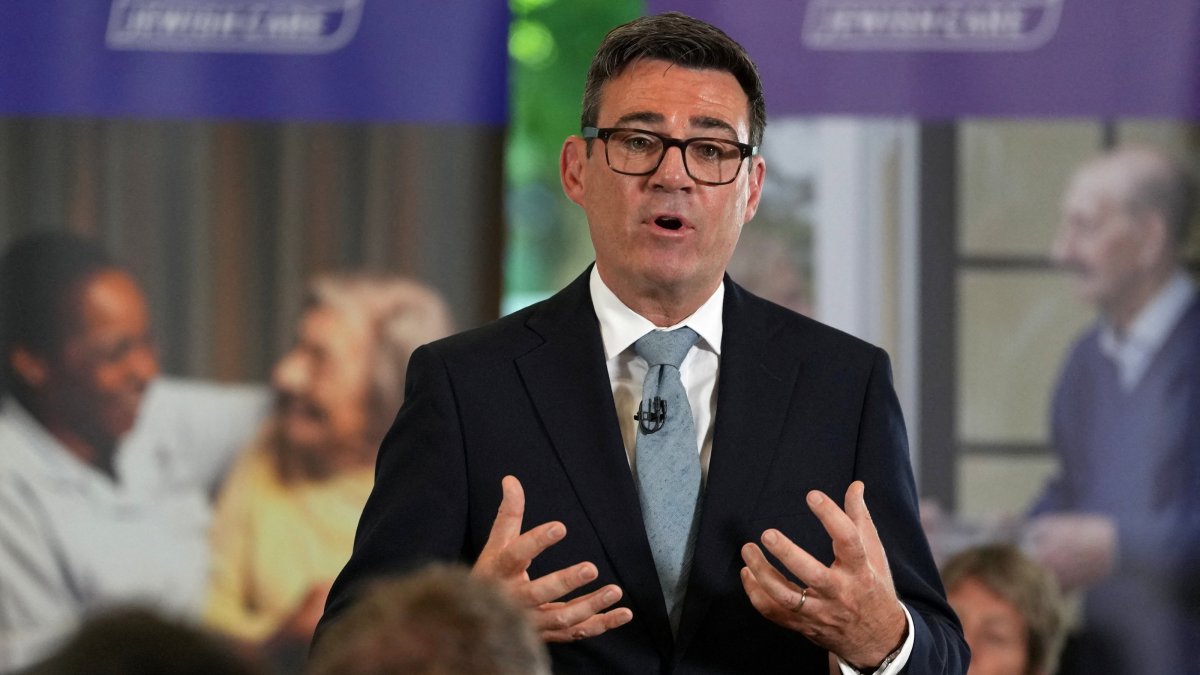
British Prime Minister Andy Burnham pledged sweeping reforms to England's adult social care system on Wednesday, promising politically difficult decisions to curb what he called unfair costs for users and to build a fairer model that avoids the high out-of-pocket expenses seen in the U.S. healthcare system. Successive governments have failed to reform adult social care, for which families can pay hundreds of thousands of pounds, after previous proposals were defeated by opposition parties who dubbed them a "dementia tax" or "death tax." Burnham did not rule out tax rises to fund a new scheme and said that "scare stories" from newspaper headlines would not deter him from tackling a situation that will only get worse as the population ages. "It's a major dereliction of public duty that parliament has not faced up to this," he told an audience at a care home in north London. Asked if he could transform social care without raising taxes, he said that more was possible within existing resources, but some of the plans "will require difficult decisions." "We will be honest with people about those," he said, adding that he would stick to a manifesto commitment not to raise certain personal taxes. Burnham, who has seen a bounce in the governing Labour Party's poll ratings since he became prime minister last week, cited his father's experience of Alzheimer's as one reason why he was determined to fix the system and correct the "shameful" political record on care. "I think social care in England is as unfair as American healthcare," he said. "The vulnerable pay with everything and it can completely leave them with nothing." To tackle the issue, he said he would expedite a review into the sector, develop a care workforce plan and engage with the opposition Conservative and Liberal Democrat parties to discuss the issue in the hope of reaching a national consensus. Burnham said he was willing to stake political capital to overhaul the care system. He first tried, and failed, to reform social care funding as health minister in 2010, and said he had learned lessons from that episode. Unlike the National Health Service, which is free at the point of use, care homes are run by a range of providers, from large chains owned by international private equity groups to smaller family-owned businesses, charities and local government. He said a national care service which was integrated into the health service in England would alleviate the pressures on both. Health and social care policy is devolved to the governments in Scotland, Wales and Northern Ireland. He also suggested he would tackle profiteering in the care sector, aided by unnecessary and dangerous cost-cutting, which he said was "fundamentally unacceptable." Depending on the level of medical need and location, residents pay about £1,400 ($1,900) a week privately, while local authorities are charged around £1,000 for similar care. How much the resident pays, and how much the state contributes, is determined by a person's level of wealth. Sarah Woolnough, chief executive of the King's Fund health think-tank, said one in seven older people were now expected to pay more than £100,000 in lifetime care costs and there had been "a decades-long failure to act, with attempts to fix the system now resting in Westminster’s graveyard of good intentions." "This is the moment to seize the opportunity and show what social care can do to improve people's lives, whilst also relieving the burden of this broken system on the NHS," she said.
PM Burnham vows tough overhaul to fix UK's broken social care system
Full Article
Original Source
Read the full article at Dailysabah →KhanList aggregates and links to publicly available news content. We do not host full articles from third-party sources. Always verify important information with original sources.