
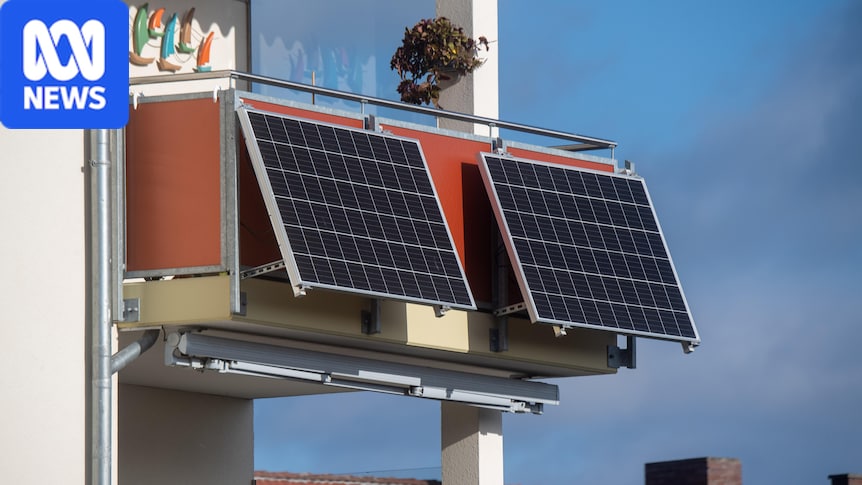
Solar panels and batteries that can be plugged into regular power outlets could cause house fires due to rushed implementation and lack of safety oversight, according to electrical trade groups. Advocates want the devices to be legalised in Australia by mid-2027, saying it would allow renters, apartment dwellers and low-income households to benefit from lower energy bills.The federal government is working with states and territories to develop a safety framework, with Minister for Climate Change and Energy Chris Bowen telling a webinar last week he had asked Standards Australia to fast track the project, which would be completed "very quickly". Western Australia has struck out on its own, releasing a draft technical standard that would bypass this national process and aiming to be the first state or territory to legalise the technology.But industry groups and unions are warning of safety risks, saying a rushed process could result in deaths.The organisations include the peak body for electricians, Master Electricians Australia (MEA); the peak body for electrical contractors, National Electrical and Communications Association (NECA); and the Electrical Trades Union (ETU). MEA CEO Kate Raymond said the current proposed safety measures, including those in WA's draft standard, could cause house fires, the release of toxic battery gases, and other dangerous outcomes. "We understand the cost of living; we understand people want and need to reduce their energy bills," Ms Raymond told the ABC."But what's the cost of a house fire? What's the cost of someone losing their life?"Power pushed into a circuit by a plug-in solar panel or battery bypasses circuit breakers that protect wiring in walls and switchboards from overheating.Germany, which has added more than 1 million plug-in solar systems in two years without disaster, limits the output of such devices so extra current cannot overload wiring.Plug-in solar, or "balcony solar", has also been legalised in the UK and some US states. (Supplied: Holger's Pictures)The same approach is being proposed by plug-in advocates and the WA government, which permits one plug-in system per household in its draft standards.But "Australians aren't Germans", MEA national technical manager Matthew Duncan said."Households either won't read the safety instructions, or they'll ignore them."If these are made readily available for sale, I can see a lot of people connecting more than one."Multiple solar panels or batteries can overload a circuit, with a higher risk in houses with faulty wiring. Plug-in batteries may also be riskier than panels, as they can push power into a circuit for longer.NECA director of safety Neil Roberts said misuse was inevitable."You're trusting the competency of the general public to install these," he said.This is a small plug-in battery, but stacked systems can exceed 15 kilowatt-hours, which is about the size of an average home battery. (Supplied: Fuse)Carl Copeland, CEO of the Electrotechnology Training Institute (ETI), which represents hundreds of electrical contractors and trains thousands of apprentices in WA, warned of a repeat of mistakes from the 2009 home insulation program.The pink batts scheme's rushed rollout and a lack of safety oversight contributed to the deaths of four installers, according to a later royal commission."We're going to end up with a situation like we did with the pink batts insulation where we'll have home owners plug in three or four of these things into the system, overloading their system, and causing house fires," Mr Copeland said.How can they be made safer?Ultimately, resolving safety concerns may require more checks and balances, but these will cost money, undermining the purpose of reducing household expenses.Rooftop solar and home batteries must be installed by qualified electricians with specific, current accreditation, following rigorous standards relating to placement, cabling, mountings and more.Under the WA draft standard, households installing plug-in devices would be required to read and follow a long list of complicated rules, including how to angle panels to achieve adequate ventilation and prevent overheating, where to place batteries to ensure toxic gas doesn't vent into bedrooms, and what stickers to add to switchboards to warn electricians and emergency services of the plug-in devices on premises.There is no process for verifying whether households do any of this.The approach throws out the "rule book", MEA's Mr Duncan said."It says, 'We're going to allow households to do just whatever they would like to do and they don't have to follow the same rules that professional installers have to follow.'"NECA and MEA want rules to mandate that panels and batteries can only be plugged into a dedicated circuit using a plug that cannot connect to regular power outlets. But such a mandate would require households to pay an electrician to install the circuit, which could still easily be bypassed with adaptor plugs.The ETU said plug-in solar and batteries were "not just another appliance"."[Plug-in solar] creates electricity and this creates a greater risk requiring different, clear safety standards to protect residents and electrical workers from harm or death," ETU national secretary Michael Wright said in a statement.When could use of plug-in solar and batteries be legalised?Each state and territory sets its own electrical safety laws but usually adopts national standards set by Standards Australia's independent committees, typically comprised of volunteers with technical knowledge of the subject.WA is bypassing this process by drafting its own standard.At the webinar hosted by advocacy group Solar Citizens last week, Mr Bowen said plug-in solar and batteries would be legalised but the safety process "cannot be rushed"."We would be letting down the people relying on us if we cut corners and allowed safety risks," he said.At the same webinar, a WA government official said the state was "on track" to complete its own process in 2027.WA Energy Minister Amber-Jade Sanderson told the ABC safety was "absolutely our primary concern.""But we want the conversation to move past whether it can be done safely, to how it can be done safely here in WA," she said in a statement.The MEA's Mr Duncan said legalising plug-in solar and batteries nationally would require amending six different standards overseen by Standards Australia committees."Our concern is very much that the process is going to be rushed," Mr Duncan, a member of the committee for wiring rules, said.He said the committee would have to amend standards relating to plug-in solar and batteries but had not yet received such a proposal. "We see a lot of push from advocates to have this completed early next year, and that's just not possible from a Standards Australia perspective."Solar Citizens told the ABC its mid-2027 deadline was "eminently doable".Glenn Morris, a Solar Citizens consultant and a member of the Standards Australia committees overseeing plug-in safety rules, said Germany and the UK had "already done all the technical work". "Eight months is a normal time frame for an amendment [to a technical standard] when there is government direction," Mr Morris, who is also the director of Smart Energy Lab, said.In September Australia's energy ministers agreed to explore pathways for "safe deployment" of plug-in solar across the country and report back in December.
Plug-in solar and batteries may cause house fires, electricians warn
Full Article
Original Source
Read the full article at Abc →KhanList aggregates and links to publicly available news content. We do not host full articles from third-party sources. Always verify important information with original sources.