
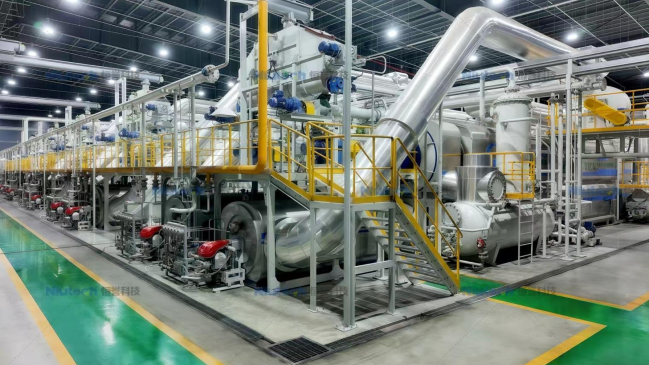
A prominent energy company has signed a deal with Chinese pyrolysis technology provider Niutech to install an industrial-scale system that will convert waste plastic into feedstock for sustainable aviation fuel (SAF). The project will upgrade an existing refinery and connect waste plastic processing with the production of hydrotreated SAF, creating an end-to-end pathway from discarded plastics to aviation fuel. The agreement is Niutech’s first equipment supply contract with the unnamed energy company and represents a move toward larger-scale commercial use of waste plastic as an alternative feedstock for lower-carbon fuels. The company says its continuous pyrolysis technology can process several types of plastic, including mixed waste streams, without extensive washing, sorting or drying before processing. Turning plastic waste into fuel feedstock Niutech’s system uses continuous pyrolysis to heat waste plastic in an oxygen-limited environment, breaking the material down into hydrocarbon products, including pyrolysis oil. That oil can then undergo further processing and hydrotreatment to produce SAF. The planned production line will have a single-unit capacity ranging from 10,000 to 50,000 metric tons per year. Niutech explained the technology can process polypropylene, polyethylene, polystyrene, acrylonitrile butadiene styrene and nylon, either separately or in mixed streams. Avoiding extensive pretreatment could be particularly important for commercial operations because waste plastic often contains different polymers and contaminants. Niutech claims its process can accept low-value plastic waste without requiring the complex washing, sorting and drying processes commonly associated with recycling. The company has already deployed its continuous pyrolysis systems in several markets, including the UK, South Korea, Denmark, Thailand, Vietnam and China. It says multiple projects with annual capacities of around 10,000 metric tons have already been delivered. SAF demand creates new market for pyrolysis The deal comes as airlines and fuel producers look for additional ways to increase SAF production. European regulations are already creating a growing market, with the EU’s ReFuelEU Aviation rules requiring SAF to account for 2% of aviation fuel supplied at EU airports in 2025, increasing to 6% in 2030 and 70% by 2050. Used cooking oil and other waste oils are among the established SAF feedstocks, but their availability is limited. Waste plastic could provide another source of hydrocarbons for fuel production, particularly as governments and industry look for ways to deal with both plastic waste and aviation emissions. The project will also test whether waste plastic pyrolysis can be integrated into a large refinery environment at industrial scale. Continuous operation is particularly important for large facilities, where interruptions can significantly affect production economics and throughput. Niutech said its nearly four decades of experience in pyrolysis technology and previous large-scale deployments were key factors supporting the agreement. The company described the deal as validation of its continuous processing technology and its ability to support refinery-scale projects. The next milestone will be moving beyond individual production lines and demonstrating that waste plastic-to-SAF systems can operate reliably, economically and at a scale to become a meaningful source of aviation fuel. Get the latest in engineering, tech, space & science - delivered daily to your inbox.Bojan Stojkovski is a freelance journalist based in Skopje, North Macedonia, covering foreign policy and technology for more than a decade. His work has appeared in Foreign Policy, ZDNet, and Nature.
Plastic waste to be turned into sustainable jet fuel as Chinese pyrolysis tech scales up
Full Article
Original Source
Read the full article at Interestingengineering →KhanList aggregates and links to publicly available news content. We do not host full articles from third-party sources. Always verify important information with original sources.