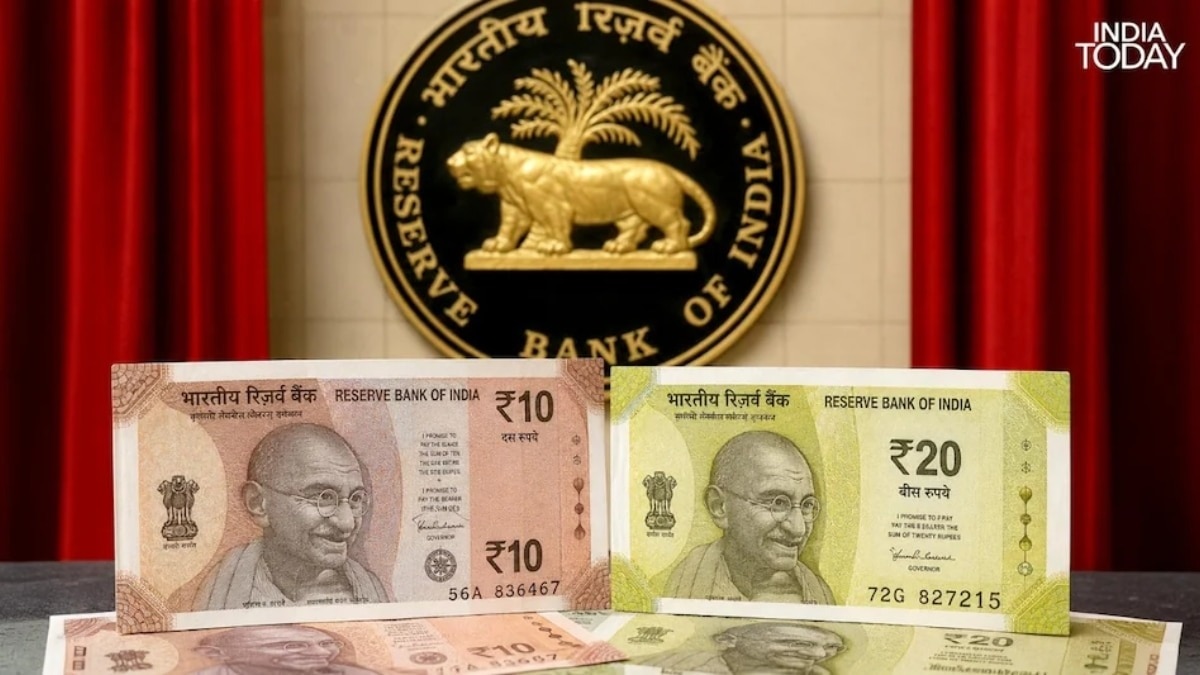
The Centre has cleared the RBI's proposal to field-test Rs 10 and Rs 20 polymer currency notes. The move revives a 15-year-old plan after delays over machines, costs and environmental scrutiny.Polymer notes are cost-effective and eco-friendly in long run. (Photo: ITG)The Centre has formally cleared Reserve Bank of India’s proposal for launching a field trial of Rs 10 and Rs 20 polymer currency notes.This marks a huge step in India’s currency evolution. The proposal clarifies that the plastic currency will exist alongside the presently circulated notes.Around 60 countries have introduced polymer currency notes. Countries such as Australia, Vietnam, Romania, Canada and New Zealand are already operating fully on polymer currency notes.Then what caused the delay for India to adapt to polymer notes, which are also touted to save money after a certain point of time? The journey to introduce polymer currency notes in India has spanned more than a decade. In fact, the proposal has arrived after RBI’s longstanding efforts to find durable alternatives to paper-based notes.REVIVAL OF A DECADE OLD TARGETFirst proposed 15 years ago, as a pilot project by the RBI in 2009, it took nearly 3 years to get approved by the Centre in 2012. Together, the RBI and Centre authorised the introduction of 1 billion pieces of 10 polymer notes on a field trial basis.To test the durability, five locations across India with varying geographical microclimates were selected. These included Kochi, Mysore, Jaipur, Shimla, and Bhubaneswar.In its findings, the RBI discovered that test currency notes caused substantial friction and static electricity while moving through commercial high-speed machines.As a result, the currency notes clung together, leading to high error rates for banks.DOES IT AFFECT THE ENVIRONMENT?Faced with intense questioning, the Government carried out an urgent environmental audit. This environmental gridlock in 2013 caused further delay in groundwork administration of the trial.The audit by The Energy and Resources Institute (TERI) concluded that the plastic currency is actually beneficial for the planet in the long term.As per the report, while plastic notes carry a higher initial carbon footprint, they have an extended lifespan. That means that they can endure the change of hands, which will reduce the need for the RBI to print more currency notes.Since they do not get worn out easily, they become more environmentally friendly and cost-effective over time.WHAT WERE THE PREVIOUS BARRIERS?The material used to create these notes are imported into India from hubs such as China, Malaysia, Indonesia, etc. Due to bureaucratic hurdles, the RBI came up with international pricing models for the imported material.Many commercial banks also showed resistance to the capital costs required to adapt their backend infrastructure for the new plastic cash.The 2016 demonetisation further broke the momentum for the currency shift. As per a report by the RBI, the currency printing cost reached a record 7,965 crore in FY2016-17.In the aftermath, the RBI’s printing arm, Bharatiya Reserve Bank Note Mudran Private Limited (BRBNMPL), abandoned all experimental programs in the pipeline.To experiment with unproven plastic notes was deemed a risk to national security and stability. The proposal was eventually buried under the massive logistical necessities.SUCCESS OF PLASTIC CURRENCY FOR OTHER COUNTRIESIn 1988, Australia became the first country to use polymer-based currency notes. The move was followed by Singapore, Indonesia, the United Kingdom, Canada, etc.All countries use Biaxially Oriented Polypropylene (BOPP) as the base sheets for their polymer notes. Unlike cotton-paper, BOPP is completely non-porous. This makes it absorbent to ambient moisture, body sweat, skin oils, and liquid spills.It has witnessed variation in texture, design and style for a wider use. For instance, in the UK, the polymer-based currency notes consist of tactile elements of raised dot patterns to assist the visually impaired individuals.In addition, their security anchors include micro-optic holograms, complex color-shifting ink, and clear windows.When held up to a laser or specific light source, the window projects a hidden image or numerical value, securing the notes with encryption.WHAT CHANGED FOR INDIA NOW?Instead of overprinting features on a blank sheet, experts believe the 2026 clearance provides elements from the global standards.Experts anticipate finding holographic elements and transparent windows, integrated into the core substrate during chemical extrusion.This will ensure anti-counterfeiting measures to be built inside the substrate layer.In addition, studies indicate the integration of anti-static texturing in the currency notes. This will prevent multiple notes from feeding and jamming legacy ATM rollers.As per the experts, this provides a solution to the paper waste problem found commonly in cotton rag notes.The polymer notes give a steady progression for India to become environmentally conscious.Ahead of a formal launch date, other countries’ positive results with polymer currency notes has piqued India’s curiosity.- EndsPublished By: Radhika VermaPublished On: Jul 31, 2026 13:42 IST
Plastic currency is finally coming to India. What took so long?
Full Article
Original Source
Read the full article at Indiatoday →KhanList aggregates and links to publicly available news content. We do not host full articles from third-party sources. Always verify important information with original sources.