
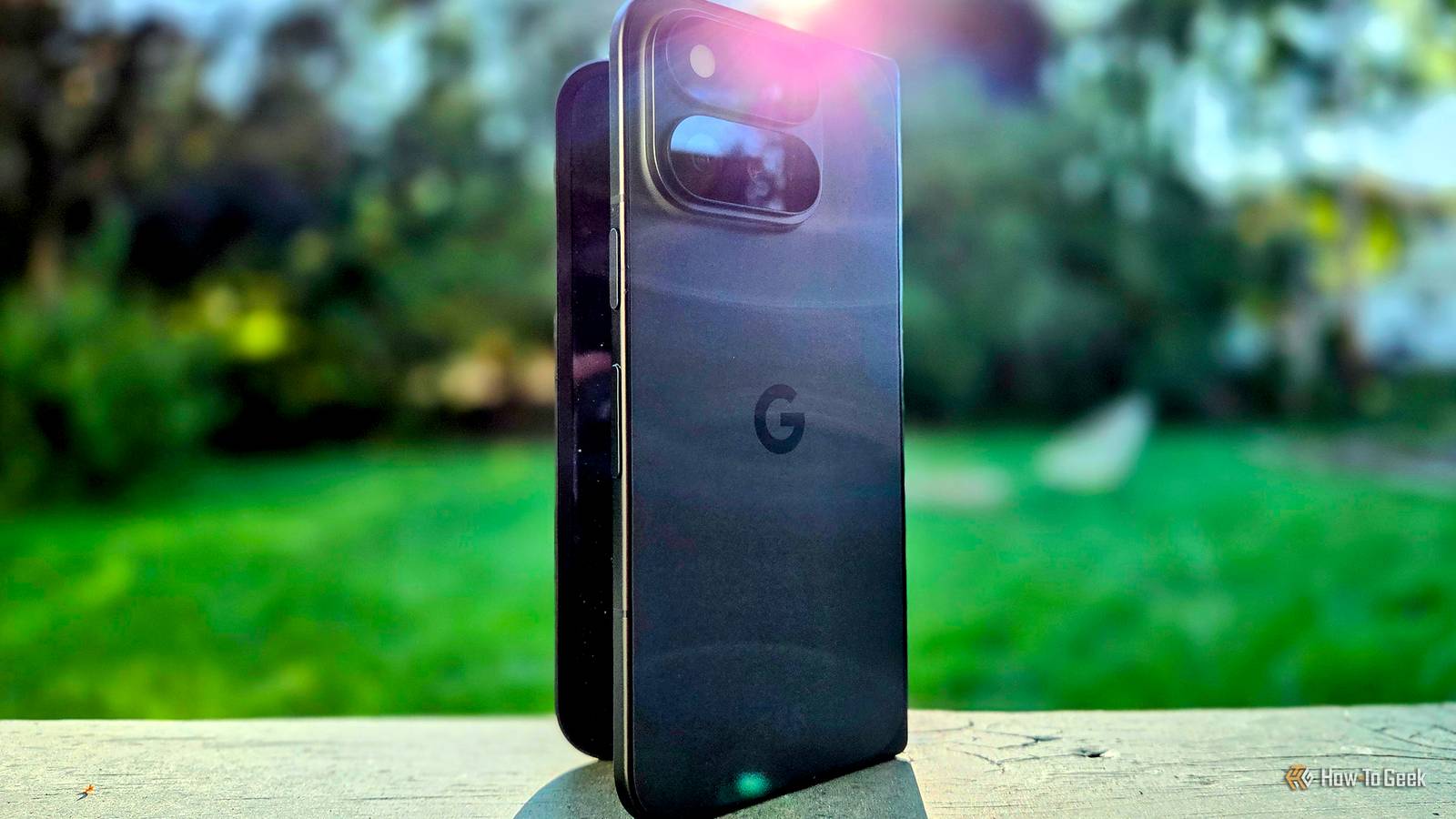
Published Aug 24, 2026, 12:05 PM EDT Joe Fedewa has been writing about technology for over a decade. Android and the rest of the Google ecosystem have been a focus for years, as well as reviewing devices, hosting podcasts, filming videos, and writing tutorials. Joe loves all things technology and is also an avid DIYer and food blogger. He has written thousands of articles, hundreds of tutorials, and dozens of reviews. Before joining How-To Geek, Joe worked at XDA-Developers as Managing Editor and covered news from the Google ecosystem. He got his start in the industry covering Windows Phone on a small blog, and later moved to Phandroid where he covered Android news, reviewed devices, wrote tutorials, created YouTube videos, and hosted a podcast. From smartphones to Bluetooth earbuds to Z-Wave switches, Joe is interested in all kinds of technology. After several years of jailbreaking and heavily modifying an iPod Touch, he moved on to his first smartphone, the HTC DROID Eris. He's been hooked ever since. Foldable phones are having a big moment. Samsung’s two Galaxy Z Fold 8 phones are thinner, lighter, and pushing into brand new form factors. The iPhone Fold is also rumored to be coming this year. Meanwhile, it’s business as usual for the Pixel 11 Pro Fold—but I’m not reviewing it from a typical perspective. Pixel phones are my bread and butter. Of the 10 generations before this year, I’ve owned 7 of them. However, I had never even seen a Pixel Fold in person until I unboxed the Pixel 11 Fold. Everyone is saying it’s a boring upgrade, but I’m starting from square one. That being said, I’m not a newcomer to foldable phones in general. I recently reviewed the Galaxy Z Fold 8 Ultra, I have the wide Z Fold 8 in my possession, and I’ve used several Moto Razr flip phones. So, while I may not be able to compare the Fold 11 to a previous Pixel Fold, I will be critical of it against the competition. Google Pixel 11 Pro Fold 7/10 Brand Google SoC Google Tensor G6 Battery 4750 mAh Ports USB-C 3.2 Operating System Android 17 Dimensions 6.1 in (height) x 3.0 in (width) x 0.4 in (depth) folded; 6.1 in (height) x 5.9 in (width) x 0.2 in (depth) unfolded Pros & Cons Solid, premium feeling build quality IP68 rating is a big deal for a foldable Pixel cameras are still great?even if not "Pro" level Built-in magnetic charging is a nice bonus Foldable display is clearly behind the competition Pixel UI does not take advantage of the larger screen enough Lacks the "Pro" experience Price and availability The Pixel 11 Pro Fold is currently available from the Google Store, Best Buy, Amazon, and most mobile carriers. It's priced at $1,900 for 256GB of storage, $2,020 for 512GB, and $2,250 for 1TB. The phone comes in two colors: Olive green and Obsidian black—the former is not available with 1TB of storage. Specifications Brand Google SoC Google Tensor G6 Battery 4750 mAh Ports USB-C 3.2 Operating System Android 17 Dimensions 6.1 in (height) x 3.0 in (width) x 0.4 in (depth) folded; 6.1 in (height) x 5.9 in (width) x 0.2 in (depth) unfolded Colors Olive, Obsidian Weight 8.4 oz IP Rating IP68 Cover display 6.5-inch Super Actua display Interior display 8-inch Super Actua Flex display Wi-Fi connectivity Wi-Fi 7 Bluetooth Bluetooth v6 Google got a lot right with the Pixel 11 Pro Fold Great durability, build quality, cameras, and charging Credit: Joe Fedewa / How-To Geek Durability isn’t the flashiest feature, but it’s incredibly important for devices with foldable screens. Many foldable phones—including the Z Fold 8 series and Razr Fold—have IP48 ratings. That’s good for water resistance, but not the best for dust, sand, dirt, and other debris. For the second year in a row, Google has managed an IP68 rating for its foldable phone. Along with the new glass fiber composite back and glass-ceramic cover screen, which makes the Pixel 11 Pro Fold one of the most durable foldable phones you can buy. And that really matters when you’re throwing down nearly $2,000 for a device. The Pixel 11 Fold is slightly thinner and lighter than last year’s model, but about 1mm thicker and 25g heavier than the Z Fold 8 Ultra. Coming from the Z Fold, I immediately could tell that the Pixel was thicker and heavier. Size aside, this is a well-built phone. The hinge is solid, and the new back material feels very nice. Design-wise, I much prefer Google’s shorter, wider shape to the tall and skinny Z Fold 8 Ultra. I was using a Pixel 10 (non XL) as my daily phone before the reviews, and the Pixel 11 Fold is essentially the same footprint. The heavily rounded corners are also more comfortable, and I didn’t mind the asymmetrical shape in the closed position. There’s been a lot of talk about aspect ratios in this foldable upgrade cycle. I can confirm that the passport-like Z Fold 8 does indeed feel great, but I’m not ready to call Google’s design outdated just yet. It’s nice to have a familiar phone size when folded. Credit: Joe Fedewa / How-To Geek Speaking of aspect ratio, I like the size of the inner display, too. It actually feels like a tablet, not a weirdly wide phone. Every time I opened the Galaxy Z Fold 8 Ultra, I felt like I should turn it sideways. The nearly square inner display on the Pixel 11 Fold is more naturally tablet-like. You can see more of each app when they’re in split-screen mode. The last hardware feature that stood out was magnetic “Pixelsnap” charging. I’m on record as being very attached to this feature, so I was pleased to see it included this year. This is also why the slightly thinner design is important for those of us who use magnetic wallets. Maybe the phone could be even thinner without magnets, but it’s a trade-off I’m willing to make. Pixel cameras are still great, even if this isn’t the best one Not fully “Pro” level, but still very good Credit: Joe Fedewa / How-To Geek Photography has been the Pixel series’ strength for a long time now. I expected the Pixel 11 Pro Fold to carry on this tradition, and it did not disappoint. However, despite the “Pro” label, the Fold doesn’t offer the best you can get in the Pixel 11 series. Google made some significant camera software improvements this year. Night Sight is 4.5x faster, Super Res Zoom is clearer, “Magic Capture” is a new hands-free shooting mode, and the “Creator Suite” is genuinely useful to those who make web videos. However, in terms of pure camera specs, the Fold is on par with the Pixel 11, not the Pixel 11 Pro. It has the same 48MP main camera, the same 10.8MP 5X telephoto lens, and similar ultrawide and front-facing cameras. Meanwhile, the Pixel 11 Pro has a 50MP main camera, 48MP 5X telephoto lens, 48MP ultrawide, and 42MP front-facing camera. So, while I’m generally happy with the photos I took with the Pixel 11 Pro Fold, it does sting a bit to use a phone that costs $800 more than its non-foldable sibling, but it didn’t get the same cameras. There's a lot that isn’t good enough anymore Last year’s improvements don’t carry over Credit: Joe Fedewa / How-To Geek My overall experience with the Pixel 11 Pro Fold has been positive, but it’s far from a perfect phone—foldable or not. I’ll start with the inner display. Google made improvements in brightness, but the crease and a lack of anti-reflective coating make it feel firmly in last year. Personally, foldable screen creases have never bothered me, but it makes one thing very apparent: the Pixel 11 Fold’s flexible display is not of the same quality as Samsung’s. Another area where Google is clearly behind is battery life. Samsung finally adopted silicon-carbon batteries in the Z Fold 8 series, allowing the phones to have bigger batteries in the same size package. Since Google didn’t switch to the new tech, it had to shave off 265mAh to make the Pixel 11 Fold thinner. Going back to the inner display, it’s time to talk about software. Now, I greatly prefer Google’s Pixel software over Samsung’s One UI. It’s the reason why I’ve owned so many Pixel phones over the years. However, the appeal of the minimalist design loses its luster when trying to take advantage of the big display. Google simply has not added enough foldable-specific features to its flavor of Android. Split-screen is limited to two apps; there are no gestures to quickly put an app into split-screen, no “flex mode” equivalent for using the display halfway open, and one-handed mode isn’t available, for some reason. Android 17’s “App Bubbles” are a much-needed improvement, but it just doesn’t feel like “Pro” software. Credit: Joe Fedewa / How-To Geek Lastly, I have to mention HiLight—the LED light in the camera bump. This is one of the very few genuinely new features in the Pixel 11 series, and Google completely wasted it at launch. I’ve already written about HiLight at length, so I’ll direct you to my editorial. Thankfully, the Android community is already working on a fix. Should you buy the Pixel 11 Pro Fold? Credit: Joe Fedewa / How-To Geek I have to admit, this is a difficult section to write. On paper, the Galaxy Z Fold 8 Ultra, and maybe even the standard Z Fold 8, are better than the Pixel 11 Pro Fold in nearly every way. The Ultra is $200 more, but it’s thinner, faster, has better battery life, and takes full advantage of the big screen. That being said, I do prefer the size and shape of the Pixel 11 Fold. It feels more familiar in my hand. It’s too early for me to say if I’ve been converted to the Z Fold 8’s passport shape, but at least I know the tall, skinny form isn’t for me. I also still find myself gravitating toward the Pixel software despite all of my criticism. However, putting my personal bias aside, it’s clear to me that the Pixel 11 Pro Fold is not on the same level as other foldables on the market. Google is putting out a phone from 2025, while other companies are completely reimagining what a foldable phone should be. The technology is finally taking a big step forward, and Google is at risk of being left behind. Google Pixel 11 Pro Fold 7/10 Brand Google SoC Google Tensor G6
Pixel 11 Pro Fold Review: A classic foldable, for better and for worse
Full Article
Original Source
Read the full article at Howtogeek →KhanList aggregates and links to publicly available news content. We do not host full articles from third-party sources. Always verify important information with original sources.