
Google doesn't need its Pixel phones to outsell the iPhone, or even Samsung Galaxy. Here is a quick look at the long, and sometimes perplexing, evolution of the Google Pixel.India has surprisingly become one of the fastest growing markets for Google Pixel phones.Google says you should ask more of your phone. The choice of words is deliberately provocative. It makes you want to question every other phone brand out there, and even yourself for settling for less all these many years. Because Google owns Android, the world's most used mobile operating system, you might as well believe it. You deserve better, or so declares Google. Something like the new Google Pixel 11 perhaps.But this brings up a perplexing question: if the Pixel is the purest avatar of an Android phone, the one Made by Google itself, why is it so difficult to spot it in the wild outside of Silicon Valley or tech-enthusiast meet-ups in Bengaluru even in 2026?The answer probably lies in the way Pixel came about on the scene. Since its very beginning it deliberately associated itself with a nerdy audience, the geeks who love the flexibility and purity of Android over everything else. After all, it was born from the ashes of Nexus phones, which too were the devices meant to be tech showcases that would endear themselves to a tech-savvy crowd.Long before Google’s present hardware chief Rick Osterloh took the stage to announce sleek Pixels, Google’s mobile hardware strategy was an eclectic testing ground catering to a clientele who loved to DIY. Google gave the wares — Nexus and Android — and freedom to do what iPhone or Galaxy users could only dream of. “My earliest memory traces back to the Nexus line and later the Google Play Edition devices,” independent tech analyst Yogesh Brar tells India Today Tech. “Those felt like developer blueprints rather than consumer devices, but they had a cult-like following in some circles. The shift happened in 2016 with the original Pixel, the first phone to prove that smart software and computational photography could completely outpace raw hardware.”When Google moved into the mainstream market, its near wizard-like mastery on mobile photography set its phones apart from other devices, iPhone included. That Pixel launch in 2016 set the tone for nearly a decade of smartphone engineering. Where rivals stacked megapixels and multi-lens camera arrays, Google relied on machine learning algorithms and its legendary HDR+ pipeline to run circles around the competition. “The series has evolved significantly, with a continued focus on showcasing how Google views Android software and hardware optimisation,” notes Tarun Pathak, Research Director at Counterpoint Research. “Back in the early years of Pixel, the consumer feedback showed people were buying Pixels for their exceptional photography capabilities.”Fast-forward to 2026, however, the narrative has moved beyond photography. Some of that has to do with the fact that competition has mostly caught up. Even though Google’s computational photography chops remain unbeatable, Chinese players like Oppo, Vivo, and others are making headways by throwing ever powerful camera hardware inside their phones.Google’s phase-3 roadmap, with recent showings like the Pixel 11, now involves marrying the pure Android with its photography expertise and AI wizardry. “While its computational photography is still arguably the best, the tighter integration of the Google ecosystem, especially the new AI experiences, is likely to be the main differentiating factor,” Pathak explains. “With deeper Gemini integration, the company is leapfrogging the competition with capable agentic AI experiences.”There is some moment in the marketDespite what might seem like timely evolution, Google’s commercial footprint remains modest compared to its software dominance. While Android powers over 70 per cent of the world’s smartphones, Pixels account for only a sliver of total shipments. But it is beginning to change, slowly and somewhat, surely. Google is hoping the promise of pure Android and its Gemini AI features will help the Pixel 11 series attract Indian consumers. “Google is effectively growing, albeit at a slower pace,” says Brar. “Even as the broader smartphone market faces a slump in 2026, Google is holding steady at around 2 million shipments for now, with a global market share just shy of 1 per cent. In hindsight, they are doing well, but there is a long way to go.”According to industry trackers, Pixel shipments climbed 9 per cent year-on-year globally in the first half of 2026, buoyed by momentum from the Pixel 10 and the mid-tier Pixel 10a.The real surprise, however, is unfolding in India. In the world’s second-largest smartphone market, Pixel shipments grew by a sizeable 79 per cent year-on-year in H1 2026. In other words, Pixel is doing better than expected in India.“India is in the middle of a massive premiumisation wave, and Google is capitalising on it,” Brar says. “Launching the Pixel 11 at Rs 89,999 and the Pro Fold at Rs 1,86,999 shows they are aggressively positioning themselves as an aspirational, top-tier brand rather than chasing budget volumes.”Pathak agrees India has turned into a pivotal growth engine for Google. “We expect the Pixel 11 series to deliver double-digit YoY growth for the brand in India in 2026. However, competitive pricing and wider retail availability will be critical to sustaining this momentum,” he says. “While the Pixel 11 series is relatively incremental from a hardware and design perspective, upgrades such as the Tensor G6 processor, larger battery, and deeper Gemini integration could address key consumer concerns.”“Software and camera continue to differentiate Pixel devices, and consumers are warming up to the Pixel premium positioning,” adds Pathak.The Pixel 11 Pro phones have a slimmer chassis and a new HiLight LED notification feature on the back that glows up when you receive a phone call. There is faster wireless charging and improved telephoto zoom on these phones too.“The Pixel 11 is their most mature hardware iteration yet,” Brar explains. “Pixels have never been the market leader in either raw hardware or getting the most out of it. What they have done consistently is give a no-nonsense, smooth pure Android experience. The Pixel 11 lineup continues to deliver on that promise.”Will we see more Pixels in Delhi Metro?With Google bumping baseline RAM to 12GB to accommodate complex on-device large language models, the Pixel 11 is unapologetically built around artificial intelligence. But who will pull out their wallet for this device? Google has launched the new Pixel 11 series in India with prices starting from Rs 89,999. “The Pixel lineup in 2026 is aimed at a buyer who wants the goodness of Google services, Gemini, and a pure Android experience,” Brar says. “It’s tailor-made for AI-first consumers and enthusiasts who want intelligent software rather than just a traditional spec sheet.”But will this be enough for Pixels to attract attention from mainstream buyers? Only time will tell. The Pixel buyers are now seemingly splitting into two distinct camps: the tech-savvy professionals who rely heavily on Google Workspace and agentic Gemini workflows, and corporate enterprise buyers looking for secure, bloatware-free devices with clean software support.“When you look at the Big Three today, the roles are well defined,” Brar notes. “Apple and Samsung comfortably dominate with 20 and 19 per cent global market shares, respectively. Google is playing an entirely different game. They aren’t trying to sell 200 million phones a year. Instead, they act as the lighthouse for the Android world.”Yet, functioning as an industry lighthouse does not lessen market share pains for Google.“Pixel’s biggest challenges remain its relatively limited scale, retail distribution, and ecosystem presence compared with Apple and Samsung,” emphasises Pathak. “Competing directly with the iPhone on volumes will remain difficult in the near term. Google should focus on building Pixel as a credible premium ecosystem brand by expanding its mainline retail and after-sales reach, while improving affordability through financing, trade-ins, and promotional offers, particularly in a price-sensitive market such as India.”Brar echoes it. “If Google wants the Pixel lineup to compete with the likes of the iPhone or the Samsung Galaxy S series, they will have to transition to a mass-market product blueprint.”Yet, there are winds of change. Google understands it needs to do more and that it is no longer 2016, particularly in India, which is an extremely competitive market. As it announced the new Pixel 11 series phones and the Pixel Watch 5, it also noted that when consumers buy the new devices, “flexible payment options will be available, including cashback offers with HDFC Bank and ICICI Bank, no-cost EMI plans, and exchange bonuses.”At the same time, the company continues with its Google Pixel Upgrade Program, where it offers “an assured buyback value of up to 62.5 percent after nine months when (a user) upgrades to the next eligible Pixel device.” On after-sales support too, Google is making a renewed push. The company says it would now offer expanded after-sales support through Google Exclusive Service Centres in Bengaluru, Delhi, Mumbai, and Hyderabad and through “18 authorised service centres and a Pick-up and Drop Concierge pilot in select cities.”Will this be enough to convince users? Again, time will tell. But as Google enters the second decade of the “Made by Google” programme, the Pixel is no longer an amateur side project or a phone for geeks. The phone by Google has come a long way and while you may not see it in its market share, the fact that it is alive and kicking, is reason enough to be excited.One important aspect of the Pixel is also to keep Apple and Samsung on their toes. As long as that is happening, it doesn’t really matter who is selling more and who is selling less. What matters is that there is a phone that Google makes, and it runs the purest form of Android there is. If that is what you fancy, you are in luck because it exists and you can buy it.- EndsPublished By: Armaan AgarwalPublished On: Aug 17, 2026 14:42 IST
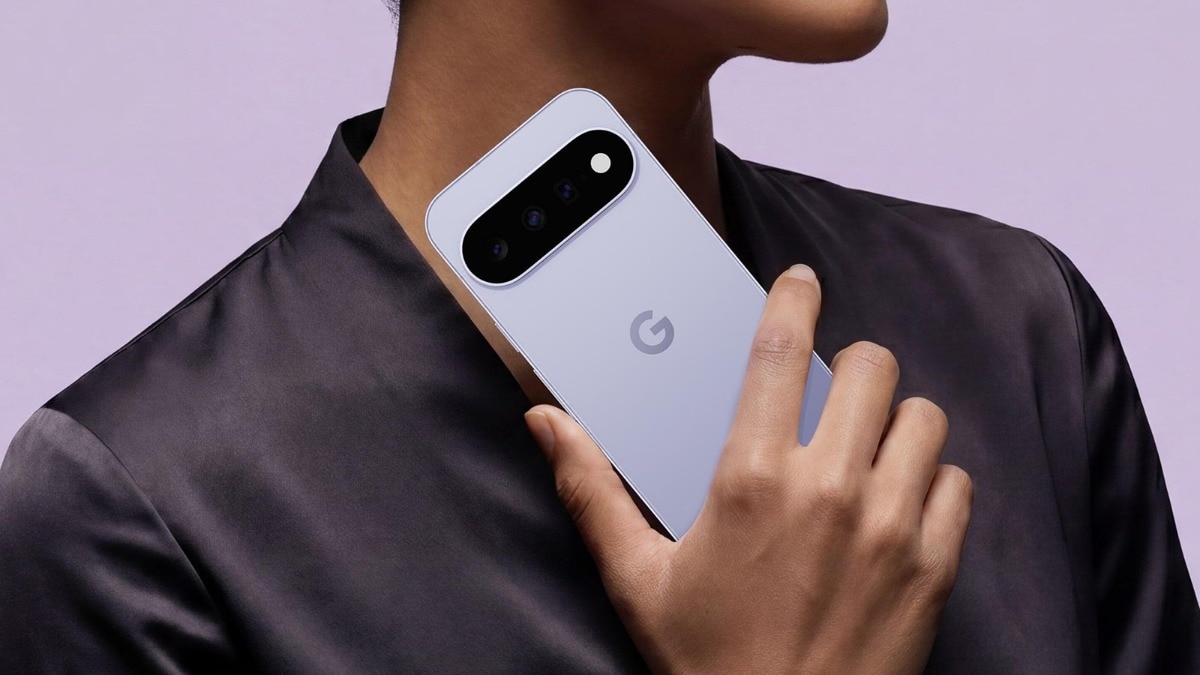
Pixel 11 is a Made by Google phone, but who is it for and who is buying it?
Full Article
Original Source
Read the full article at Indiatoday →KhanList aggregates and links to publicly available news content. We do not host full articles from third-party sources. Always verify important information with original sources.