
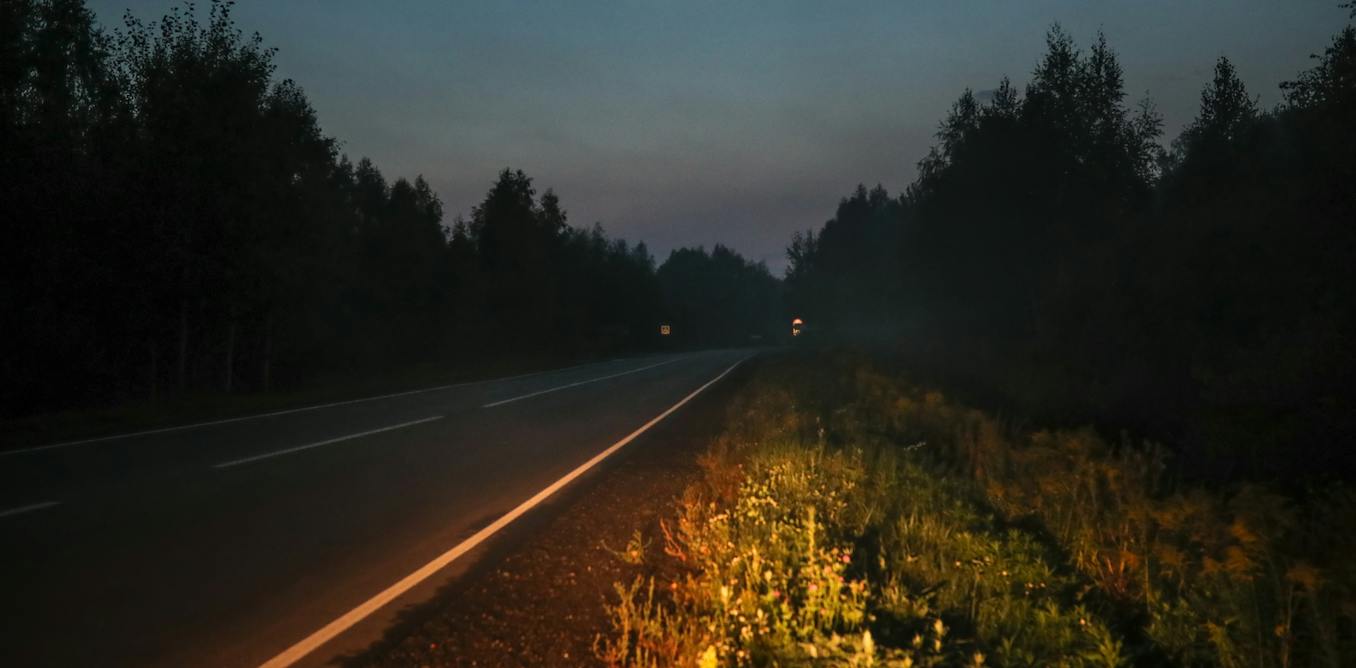
Every semester I teach a class called History of Monsters, Aliens and the Supernatural at Penn State. It fills up quickly, because students, like many people, are fascinated by the supernatural. During the course, students occasionally bring up the western Pennsylvania tradition of the “Green Man.” As a folklorist, I study the traditions people practice and share in everyday life, from jokes and family recipes to birthday customs and ghost stories. The story of the Green Man shows how legends and history can tangle – and how each person who retells a legend helps remake it. What makes a legend a legend In everyday speech, “legend” often means a story that isn’t true. For folklorists, a legend is a story about something that may have happened in the real world, told as if it could be true but always open to debate. As Linda Dégh, a prominent Hungarian American folklorist, once put it, “The legend is a legend once it entertains debate about belief. … The sounding of contrary opinions is what makes a legend a legend.” This is in contrast to myths, for example, which are sacred creation or explanatory stories set before or outside of normal time. Legends spread through talk and through the people who keep retelling them. franckreporter/iStock collection via Getty Images Plus Importantly, myths and legends are not simply false narratives. They contain different kinds of truth, which depend on the perspectives of the people sharing them. Folklorists don’t study such stories in order to disprove them. Our goal is to understand why these stories matter to people. Legends are distinct from history because they do not center on established, generally agreed-upon facts about past events. They are more like contested historical narratives that may at times align with consensus history and at other times subvert it. The real man behind the Green Man According to news coverage, the man at the center of this legend, Raymond Robinson, was 8 years old in 1919 when he climbed a bridge near Beaver Falls, in Beaver County, Pennsylvania, to reach a bird’s nest and touched a live electrical line. He survived, but lost his eyes, nose and part of an arm. Robinson lived with his family in nearby Koppel. To avoid attention, as the legend goes, he took to walking along a quiet stretch of Route 351 at night. Some called him “Charlie No-Face,” but “Green Man” seems to have caught on among people from farther away. A number of people claimed to have met and spoken with him directly during his nighttime walks. Some who met him were kind to him, news outlets reported; others, less so. Robinson died in 1985. Pittsburgh’s most uncontested urban legend is that of the ‘Green Man.’ A reporter from the Post-Gazette suggests that the truly frightening part of the story is how Robinson became an object of fear and ridicule. In a KDKA report, Robinson’s great-niece describes him as an exceptionally kind person. And PennLive reporter Claudia Dimuro writes, “But maybe in between seeking these thrills from supposed ghosts lurking in abandoned tunnels, we should stop and wonder whether they were once someone real.” The “thrills” Dimuro refers to stem from a practice folklorists call legend-tripping – that is, deliberately visiting a location associated with a legend, often in order to experience some part of the legend for oneself. These articles note that many people deliberately set out to visit Robinson while he lived and went on his nighttime walks. While it might be tempting to assume that an encounter with a real human being would end the supernatural legend of the Green Man, these real-life encounters may have actually bolstered the legend. Legend, truth, fiction, fact Popular media coverage of folklore often tries to debunk it. The Discovery Channel show “MythBusters” was built around testing popular beliefs, such as whether a penny dropped from the Empire State Building could kill someone. Many news articles about the Green Man also engage in debunking by highlighting the real life of the man behind the legend. That urge makes sense, especially when false claims can hurt real people. Casting Robinson as a monster dehumanizes a man who lived with severe disabilities, and his family still lives with that legacy. Legends occupy an unstable place between fiction and reality. Robinson was real, and so were his nighttime walks. But the Green Man of legend – a glowing, threatening figure with supernatural powers who supposedly lived in a tunnel – was not. The so-called Green Man Tunnel in South Park Township seems to have had nothing to do with Robinson’s actual life. Still, people “really” met the “real” Green Man, and those meetings, for better or for worse, contributed to the legend. Instead of laying it to rest, those encounters likely helped preserve it. Legend-tripping, or visiting places tied to a legend, lets people take part in the story themselves. picture alliance collection via Getty Images I doubt that debunking the supernatural or monstrous parts of the Green Man legend will make it fade away. Still, I’m sympathetic to the desire to honor the real man at the heart of the story, and to push back on the dehumanization and ableism that drew such interest to his story in the first place. And the link between the monstrous legend and Robinson’s real life is itself a historical matter. Robinson was a real person who really became the central figure of a legend. To fully tell his history means acknowledging that legend as part of it. Legends are, after all, talk about a supposed past. As a form of talk, legends persist as long as we continue talking about them. But legends are by definition debatable, their claims are never solid, and they’re never really on stable ground. If, in the future, students bring up the Green Man in my Monsters class, I’ll acknowledge that, yes, this is an example of a legend. It features a man made into a kind of monster. I’ll note that legends, as talk about things that may have happened and people who may have been, are never neutral. But I’ll also suggest that, because legends are debatable, unstable and contested, there’s always room for us to challenge and correct problematic claims when we hear them, and to bring humanity to stories unjustly focused on monstrosity. We can, if we choose to, tell a different version of the story. Read more of our stories about Pittsburgh and Pennsylvania.
Pittsburgh’s ‘Green Man’ was a real person – why the legend outlives the facts
Full Article
Original Source
Read the full article at Theconversation →KhanList aggregates and links to publicly available news content. We do not host full articles from third-party sources. Always verify important information with original sources.