
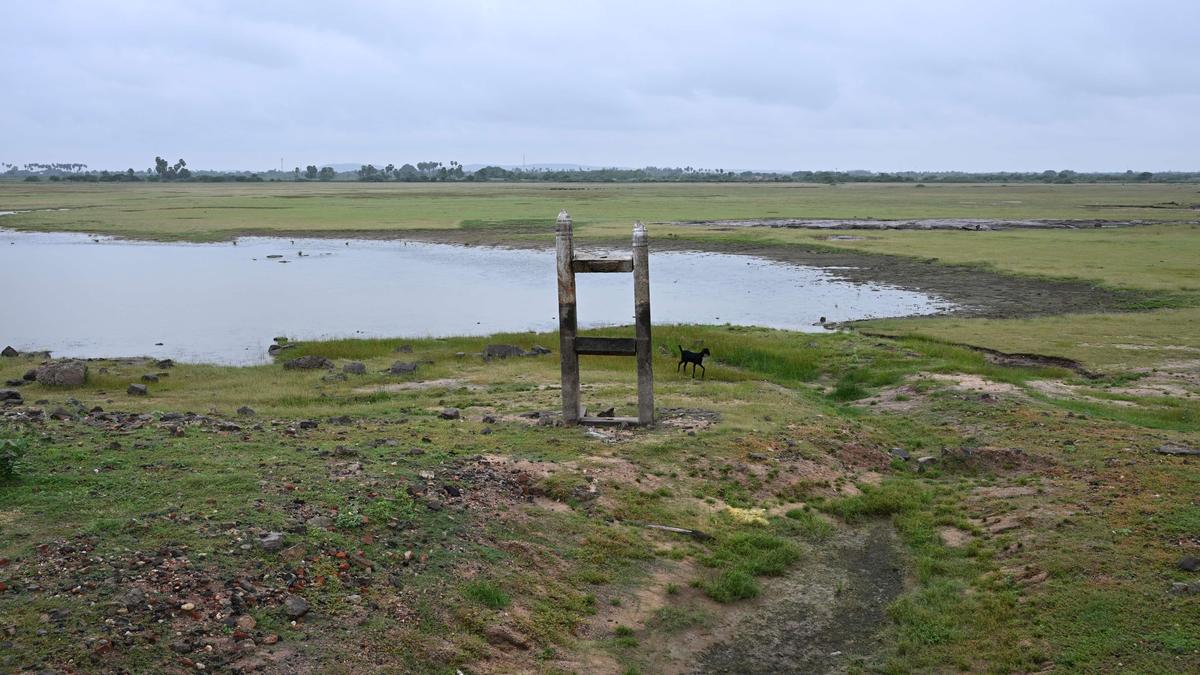
With the Northeast monsoon playing truant this year and storage level in dams and irrigation tanks remaining low, the farmers of Tenkasi, Tirunelveli and Thoothukudi districts, who mostly suffered heavy crop loss last year, are not prepared to take the risk again this year.The monsoon has been arriving in Tamil Nadu only in the third or fourth week of October for the past several years. Consequently, Manimuthar dam, the largest dam in Tirunelveli district with the maximum capacity of 5,511 million cubic feet now has 1,659 mcft (30.11%), and Papanasam dam, the second largest reservoir with the capacity of 5,500 mcft has 1,925 mcft (35%) as on Wednesday (November 25, 2025).Since both the dams have a huge silt deposit, the estimated quantity of water will be still less.Even though the Southwest monsoon let down Tirunelveli district for the fourth successive year, it was expected that the Super ElNino would bring heavy downpour in the catchment areas before mid-November. However, the expectation has been belied now, it seems, as there is no sign of the Western Ghats getting drenched in near future.As there is no rain along the Western Ghats and in the plains, storage level in the dams is low while the systemised and non-systemised irrigation tanks are dry. Of the 1,098 irrigation tanks – 727 systemised and 371 non-systemised waterbodies – 928 tanks are dry now while 120 tanks have water sufficient for only 30 days of irrigation.Hence, the farmers are sceptical about starting ‘pisanam’ paddy cultivation, which would be taken up on 40,000 acres in Tirunelveli district.In Tenkasi district, which largely raises paddy and vegetables during this season, the farmers are keeping its fingers crossed as more than 900 of the 1,420 irrigation tanks are dry. And, the storage is poor in Gadana, Ramanadhi, Karuppanadhi, Gundar and Adavinainarkovil dams.While paddy growers have almost given up their hopes of raising the 120-day crop this year as it is almost very late, vegetable growers are also not sure of their prospects.“Arrival of vegetable has shrunk considerably this year due to poor production hit by water shortage. If the situation continues, the influx of vegetables from villages around Alangulam, Surandai, Pavoorchathram, Kadayam, Tenkasi, Kadayanallur, Puliyangudi and Vasudevanallur for upcoming Christmas, New Year and Pongal will be poor,” says Kutralingam, a vegetable trader of Pavoorchathram.In Thoothukudi district, almost all the 408 irrigation tanks under the control of village panchayats are dry and only a handful of tanks in Vaippar basin (29 tanks) and Tamirbharani basin (107 tanks) have water sufficient for 30 days.The northwestern and northern parts of the district, from Kayathar to Vilathikulam, which produces maize, grams, oilseeds, millets and chilli, are also desperately waiting for showers as they do not have any credible irrigation system.While most of the agriculturists of Viaathikulam and Pudur taluks, who have ploughed their fields, are waiting for the first shower, Kovilpatti and Kayathar areas received some rainfall for two days in the last week of October.Farmers cultivating paddy or plantain with the Tamirabharani water being released in the canals are also not prepared to take the risk this year as there is no sign of release of water from Papanasam and Manimuthar dams.“Most of the irrigation tanks in this region have at least 50% rainwater during this period every year and we can start planting of paddy or banana. And the water usually released from the Tamirabharani makes our task easier every year before harvest. However, we are reeling under one of the worst Northeast monsoons this year with all irrigation tanks remaining dry. We are unable to decide if we should start farming or not,” says S. Ramesh of Pandaravilai.
‘Pisanam’ paddy season, vegetable production badly affected
Full Article
Original Source
Read the full article at Thehindu →KhanList aggregates and links to publicly available news content. We do not host full articles from third-party sources. Always verify important information with original sources.