
Most runners are familiar with the big muscles involved in running, such as the quads, hamstrings, and glutes. But there are lesser-known—yet still important—players that can influence running performance. One example: the quadratus lumborum, or QL for short.A deep trunk muscle, the QL attaches to the lower spine and the back side of the pelvis, Nicole Haas, PT, DPT, a physical therapist and founder of Boulder Physiolab in Colorado, tells Runner’s World. It serves a few different functions in daily life, such as helping you arch your back, bend to the side, and rotate your upper body, Haas explains.When you run, the QL plays more of a stabilizing role, working to control your pelvis and trunk while you stride, says Spencer Agnew, PT, DPT, a physical therapist at Sword Health and run coach with Wisconsin-based Ascent Endurance Group. The QL also assists with breathing, specifically when you inhale, Agnew adds.If this muscle is tight or irritated, you’ll likely feel pain in your back or sacroiliac joints, which link the pelvis and lower spine, Agnew says. To help you avoid these aches, we asked the PTs to explain what can cause an angry QL and how to relieve it.What Causes QL Pain?There are several reasons your QL might be yelling at you. A common one? Your hip flexors are tight. In particular, when the psoas (a big, rope-like hip flexor muscle that runs from your lower back to the front of your hip) is shortened, it can pull your pelvis into an anterior tilt, meaning your pelvis is tipped forward, arching your lower back. In many cases, this yanks on your QL as well, because the psoas and QL both insert into the same group of vertebrae in your lower back, Agnew explains.Another culprit is weak glutes. When your glutes aren’t strong enough to help you maintain good running mechanics, your knee can collapse inward as you land and your opposite-side hip can dip down, Haas explains. This, in turn, can cause your trunk to side bend and rotate, thus placing more strain on your QL over time. Running downhill can exacerbate the problem, Haas adds, because that can cause your lower back to arch and place further stress on your QL.Yet another cause of an irritated QL is upper-back stiffness. Restrictions in the upper part of the spine can shift more workload onto the QL, Haas explains. So can issues in your shoulders, hips, and mid-back. If these areas aren’t moving like they should due to pain or injury, your QL may receive added stress, Haas says.Keep in mind that in some cases, your QL may hurt because it’s taking on a bunch of extra stress it’s not meant to, but the muscle itself probably isn’t tight. “It’s more like your QL is just irritated because everything has been collapsing around it and loading it,” Haas says. “It’s overworked and underappreciated.”How Does a Tight QL Affect Running?A tight-feeling QL is worth addressing because it can lead to a few not-so-great issues if left unchecked. A big one? Compromised running mechanics.A tight QL, as mentioned, can shorten your hip flexors and pull your pelvis into an anterior tilt, which will reduce your knee lift as you stride, Agnew says. As a result, “you’re not going to be able to generate as much force moving forward, and you’ll have more of an arched-back position when you run,” he explains. In many cases, this can deliver a double whammy of reduced performance and increased back pain, he says.On top of that, a tight QL can also hinder your breathing. As mentioned above, one of the QL’s jobs is to help you inhale, so when this muscle is tight, you may not be able to breathe as deeply or easily, Agnew says.Your 3-Step Routine to Relieve QL PainPlagued by what you think may be an irritated QL? Try Agnew’s three-step at-home series to help reduce your discomfort.Perform this sequence as often as every day if you’re in significant discomfort that’s limiting your ability to run. In the case of minor pain, incorporate this series two to three times per week. On the days you run, perform the myofascial release, pelvic tilts, and hip hikes before you lace up, then tackle the other components afterward.Step 1: Myofascial ReleaseThis can help turn down the pain response in a barking QL by desensitizing soft tissue, Agnew explains.Trevor RaabStep 2: Pelvic and QL ExercisesThe pelvic tilts help you learn how to coordinate and control pelvic motion so you can maintain proper mechanics while running, and the hip hikes help activate your QL. The kettlebell side bend increases blood flow to the muscle, which can aid in healing. Finally, the suitcase carry increases strength, stability, and engagement of the muscle, which can ensure it functions properly during a run.Trevor RaabTrevor RaabTrevor RaabTrevor RaabStep 3: QL StretchingLengthen your QL—as well as tight hip flexors—with this two-for-one half-kneeling lunge stretch.Trevor RaabMore Ways to Stretch Your QLDo these moves daily or several times per day to mobilize your lower back. Perform them before or after a run. Important caveat: If your QL hurts more after stretching—or if your QL pain returns soon after stretching—then stretches are likely not the solution and you should stop doing them, Haas explains.Trevor RaabTrevor RaabTrevor RaabGlute and Core Exercises to Ease QL PainTo start, do one set of these moves daily to help your body learn the neuromuscular patterns. (The caveat: If you feel sore, then skip a day.) After about six weeks, do these moves two to three times per week as part of your regular strength-training routine.Standing ClamshellThis exercise targets the glutes and works on pelvic control in a movement pattern that’s similar to running. Think of it as an opportunity to train proper glute use in your running form, which will help unload any strain on your QL caused by weak glutes.Trevor RaabBanded Bird DogThis exercise can improve core stability and strengthen the glutes, resulting in improved running mechanics and less stress on your QL. You’ll need a long, looped resistance band.Trevor RaabWhen to See Your Physical TherapistSometimes, despite your best at-home efforts to treat an irritated QL, it’s still best to get checked out by a physical therapist. Haas recommends booking a PT appointment if you try the above stretches and strength moves and don’t see improvements after about two weeks.Agnew suggests getting evaluated by a PT if you’re in so much pain that it’s inhibiting your running. In this case, getting seen sooner can help mitigate pain before further issues arise, Agnew explains.Jenny is a Boulder, Colorado-based health and fitness journalist. She’s been freelancing for Runner’s World since 2015 and especially loves to write human interest profiles, in-depth service pieces and stories that explore the intersection of exercise and mental health. Her work has also been published by SELF, Men’s Journal, and Condé Nast Traveler, among other outlets. When she’s not running or writing, Jenny enjoys coaching youth swimming, rereading Harry Potter, and buying too many houseplants.
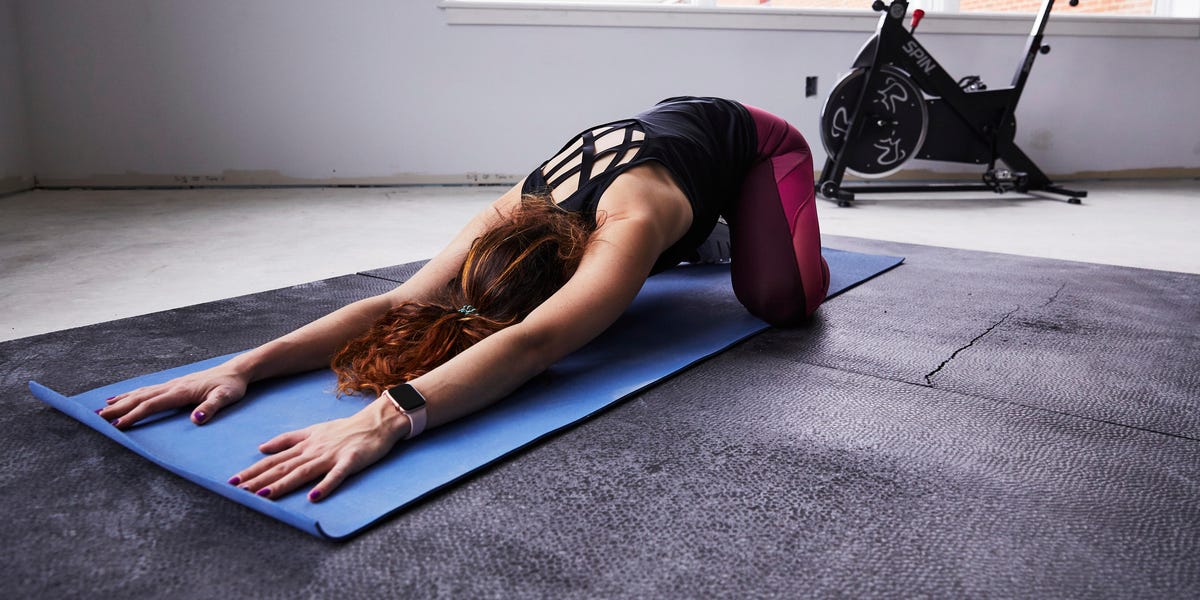
Physical Therapists Share the Most Effective QL Stretches and Exercises for Runners With Lower Back and Hip Pain
Full Article
Original Source
Read the full article at Runnersworld →KhanList aggregates and links to publicly available news content. We do not host full articles from third-party sources. Always verify important information with original sources.