
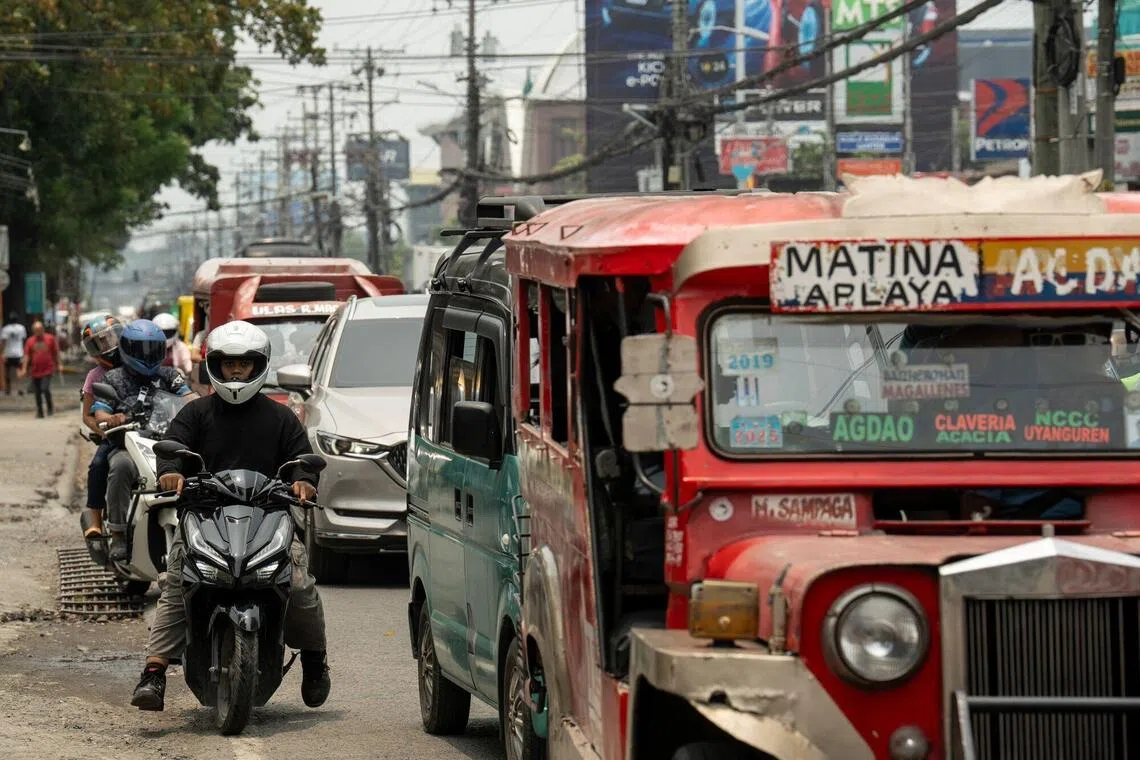
MANILA – Philippine bus operators pressed President Ferdinand Marcos on Sept 22 to let them raise ticket prices, arguing that soaring fuel costs from the Middle East war threaten to make operations “impossible”.The cost of diesel, which powers most of the Philippines’ buses, has effectively doubled since the first US-Israeli strikes on Iran in February triggered the conflict.The Philippine transport board approved a fare hike in March, only for Marcos to quash the move a day later.Ticket prices have remained static ever since.On Sept 22, the per-litre price of diesel jumped another 8.82 pesos (18 Singapore cents).“This is a notice that operations may soon become impossible,” a group of companies representing bus lines across the country of 116 million said in a statement.“Fuel prices have reached levels that our operations can no longer afford,” it read.“We are not asking the government for ayuda,” the statement added, using a Filipino term meaning handout. “We are asking for a fair and sustainable fare that reflects the real cost of operating public transportation.”Millions of Filipinos use buses to get to and from work each day, with prices for a ride ranging from 13 to 15 pesos for the first 5km, then jumping about three pesos for each subsequent kilometre.Contacted by reporters, the transportation department pointed to a statement on Sept 19 saying it “hoped to arrive at a positive decision” on a rate hike in the coming days.The import-dependent Philippines declared a national energy emergency in March and has been forced to cast an ever-wider net for fuel, including purchases of oil from Russia.Unlike its neighbours Indonesia, Malaysia and Thailand, fuel prices in the Philippines are unregulated, leaving local transport firms to deal with market fluctuations.The Marcos administration gave bus operators a one-off subsidy in March of 10,000 pesos for each of their vehicles.Separate handouts have been given to transport workers, including drivers of taxis and the country’s ubiquitous jeepneys.On Sept 22, the energy department said the country had a 57-day reserve of diesel and enough petrol for 56 days. AFP
Philippine bus lines press Marcos for fare hike as fuel prices soar
Full Article
Original Source
Read the full article at Straitstimes →KhanList aggregates and links to publicly available news content. We do not host full articles from third-party sources. Always verify important information with original sources.