
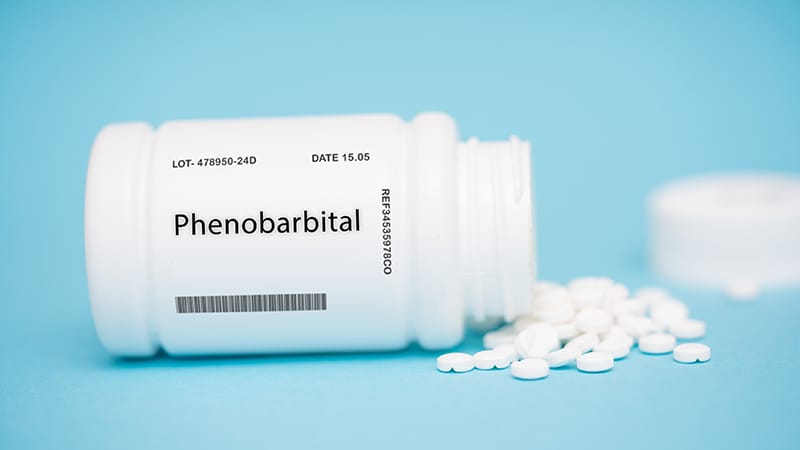
Phenobarbital may be as effective and safe as longer-acting benzodiazepines for managing alcohol withdrawal syndrome, potentially expanding the range of viable treatment options available to clinicians, according to evidence from a large observational study.The analysis, published in JAMA Internal Medicine, showed no significant differences in outcomes between phenobarbital and diazepam when administered to hospitalized patients for alcohol withdrawal syndrome.The findings should give clinicians greater confidence that either treatment approach is appropriate, said Nicholas Bosch, MD, MSc, assistant professor of medicine at Boston University Chobanian & Avedisian School of Medicine in Boston, who helped lead the study.“Our results help both sides of that coin; it gives the hospitals that have already decided to use phenobarbital more confidence,” Bosch said. “But the hospitals that haven’t adopted phenobarbital can be rest assured they don’t have to jump on the bandwagon of using phenobarbital if they feel they are doing well with diazepam.”Diazepam has been the standard for the treatment of alcohol withdrawal syndrome since the 1960s. Its effects begin quickly, and the drug leaves the body slowly, providing a self-tapering effect.Phenobarbital, a barbiturate, has been shown to have similar properties, yet some evidence suggests the medication has a more predictable therapeutic response than diazepam. Such factors may help to explain why the use of phenobarbital for alcohol withdrawal syndrome has increased by more than 200% from 2016 to 2020.Bosch said the upswing in phenobarbital use has been partly due to clinician dissatisfaction with some of the effects associated with shorter-acting benzodiazepines, including episodes of breakthrough symptoms and sleepiness.To compare the drugs, Bosch and colleagues tracked more than 24,000 patients (average age, 45 years) across 754 acute care hospitals between 2022 and 2024 with a primary diagnosis of alcohol withdrawal syndrome who received either phenobarbital or diazepam upon being admitted.The study found no meaningful difference in length of stay between the two groups after adjustment, with patients receiving phenobarbital hospitalized for a mean of 4.1 days compared with 4.3 days for patients treated with diazepam.Roughly two thirds of patients in both groups also received midazolam, lorazepam, or chlordiazepoxide on the day of admission. Among those patients, the average length of hospital stay was the same for both groups. For patients who did not receive these additional drugs, the analysis showed the average hospital stay was marginally shorter after adjustment between groups, or half a day shorter for the phenobarbital group.Researchers found a similar proportion of patients in the phenobarbital and diazepam groups required a breathing machine, at 3.1% and 2.7%, respectively. The study also found no significant differences between groups in the occurrence of seizures or diagnoses of alcohol withdrawal-induced delirium.Further study will be needed to determine which patients benefit most from each approach and how best to incorporate phenobarbital into treatment protocols, said Tracy Hendershot, MD, DC, family medicine physician based in Parkersburg, West Virginia, and a member of the board of directors for the American Academy of Family Physicians.“The numbers are good, but because it doesn’t follow individual cases, you may lose some nuance as you try to apply it,” Hendershot said.Bosch acknowledged the study did not examine whether treatment with phenobarbital resulted in different experiences of withdrawal compared with treatment with diazepam, a topic he said warrants further investigation.“A lot of work still needs to be done to understand what implications for the medications are for the patient and how they feel when they receive the medication,” Bosch said.Physicians in an accompanying editorial to the study raised other important questions, including whether therapeutic effects may differ based on the severity of withdrawal and best practices and dosing for phenobarbital.“A future randomized trial is needed to advance the field beyond simply asking whether phenobarbital and benzodiazepines produce similar outcomes and to help define the optimal treatment strategy, including how, in whom, and in what setting phenobarbital should be used,” wrote lead author Timothy M. Dempsey, MD, MPH, assistant professor of medicine in the Division of Pulmonary, Allergy, Critical Care, and Sleep Medicine at the University of Pittsburgh School of Medicine in Pennsylvania.The study was funded by the Boston University Chobanian & Avedisian School of Medicine Department of Medicine Career Investment Award. The study authors reported having no relevant financial interests.Steven Ross Johnson is a journalist who covers public health and healthcare delivery issues.
Phenobarbital Matches Diazepam for Alcohol Withdrawal
Full Article
Original Source
Read the full article at Medscape →KhanList aggregates and links to publicly available news content. We do not host full articles from third-party sources. Always verify important information with original sources.