
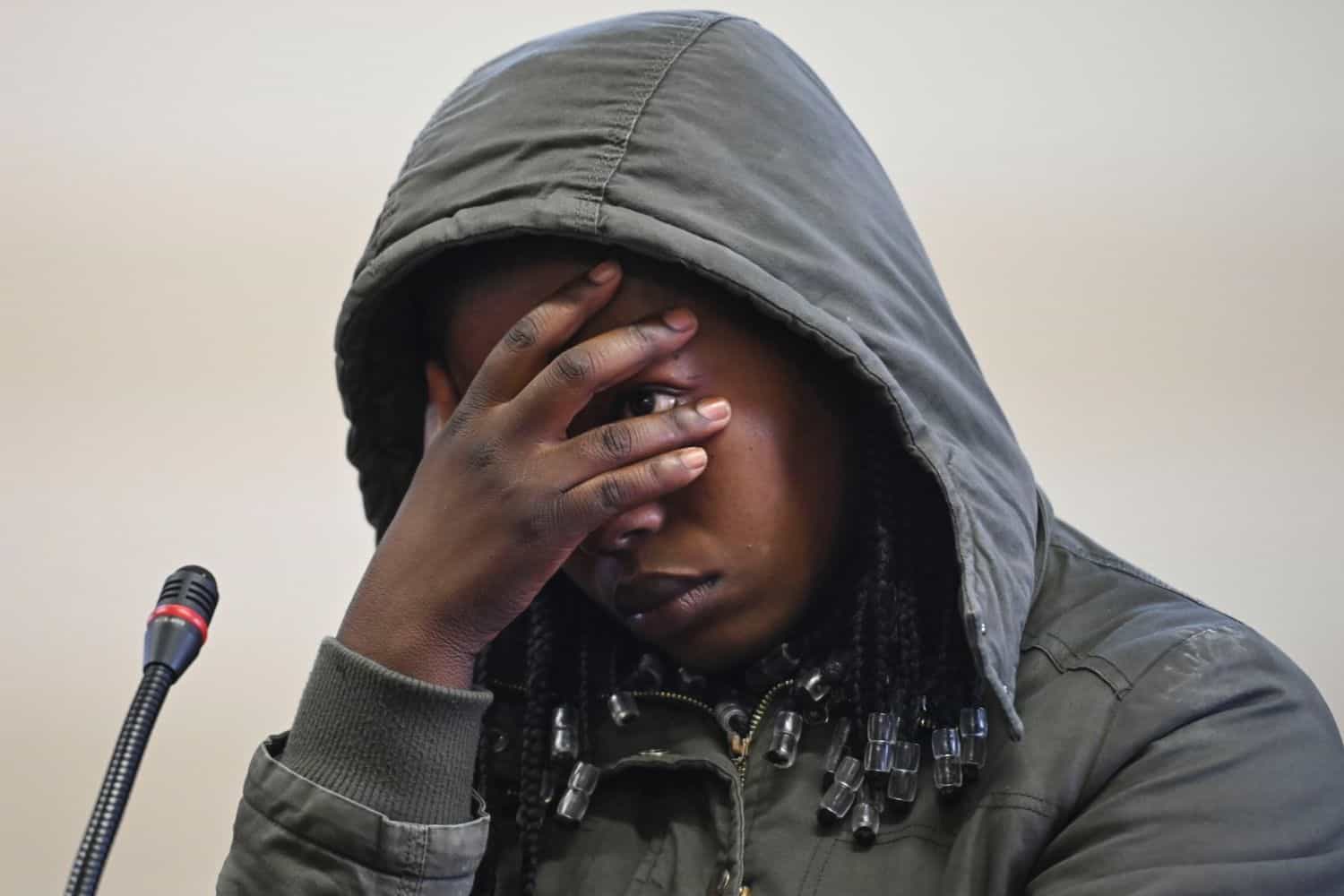
A correctional officer recommended that Froliana Joseph be allowed to serve a non-custodial sentence. A former employee at President Cyril Ramaphosa’s Phala Phala farm could avoid prison time after a correctional services official recommended that she be placed under correctional supervision for her involvement in the theft of foreign currency from the property. This emerged on Thursday, 26 November 2026, as the Modimolle Regional Court continued hearing evidence and arguments relating to sentencing. Froliana Joseph, a former temporary cleaner at the farm, was convicted alongside fellow Namibian national Imanuwela David on 2 November by Magistrate Peter Manthata. David was found guilty of conspiracy to commit housebreaking with intent to steal, housebreaking with intent to steal and theft, as well as money laundering. Joseph, who has been out on R5 000 bail since November 2023, was convicted of conspiracy to commit housebreaking with intent to steal. Both were acquitted of the charge relating to housebreaking with intent to steal at Stokkiedraai farm. Joseph’s brother, Ndilinasho Joseph, who was also charged in the matter, was acquitted on all counts. Sentencing proceedings in Phala Phala farm theft trial Joseph’s sentencing proceedings were previously postponed to allow her to obtain an assessment report from the Department of Correctional Services. Her legal team, consisting of attorney Ramoloko Mike Mokgobu and Advocate Relleng Masipa, confirmed that the report had been finalised and received ahead of Thursday’s hearing. Correctional reintegration officer Phillip Maboyane testified, under questioning by Mokgobu, about the findings and recommendations contained in the document. Maboyane told the court that his duties include monitoring parolees and assessing accused persons to determine whether they are suitable for correctional supervision. He recommended that Joseph be allowed to serve her sentence outside prison, where she could participate in rehabilitation programmes while remaining under supervision. Maboyane explained the recommendation took into consideration that Joseph was a first-time offender and had a verified residential address in Mpumalanga, where she stays with her two minor children, brother and two parents. “The place where she is staying can be monitored,” the correctional officer said. He also told the court that keeping Joseph out of prison would save taxpayers money, citing the costs associated with incarcerating offenders. “It will be saving the government and taxpayers’ money, because, according to the stats of the 2025-26 financial, it [costs] more than R168 000 per year on spend on one offender if incarcerated. “For one offender, the government spends R462 a day of which leads to R13 800 per month,” Maboyane testified. State highlights inconsistencies in assessment report During cross-examination, state prosecutor Nkhetheni Munyai questioned Maboyane about a discrepancy in the report concerning Joseph’s employment status. The report had indicated that Joseph risked losing her job if she was imprisoned, although the report also recorded that she was unemployed and survived on informal work. In his response, Maboyane clarified that Joseph earned an income through transporting people, adding that a prison sentence would affect her ability to provide for her family. “Even though there is no fixed salary, the money that she accumulates from transporting people from the village to town, if she is incarcerated, she will be losing the means of making money to support her family and her kids.” He further acknowledged that the offences Joseph had been convicted of were classified as high-risk by the Department of Correctional Services. The officer also explained the difference in the minimum periods an offender would have to serve before becoming eligible for consideration for parole. According to Maboyane, Joseph would have to serve at least one-sixth of her sentence before being considered for parole under correctional supervision, compared with half of the sentence if she received direct imprisonment. “It would not be automatic,” he stressed. Alleged mastermind pushes for a fine Attention also turned to David’s sentencing, with his lawyer, Koena Matlala, asking the court to consider a fine rather than a prison sentence. Matlala argued that David was a first-time offender in the current case, although he had a previous drunk-driving conviction. He further submitted that his client had not been convicted of violent crimes. “It is our plea that the court considers a fine sentence,” the lawyer told Manthatha. David took the witness stand on 13 November, telling the court that he could pay a R1 million fine and was able to raise R500 000. However, Matlala informed the court that David’s family had indicated that they were unable to afford the proposed amount. The lawyer also argued that the time David had already spent behind bars should be taken into consideration when determining an appropriate sentence after he was denied bail in December 2023. He was arrested a month prior to the bail refusal. Matlala further asked the court to order that any sentences imposed on David run concurrently. Meanwhile, Mokgobu requested additional time to prepare his closing arguments ahead of the sentencing judgment. The magistrate postponed the matter to 1 December 2026 for the continuation of proceedings. US dollars stolen at Phala Phala farm The criminal proceedings centred on the theft of $580 000, estimated to have been worth approximately R9.2 million at the time. The money was stolen from a couch at Ramaphosa’s Phala Phala game farm in Bela-Bela, Limpopo, on 9 February 2020. It was alleged that David went on a spending spree after the incident, acquiring expensive vehicles, properties and other luxury items. Joseph was suspected of providing information about the cash hidden in the couch. David and the Joseph siblings, who are originally from Namibia but hold South African citizenship, had earlier applied for a discharge in terms of section 174 of the Criminal Procedure Act (CPA), seeking to have the charges against them dismissed after the prosecution concluded presenting its evidence. However, their application was unsuccessful, with the court rejecting the bid in April this year.
Phala Phala farm theft: Ex-cleaner backed for sentence outside prison to save taxpayers R168k
Full Article
Original Source
Read the full article at Citizen →KhanList aggregates and links to publicly available news content. We do not host full articles from third-party sources. Always verify important information with original sources.