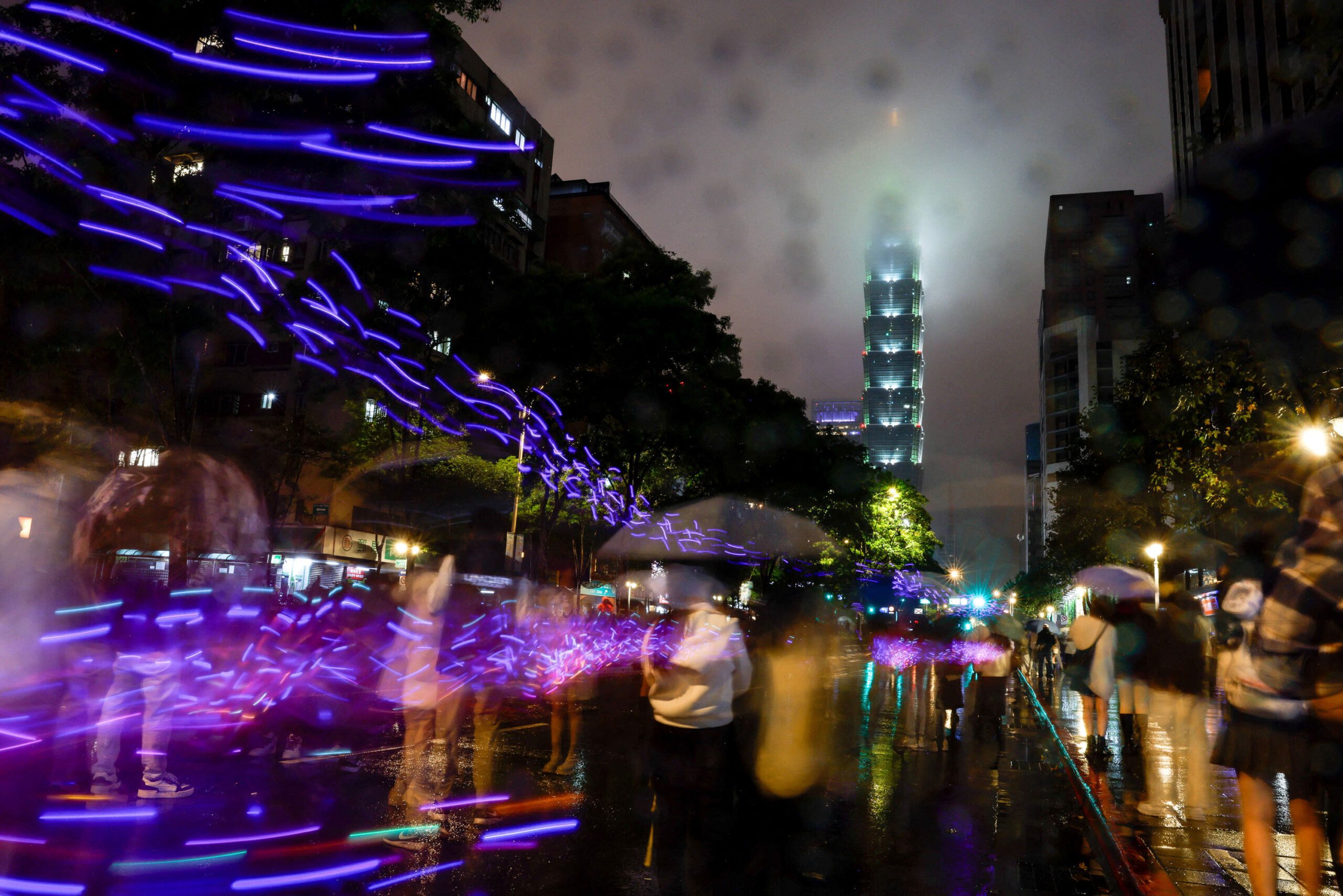
NEW YEAR. People gather to see fireworks at Taipei 101 to mark the New Year in Taipei, Taiwan, on December 31, 2025. PHOTO BY ANN WANG/REUTERS 'All we are concerned about is the defense of our territory and the maintenance of peace and stability in the region,' says Marcos President Ferdinand Marcos of the Philippines stated that the country has no intention of being involved in conflicts in the region and will not permit attacks on its territory amid tensions over Taiwan. Marcos emphasized the Philippines' focus on maintaining peace and stability, while acknowledging the potential risks of being drawn into a Taiwan conflict due to geographical proximity. The Philippines follows a One China Policy, recognizes the People's Republic of China, and maintains economic and cultural ties with Taiwan, while deepening defense relationships with allies like the US, Japan, and Australia. This is AI-generated. Read the article for full context. Report any errors. MANILA, Philippines — The Philippines has “no desire to be a belligerent nation in the region” and will not “allow an attack on anyone from the Philippines” in the event of a Taiwan invasion, President Ferdinand Marcos said Friday, August 14. “All we are concerned about is the defense of our territory and the maintenance of peace and stability in the region. That is all that the Philippines is concerned with… that is all that the Philippines will endorse and support,” said Marcos in a luncheon with foreign correspondents in Manila. “To allow an attack on anyone from the Philippines is contrary to that policy. So we will stick with that policy because all that we do is work hard to maintain peace and stability in the region,” he added. Marcos has said before that the Philippines would be dragged into a Taiwan scenario “kicking and screaming” because of its proximity to the independently-governed island. China wants “reunificiation” with democratic Taiwan, a scenario both observers and security officials in the region fear may involve force. Taiwan is less than an hour’s flight away from the northern most provinces of the Philippines, including Marcos’ home province of Ilocos. Manila follows a One China Policy in establishing diplomatic ties with China. This means that the Philippines recognizes the People’s Republic of China as the sole government of China, therefore cutting diplomatic ties with Taiwan or the Republic of China. Taiwan is a touchy issue for Beijing, which typically reacts strongly to statements made by Marcos or Philippine officials related to the island. The Philippines maintains economic and cultural ties with Taiwan, however, through the Manila Economic and Cultural Office in Taipei and the Taipei Economic and Cultural Office in Manila. Marcos dodged a question about what he thinks Philippine partners like its treaty-ally, the United States, should do to “help bolster deterrence in the region,” by saying it’s not for the Philippines to answer. “The Philippines [wants] to defend our territory to have the continuation of the… the exercise of our sovereign rights and the recognition of our sovereignty. What other countries choose to do is really not something that the Philippines has much influence on. So again, what the United States or for that matter, any other country chooses to do is, is really an internal matter to them and how they choose to handle their own foreign policy,” he said. Part of Manila’s strategy for securing its vast maritime spaces, including the West Philippine Sea to its west and waters close to Taiwan to the north, has been to deepen defense ties with old partners such as the US, Japan and Australia, and expand its defense and military relations with other countries, including France, New Zealand and Canada, to name a few. – Rappler.com How does this make you feel? Loading
PH will not allow attacks on Taiwan from its soil, says Marcos
Full Article
Original Source
Read the full article at Rappler →KhanList aggregates and links to publicly available news content. We do not host full articles from third-party sources. Always verify important information with original sources.