
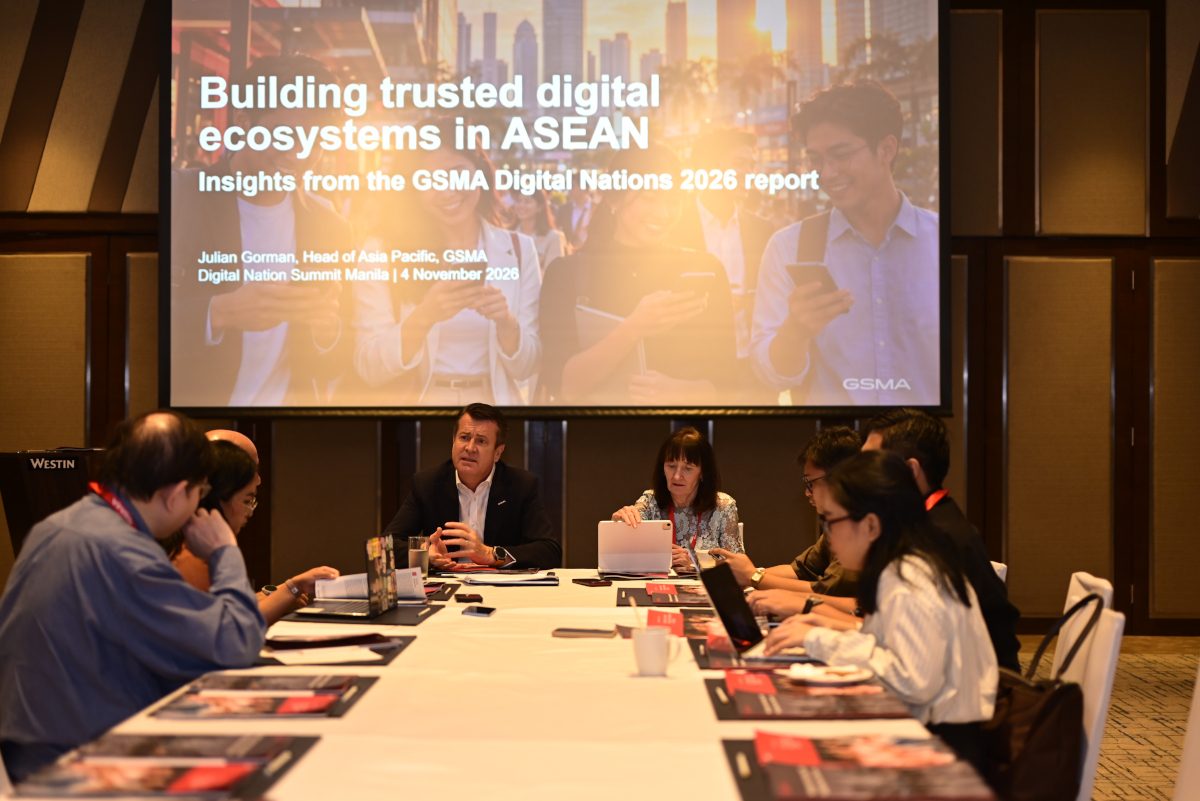
GSMA ROUNDTABLE. Members of the media attend a roundtable discussion with GSMA's Julian Gorman and Jeanette Whyte on November 4, 2026. GSMA GSMA Asia-Pacific head Julian Gorman says, 'The Philippines has real digital momentum, but sustaining that progress depends on trust' Filipinos are the most anxious consumers in the ASEAN region, with 76% expressing worry about scams and 78% changing their behavior due to scam awareness. The Philippines has the highest rate of reporting scams to digital platforms (49%) compared to only 16% reporting to the police, and investment and crypto scams affect 41% of victims. The GSMA is advocating for stronger regional cooperation among ASEAN countries to combat online scams and enhance consumer protection through data sharing and trust-building initiatives. This is AI-generated. Read the article for full context. Report any errors. MANILA, Philippines – Filipinos were seen as the ASEAN region’s most anxious consumers and the most willing to accept high amounts of friction — or points of slowdown such as security steps — to avoid being scammed. This was according to a report from the GSM Association (GSMA) released during a roundtable discussion on the sidelines of the GSMA Digital Nation Summit Manila last November 4. A GSMA survey in the ASEAN Consumer Scam Report for 2026 said that in the Philippines, while 10% of respondents were scammed within the last 12 months, 78% of respondents changed their behavior because of scams occurring. This change in behavior may not necessarily be due to a scam occurring to them, but because they realized these scams existed or were happening to people they knew. The Philippines is also second only to Vietnam in terms of changing behaviors — 79% for Vietnam and 78% for the Philippines — but 13% of Vietnam respondents were scammed in the past 12 months, according to the report. On the topic of consumer anxiety, 76% of Filipinos said they worried about being scammed. Filipinos are also willing to change behaviors for security with the Philippines also being the ASEAN country most willing to tolerate and accept friction — such as adding security to their accounts — when it comes to ensuring account security and scam prevention. The report also said Filipinos turn to social media a lot to tell others about scam behavior, which informs their actions against scams. “The Philippines is the market where victims take their cases to platforms rather than the police,” the report explained. Filipinos know about scams, thanks to a tendency to be the highest in the region (49%) to report to digital platforms while only 16% go to police against the regional average of 36% who run to cops. The report added, “Filipinos are also the most likely to act on distrust, with 24% switching providers and 62% avoiding contact or transactions.” Artificial intelligence was also seen as a major factor now in the proliferation of scams, with the report saying that “artificial intelligence is now the operating environment rather than an emerging threat.” While the report said the Philippines “has absorbed the awareness messaging,” Filipinos are not free from being scammed. Investment and crypto scams reach 41% of Filipino victims, which the report notes is “the highest of the six markets and well above the regional 29%.” Seeking stronger regional cooperation During the roundtable discussion with media, the GSMA said it was seeking stronger regional cooperation as ASEAN countries, alongside their related technology companies and telecommunications providers in the region, deal with online scams and bad actors. Julian Gorman, GSMA head of Asia-Pacific, and Jeanette Whyte, head of public policy and external affairs, discussed two ASEAN-specific reports: one on building trusted digital ecosystems in the ASEAN region as part of GSMA’s 2026 Digital Nations Index, and the ASEAN Consumer Scam Report for 2026. While the ASEAN Consumer Scam Report for 2026 focused on ASEAN members’ response to scams, the 2026 digital trust report on ASEAN countries focused on regional cross-border cooperation meant to foster trust — or “the confidence that digital systems, services and the organizations behind them will operate securely, reliably, transparently, and accountably while protecting users’ rights and interests.” Sharing data, building trust During the roundtable, Whyte said the Philippines is the first ASEAN country to join in a proof-of-concept data-exchange program with Globe Telecom, allowing information on scams and recognized bad actors to be shared with some other ASEAN countries. . Gorman, meanwhile, said, “The Philippines has real digital momentum, but sustaining that progress depends on trust. Scams move across communications channels, digital platforms and payment systems, so protecting consumers requires action across the digital ecosystem.” Gorman added the GSMA was also working with operators and digital platforms across ASEAN — some 39 companies across 17 Asia-Pacific countries — “to explore whether network signals can help identify scam activity earlier and enable action elsewhere in the digital ecosystem before consumers are harmed.” “The priority now is to turn these capabilities into practical solutions that better protect consumers,” he went on to say. The ASEAN Digital Nations Report for 2026 can be read here. Meanwhile, the ASEAN Consumer Scam Report for 2026 can be downloaded here. – Rappler.com How does this make you feel? Loading
PH seen as ASEAN’s most anxious consumers in battle vs scams – GSMA
Full Article
Original Source
Read the full article at Rappler →KhanList aggregates and links to publicly available news content. We do not host full articles from third-party sources. Always verify important information with original sources.