
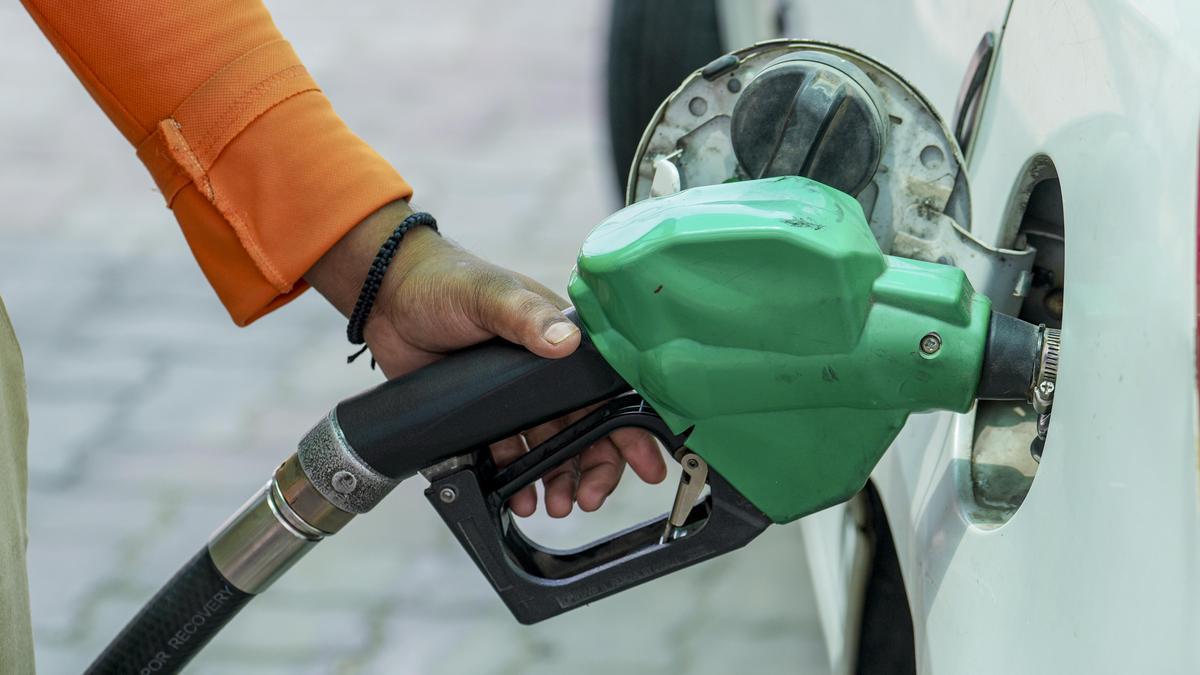
Image for the purpose of representation. | Photo Credit: File The government on Saturday (October 31, 2026) slashed the export duty on petrol to nil while hiking the levy on export of diesel and aviation turbine fuel (ATF) by ₹3 per litre and 50 paise per litre respectively for the next 15-day period.There was no change in the existing excise duty rates for petrol and diesel for domestic consumption.Diesel exports would now draw a levy of ₹11.5 for every litre against ₹8.5 per litre it drew in the previous fortnight.ATF would be subject to an export levy of ₹11 for every litre against ₹10.5 for every litre as mandated for the previous fortnight.The revised levy on diesel assumes significance as India spiked its exports of the liquid vehicular fuel amid a global supply crunch, particularly in Europe.According to data from real-time analytics provider Kpler, India’s diesel exports stood at 700 kilo barrels per day in October, the highest since September 2025.Sumit Ritolia, Manager for Modelling and Refining at Kpler, in a social media post on Friday (October 30, 2026) further observed, “India’s diesel exports are expected to ease to 500-550 kbd in Nov–Dec as seasonal domestic demand peaks before recovering to 550–600 kbd in Q1 2027. Higher maintenance in Q2-27 will constrain export, with new capacity contributing meaningfully only later in 2027.”The government has been conducting a fortnightly review of export levies since March 27, in the backdrop of the conflict in West Asia. These are done based on the average international benchmark prices of crude oil, petrol, diesel and ATF observed since the previous review.This is to ensure the domestic availability of retail fuels by disincentivising exports. Published - October 31, 2026 04:46 pm IST
Petrol export duty cut to nil, diesel levy raised by ₹3 a litre
Full Article
Original Source
Read the full article at Thehindu →KhanList aggregates and links to publicly available news content. We do not host full articles from third-party sources. Always verify important information with original sources.