
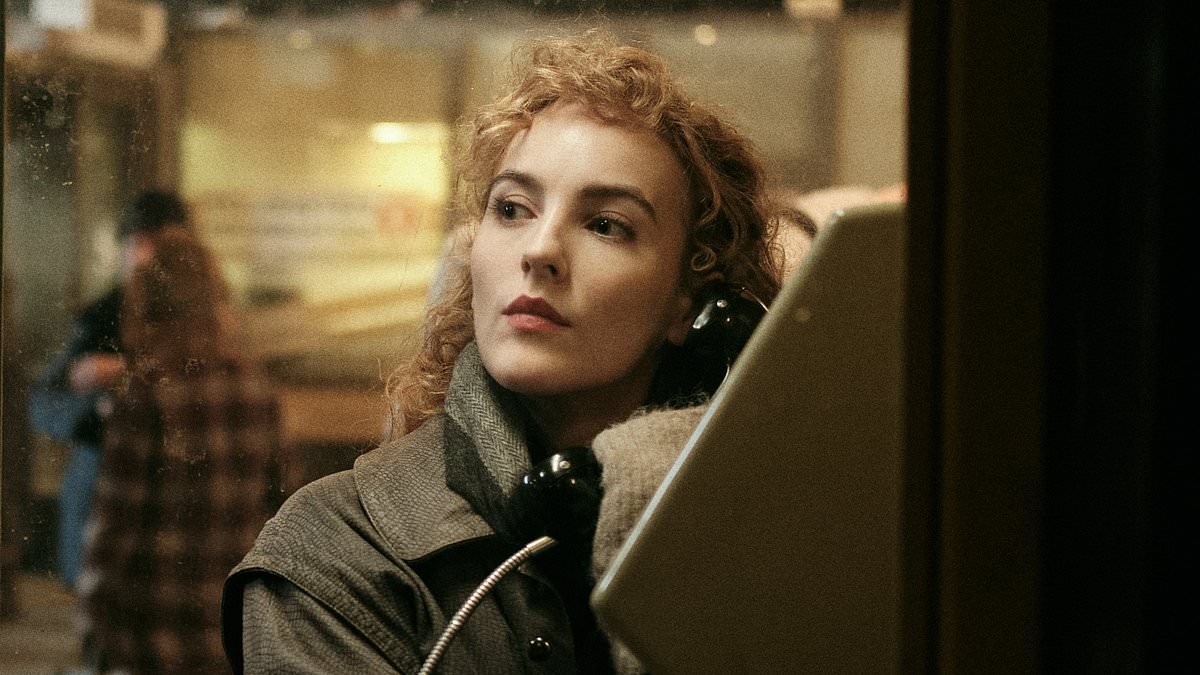
The new BBC spy drama Honey is supposedly set in 1980s East Berlin. A trainee MI6 spy, played by Ann Skelly, is smuggled into the East disguised in a dog costume and set to work seducing fat Easterners in the soft porn guise of a cocktail waitress.It is so cluelessly wrong about what the city was like that I feel a duty to pass on what I know.The Killing Eve prequel is too jokey, too trivial for the seriousness of what was happening there. It has no sense of the time and place.East Berlin was genuinely thrilling, full of dark glamour, spiced with fear and astonishment. I first saw it in the late 1970s at about this time of year. I did not go there tediously by air, which would have missed most of the point.I had finished a Brussels assignment for my newspaper and it was Friday. I had friends in Berlin. Why not go to visit them? I postponed my flight home then booked myself a return rail ticket, amazingly cheaply, to the alluringly named Zoo Station in Berlin.To follow this, you have to understand (as many don't) that West Berlin was an island, surrounded on all sides by what they used to call 'real, existing socialism'.But it was the only easy gateway to East Berlin. Thanks to unchangeable 1945 agreements, it was open to Western visitors without long and costly visa applications, unlike the rest of the Communist world. But only for a day.The train, with its rather good East German dining car (if you like beer and schnitzel, as I do) trundled slowly towards the dark frontier of the Soviet-ruled world. The Killing Eve prequel is too jokey, too trivial for the seriousness of what was happening there. It has no sense of the time and placeOnce past the border, the train was sealed against East German citizens, who could not ride in it (they gave Westerners a transit permit). The dusk gathered. Soon before we reached the outer edges of Berlin, the world outside was as poorly lit as the 1950s.Then we hit total darkness. Amid the lakes and forests, full of wild boar, which fringe Berlin, you could see nothing but blackness.After a few minutes of this alarming gloom, we shot into West Berlin and the light was instantly stronger than dazzling. In those days it was a besieged showcase, frantically signalling to its oppressed and poor neighbours that capitalism and freedom meant life, light, warmth and fun.But this was not what I had come to see. I wanted to go on into the dark forest, to pass through the looking glass.Berlin was the one place where you could take a day trip to another planet – the Red Planet – and, provided you did nothing foolish, return in the evening unscathed and very educated.What we loathed on our side was revered there. What we thought was normal was utterly strange to them.I crossed by taking the suburban railway, the S-Bahn, with Hitler-era carriages painted the colour of rhubarb and custard and with hard wooden seats.Between Zoo Station and the Friedrichstrasse crossing point you could see the notorious Wall from above, with its watchtowers – and the deserted Reichstag parliament building, like a huge tomb of democracy, right on the frontier.At this point, you could still have turned back. The sight of scruffy, frowning frontier guards with AK-47s, looking down on arriving passengers from galleries in the station roof, did make me wonder a bit.But I pressed on down the grey, uninviting steps and was stared at, scowled at, required to change real West German money for Communist cash and, whoosh, I was out in the street. And it was another world.Even the air smelled different – a pungent compound of brown coal and two-stroke exhaust fumes. It was also grittier and smokier, giving everything a yellowish look. Most windows were dirty. Unimportant buildings had not been painted since the Battle of Stalingrad ended in 1943.The people really did dress more drably and walk with less confidence. But it was only in my imagination that it felt colder. Berlin was the one place where you could take a day trip to another planet – the Red Planet – and, provided you did nothing foolish, return in the evening unscathed and very educatedIt was also grander and full of the past. There were spots where it did not take much effort to imagine a Nazi torchlight procession. There were also plenty of bullet holes and unrepaired war damage. One haunting square (where a large Hilton Hotel now stands) contained two derelict cathedrals with small trees growing from their crumbling towers.Berlin's great ceremonial avenue, the Unter den Linden, was lined with majestic, heavy architecture, including the enormous Soviet Embassy, said to contain its own torture chamber.Not far away the official national memorial to 'the victims of war and fascism' was guarded by helmeted soldiers who actually performed the goose-step as they stamped up and down in front of it. If you were really lucky, you might encounter a parade of the East German palace guard, named after Felix Dzerzhinsky, founder of the KGB and mass killer. Loyal Marxists to a man, and better armed and clothed than the rest of the army, they sang a special song in which they thanked Dzherzhinsky, carolling merrily: 'You have taught us how to hate the enemy!'Yet the regime also sought creepily to be modern, in a rather 1960s sort of way. There is a great, broad Eastern highway that leads to Warsaw and Moscow. Once it was called the Stalinallee and in 1953 Soviet tanks literally crushed protests by building workers against their miserable wages there.Later, after Communism began to thaw in 1956, it became the Karl-Marx-Allee. On it stand several ultra-modern concrete and glass buildings, trying to assert that Communism could be up to date and exciting.One was the Cafe Moskau, enjoyably bright and busy, which was decorated with a replica Sputnik satellite, perched on one of its corners. There I saw Soviet officers drinking vodka served from frozen bottles.Another was a stylish international cinema which, even in Communist days, showed Western films. Dirty Dancing, for some reason, was a huge favourite, along with Cabaret and One Flew Over the Cuckoo's Nest. I assume the commissars allowed these because they showed us Westerners in a bad light.But over all this lay the inescapable dinginess of the prison house. Most people could not get out. Eastern maps did not even show the streets in West Berlin. Some underground stations were locked and chained as trains from the West still rattled through them without stopping.You needed a special code to telephone West Berlin and, if you got through, it sounded as if the person at the other end was ten feet under water.Even thinking of escape was a crime. The secret police collected the socks of troublemakers, for the smell, so that they could be more easily tracked by bloodhounds if they made a break for it.Open displays of loyalty were required. Dissidents were jailed and their children stolen and given to loyal Communists to bring up.Every aspect of life was poorer and narrower than it need have been. No job or action could be undertaken without in some way serving a state which shot people who tried to leave it.Most of the time the repression was mingled in the dirty air itself but towards the end, in 1989, it showed itself in the street in great battalions of grey uniformed polizei, who once (I am proud to say) chased me and many others down the street, as they broke up a peaceful demonstration for freedom. I have seldom run so fast in my life.A few weeks later the whole thing came to an end. It was thrilling, it was hateful and it was bitter and I am eternally grateful that I saw it before it vanished.
PETER HITCHENS: I've been chased through East Berlin by the polizei, and believe me, the new Killing Eve prequel captures none of the fear spiced with dark glamour
Full Article
Original Source
Read the full article at Dailymail →KhanList aggregates and links to publicly available news content. We do not host full articles from third-party sources. Always verify important information with original sources.