
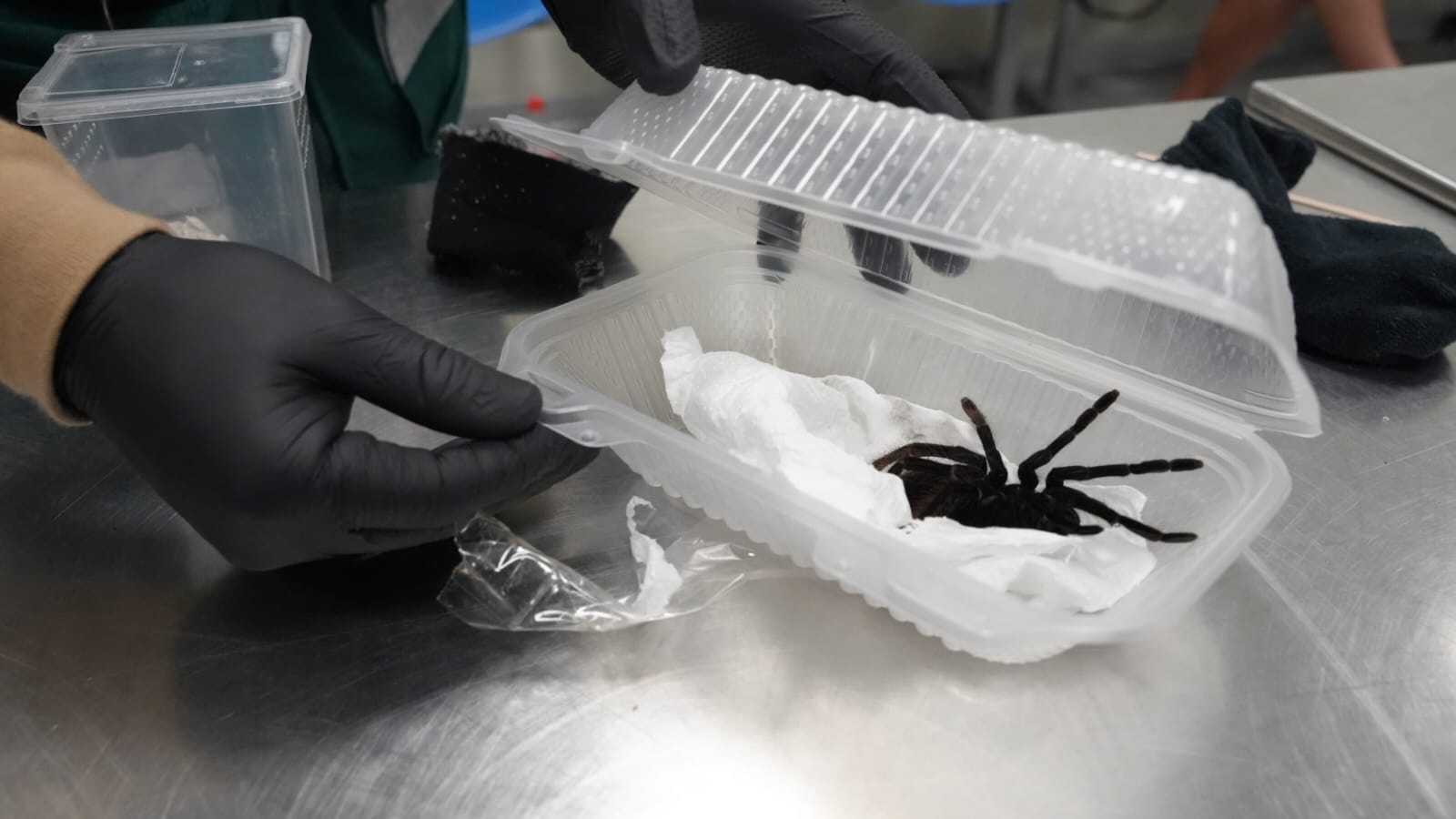
Peruvian customs agents and authorities from the National Forest and Wildlife Service (SERFOR) announced on Nov. 4, 2026, that they seized more than 3,000 tarantulas at the Jorge Chávez International Airport in Lima. The spiders were hidden inside socks put in luggage destined for Germany. The alleged traffickers, two German citizens and a Polish national, include a “renowned tarantula researcher” who was not publicly identified, authorities said in a press release. They were reportedly detained by the Peruvian National Police’s environmental crimes unit and face criminal proceedings. “Concealed in socks inside three suitcases, we found the tarantulas in different stages of life, from eggs and hatchlings to adults,” said Cora Suárez, a forest and wildlife control technician at SERFOR in a press release. “The traffickers made a meticulous selection to include different species, some of which have not yet been described by science.” These arachnids, some vividly colored, were collected from the wild allegedly to be sold as exotic pets to collectors and for research. They came from across Peru, including Junín, Loreto, Cajamarca, Cusco and La Libertad, authorities said. The seized spiders include members of the genus Pamphobeteus which includes some of the largest spiders in the world and are sold online for as much as 60 pounds ($80) each. Blue bird eaters (Thrixopelma lagunas), which can fetch 40 pounds ($53) online, were also confiscated along with several new-to-science spiders. Antikuna sp. was only described in 2021, and some species of Avicularia have not yet been scientifically described, according to Peruvian authorities. The Bolivian blue leg bird eater (Pamphobeteus antinous), which was also seized, is listed as vulnerable to extinction on the list of threatened wildlife in Peru and is protected nationally. However, none of the seized species are internationally protected under CITES, the global wildlife treaty. Authorities are still identifying the crawlies, and once that is complete, they will be housed in an “authorized breeding center,” the release said. The seizure highlights a growing global trend in smuggling invertebrates from the wild for the exotic pet trade — from rare and protected ants to invasive cockroaches and venomous scorpions. Current regulations in most countries, including the EU, allow for a smuggled species to be legally sold even if removing it from the wild broke national regulations in the native country — a loophole experts say must be closed. “This is just another example of smuggling a non-CITES protected species, but caught in violation of national law in the country of origin,” Sandra Altherr told Mongabay. Altherr is from the German NGO Pro Wildlife, which documents such cases of “stolen wildlife” to Europe violating national regulations. “This is a pattern that we have observed again and again: If they were not seized they could have been legally imported to the EU, due to a legal gap. This means a lower legal risk for the smugglers but with high profit.” Banner image: One of the seized tarantulas. Image courtesy of SERFOR. Credits Topics
Peruvian authorities seize more than 3,000 tarantulas from suspected European traffickers
Full Article
Original Source
Read the full article at News →KhanList aggregates and links to publicly available news content. We do not host full articles from third-party sources. Always verify important information with original sources.