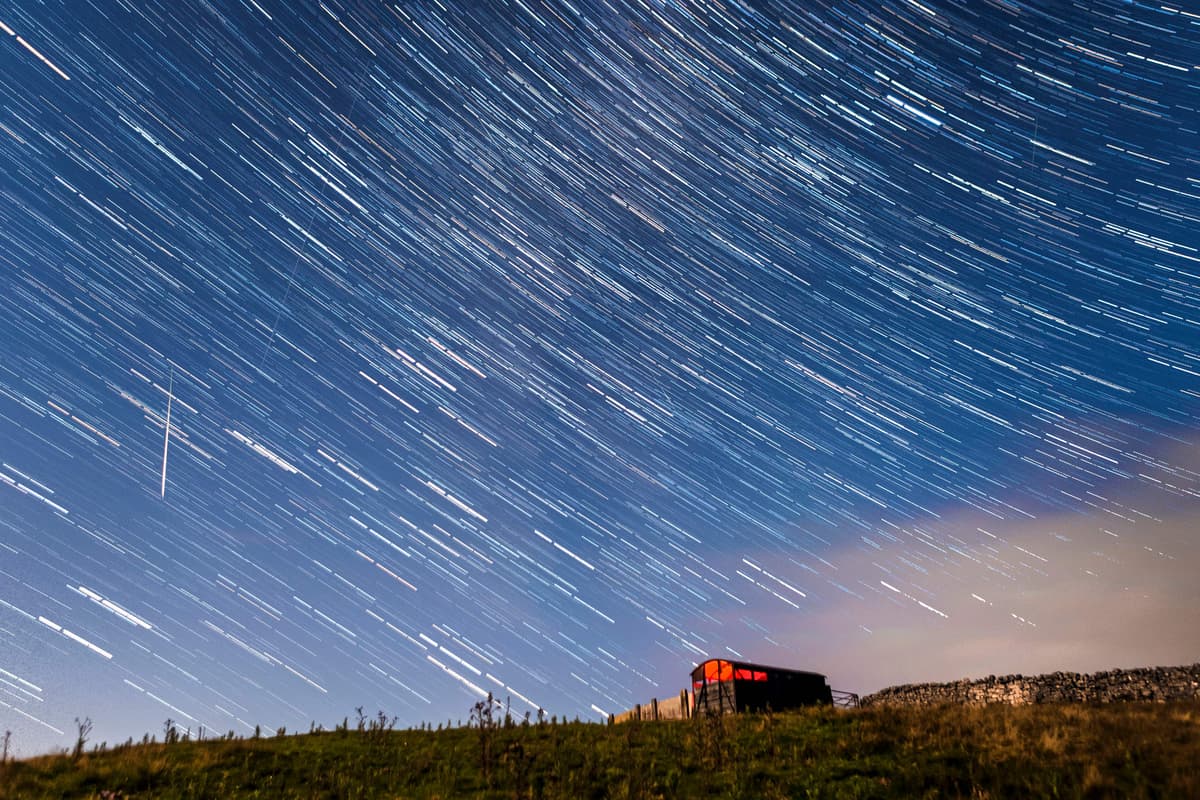
Londoners are set for a celestial spectacle this August as the Perseid meteor shower promises to bring up to 100 shooting stars an hour to the capital’s night skies. The dazzling star show will be active for around 5 weeks between mid-July and mid-August, with its peak expected to fall on the same day of the solar eclipse - August 12. On what is set to be a stargazer’s dream evening, the new Moon on August 12 will also mean darker skies, increasing your odds of catching a glimpse of the cosmic display. So, as the day approaches, here is everything you need to know about the Perseid meteor shower: Stargazers in the UK could expect up to 50 ‘shooting stars’ an hour this week (Danny Lawson/PA)PA ArchiveWhat is the Perseid meteor shower? The Perseid meteor shower is an annual occasion, usually taking place between mid-July and mid-August. During this period, as many as 100 meteors whizz across the night sky in a stunning fashion. The meteors are often dubbed “shooting stars”, but they have nothing to do with stars at all. Meteors are small space rocks, which are left behind by comets. They burn as they enter the earth’s atmosphere, moving fast and leaving streaks in the sky. When Earth passes through a particularly dense debris trail, usually left by a large comet, we see the highest rate of meteors in what is known as a meteor shower. The Perseid meteor shower happens when Earth passes through the trail left behind by the large comet, 109P/Swift-Tuttle. Swift-Tuttle has an elongated orbit, which means its debris enters the Earth’s atmosphere at high speeds. The shower gets its name from the constellation Perseus, but they can happen anyway in the sky. When is the Perseid meteor shower?The Perseid meteor shower is already upon us, with its active dates between July 17 and August 24. But, the peak of the shower is yet to come. On the night of August 12, up to 150 meteors should be visible, usually around midnight. The spectacle is best enjoyed when the sky is at its darkest and the constellation of Perseus is high. The new moon will also mean the sky will be especially dark, so the meteor shower should be easy to spot. How to watch the Perseid meteor shower in London? In theory, the cosmic display should be visible from wherever you are. But there are ways of boosting your odds. Read MoreThe sky needs to be as dark as possible. This means steering away from locations that are lit up by the city’s bright lights. Many head down to commons or open spaces to catch a glimpse of the celestial display. But the general rule of thumb is to avoid areas with heavy air and light pollution.It’s best to avoid areas with heavy canopy cover, as you don’t want trees to obstruct your view. Eyes also need 15 minutes to adjust to the dark, according to the Royal Observatory. What is the forecast on August 12?According to BBC weather, skies will stay clearer for longer in the south, which is good news for Londoners.
Perseid meteor shower: What is it, when's it happening and how to watch in London?
Full Article
Original Source
Read the full article at Standard →KhanList aggregates and links to publicly available news content. We do not host full articles from third-party sources. Always verify important information with original sources.