
The European Court of Human Rights ruled that Turkey’s detention of a journalist who named a military commander and Azerbaijan’s suspended prison sentence for an editor covering a shooting violated freedom of expression.(CN) — Naming a commander landed a Turkish journalist in jail, while covering a shooting brought an Azerbaijani editor a suspended prison sentence — both unjustified, Europe’s human rights court ruled Tuesday.The European Court of Human Rights upheld Müyesser Uğur’s challenge to her detention over military reporting and Anar Mammadov’s challenge to his conviction and property seizures, finding both countries violated freedom of expression.Turkey backed Libya’s internationally recognized government against commander Khalifa Haftar, an alliance that included a Mediterranean maritime agreement. Uğur, writing for odatv.com, investigated the deployment. After investigators intercepted her calls with a military source, she was arrested in June 2020 and held for five months.Five of six articles cited against her disclosed no confidential information or state secrets. The sixth identified the Libya commander. The court accepted that disclosure could seriously damage national security and endanger him, but found the article contributed to public debate.The court wrote: “The task of imparting information and exercising public scrutiny entrusted to the media extends also to the activities of the armed forces.”Although Uğur should have recognized the information’s sensitivity, the court found no indication she obtained it unlawfully or pressured her source. Turkish judges also overlooked whether officials had weakened secrecy by revealing the commander’s rank. They failed to balance security against the reporting’s public value; the court found detention excessive and did not separately decide her liberty complaint.Lorna Woods, professor of internet law at the University of Essex, said finding fault with reporting did not settle whether the state’s response was justified. She considered five months disproportionate.Sibel Güzeldağ, a lawyer and political science doctoral candidate at Bursa Uludağ University, highlighted a separate failure: Turkey’s Constitutional Court had carried its detention findings into the press freedom complaint without independently assessing it. Güzeldağ also noted that dissenting judges on Turkey’s Constitutional Court had questioned whether the harm had been clearly demonstrated and whether detention was necessary.“In my view, the core message is this: The state may invoke a legitimate national security interest, but it must show why depriving a journalist of her liberty was necessary and proportionate,” she said.Erhan Tokatlı, Uğur’s lawyer at Tokatlı Hukuk Bürosu, said she declined comment pending a full assessment.Mammadov, editor of criminal.az, examined why Ganja’s top official was shot in 2018, reproducing residents’ grievances from another outlet. Azerbaijani courts treated his coverage as calls to seize power by force, imposing a suspended five-year, three-month sentence.The European court found no incitement to violence or explanation linking his articles to subsequent unrest. It also found unlawful seizures of phones, a laptop and documents and unlawful retention of devices. A hidden purpose of punishing his journalism remained unproven.Elchin Sadigov, Mammadov’s barrister, criticized domestic courts’ regressive handling of politically sensitive reporting. “The judgment provides a clear roadmap for the domestic courts to improve their problematic approach to cases concerning freedom of expression and, more broadly, to proceedings that may have a political dimension,” he said.Sejal Parmar, senior lecturer and global civic lead at Cardiff University’s School of Law and Politics, stressed that suspended sentences could silence journalists too. She welcomed both rulings as a defense against political leaders’ use of national security to undermine public interest reporting.President Recep Tayyip Erdoğan’s government has intensified its crackdown on Turkey’s opposition; Reporters Without Borders says 90% of national media are government-controlled. In Azerbaijan, the watchdog describes near-total official media control and little political pluralism under President Ilham Aliyev.Jeanne Cavelier, head of its Eastern Europe and Central Asia desk, linked Mammadov’s prosecution to longstanding repression that had worsened since Abzas Media arrests began in November 2023, with fabricated charges bringing years in prison.“Azerbaijan must implement the European Court’s judgment and, more broadly, end the systematic misuse of criminal justice against journalists and release all media professionals imprisoned for their work,” she said.The parties have three months to request Grand Chamber review, which is not automatic. Without a request, or upon rejection, the judgments become final; payment follows within three months: 7,500 euros (about $8,450) for Uğur, 6,000 euros for Mammadov and 1,500 euros in legal costs. Uğur’s later conviction was not overturned.Courthouse News reporter Eunseo Hong is based in the Netherlands.Subscribe to our free newslettersOur weekly newsletter Closing Arguments offers the latest about ongoing trials, major litigation and rulings in courthouses around the U.S. and the world, while the monthly Under the Lights dishes the legal dirt from Hollywood, sports, Big Tech and the arts.Additional Reads
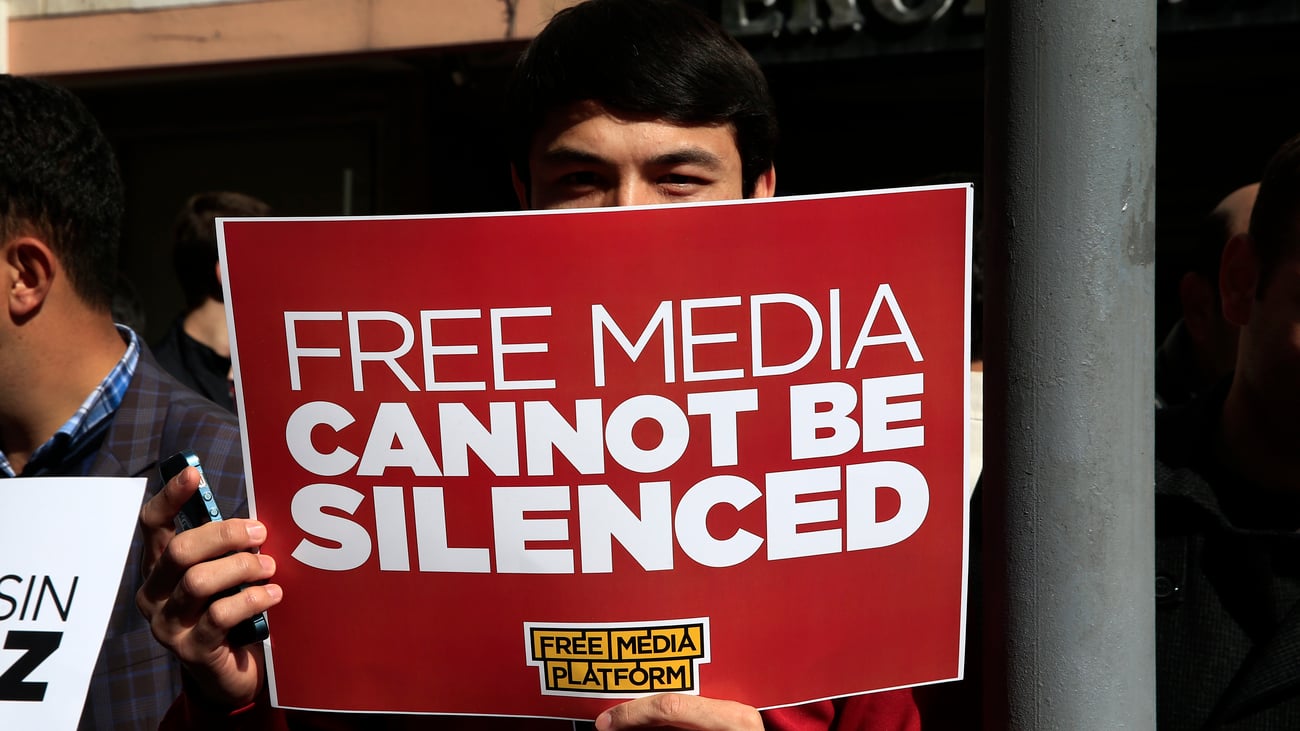
Persecuted journalists win protection from Europe’s human rights court
Full Article
Original Source
Read the full article at Courthousenews →KhanList aggregates and links to publicly available news content. We do not host full articles from third-party sources. Always verify important information with original sources.