
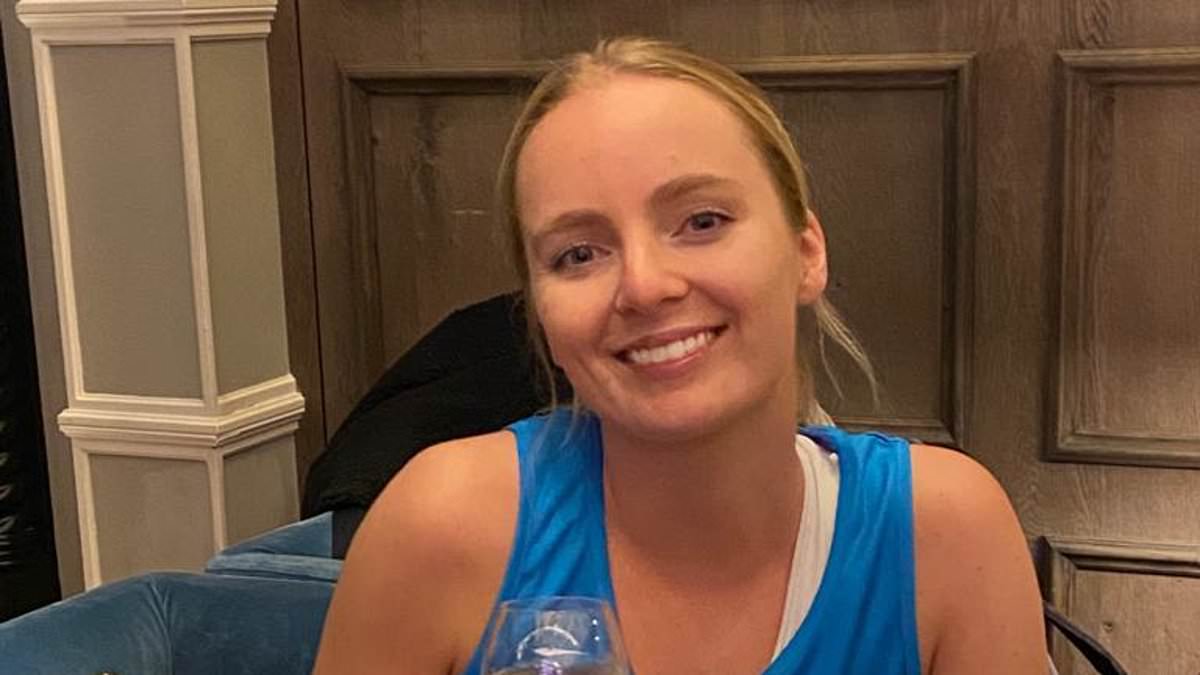
For Anna Davies, hormonal shifts in her teenage years had an impact that extended far beyond typical growing pains and led her down a dangerous and lonely path of mental struggles and eating disorders. Anna, 29, is now calling for more awareness of the symptoms of polyendocrine metabolic ovarian syndrome (PMOS) and urging young girls to get help before they suffer as she did.At the age of 14, Anna noticed confusing changes in her body, and not ones that fitted with what friends and family put down to ‘typical teenage problems’. Her periods were irregular and cycles often stretched past 35 days. Additionally, persistent acne spread across her face, chest and back. Despite being a sporty teenager who played on the school netball and hockey teams and ate wholesome, home-cooked meals, she experienced stubborn weight gain.With no medical explanation for what was happening internally, Anna assumed the blame lay with her own habits. 'I developed a very unhealthy relationship with food because I thought I was the problem,' she says. 'I started restricting what I ate and struggled with eating disorders from a very young age.’Anna now knows she was suffering PMOS, formerly known as polycystic ovary syndrome (PCOS). Affecting one in eight women worldwide – more than 170 million – PMOS is a long-term hormonal and endocrine condition that affects metabolic health, period regularity, fertility, skin, hair and mental health.Recently renamed after 14 years of medical debate and studies to move away from a focus solely on ovarian 'cysts', medical experts as well as sufferers like Anna believe the new terminology better reflects the complex nature of the condition.Seeking relief from her crippling cramps and demoralising skin issues, Anna initially visited her GP, where, aged just 15, she was put on the pill. 'At that age, I wasn't thinking about why I was having these symptoms,’ she says. ‘I just wanted them to go away so I would try anything.’ Despite being a sporty teenager, Anna experienced stubborn and persistent weight gain and thought of herself as being 'the problem'Anna stayed on the contraceptive pill for a decade, but when she finally decided to stop taking it four years ago, her symptoms returned with a vengeance, triggering an almost immediate decline in her mental health.‘I was on the pill from the age of 15 to 25. When I first went on it, my symptoms did improve significantly, particularly my acne,' she says.'But after around seven or eight years, my acne gradually started to creep back in. At that point, I still hadn't even heard of PCOS or PMOS. One of the main reasons I'd stayed on the pill for so long was to keep my skin under control, and when it stopped doing that, I started to question why I was still taking it and decided to come off.‘That's when everything came back in full force. My acne became severe again, my periods were very irregular and I started questioning whether there could be something else going on. Because of my irregular cycles, I became curious about what that might mean for my fertility and decided to do an at-home fertility test. 'I wasn’t planning to have children at that point, but knew I wanted a family in the future. I wanted to be informed and if there was a chance I might struggle, I'd rather know and be prepared than find out years later when I was ready to start trying.’Anna’s results indicated that she may have PCOS/PMOS, so she used savings to pay privately for an ultrasound. She took all the evidence back to her GP, where her diagnosis was eventually confirmed.She says: ‘At this point I was told my only option was to go back on the pill and come back when I wanted to get pregnant.‘I remember feeling incredibly let down.’The physical symptoms of PMOS had a huge impact on Anna’s social life and emotional state as she grew up. During severe flare-ups, she found herself withdrawing completely.'I remember one week when it became so bad that I didn't leave the house for a few days because I was so self-conscious about my skin,' she says.'If I did have to go out, I would find a coat that I could pull up high enough to hide the bottom half of my face.' Social activities centred around swimming, sunbathing, or going out for meals became unbearable and caused her intense anxiety.To help control her skin breakouts, Anna followed a strict, healthy diet and cut out alcohol for a year. While other friends were drinking and having fun, she would be preoccupied with avoiding anything that might trigger further breakouts. Despite wanting to enjoy an active social life, Anna says she withdrew and felt alienated from her peers because she wasn't sharing the same teenage experiences as them.The emotional weight of struggling throughout her teenage years created long-lasting patterns. 'Even now, my appearance consumes so much of my waking day,’ she says. ‘Looking in the mirror, thinking about what I've eaten, what I'm going to eat, what I’ve already eaten, whether I've exercised enough, how my clothes fit. It’s all-consuming, and I don't think you go through years of having that relationship with your body and food without it leaving a mark.’ Anna used her savings to pay privately for an ultrasound after an at-home fertility test indicated that she may have polyendocrine metabolic ovarian syndrome (PMOS) Anna is now prioritising her long-term health as she and her husband, Jack, hope to start a family For more than a decade, Anna sought solutions through countless avenues – antibiotics, prescribed topicals, cognitive behavioural therapy (CBT), acupuncture, laser hair removal, regular skin peels, and numerous supplements – all of which took a toll on her confidence and her bank balance. Finding help online also proved complicated. While she says social media helped her realise she was not alone, it also offered a confusing array of conflicting advice and unrealistic body expectations.'When you go to the doctor and are told “the pill is your only option and to come back when you want to get pregnant” you feel helpless and like you’re battling this alone,' she says.After years of struggles, Anna ditched her corporate job in HR to retrain as a personal trainer and women's health coach, giving her the confidence to help other young women feel happy and confident, and deal with symptoms in a positive way. Having recently married her partner of eight years, Jack, she is now focusing on long-term health as they look towards starting a family.Reflecting on her own experience, Anna says that early, specialised support is crucial for women and girls suffering PMOS. She recently visited a Holland & Barrett menstrual nurse and says the advice she received was invaluable.'When I was younger, I didn’t know that irregular periods, acne and changes in my weight could be signs that something else was going on,' she says. 'Having access to a menstrual nurse would have been an incredible resource. Even just having someone take the time to explain what a healthy menstrual cycle can look like, listen to my concerns and tell me that what I was experiencing was worth a second opinion could have helped me recognise much earlier that something wasn’t right.'For Anna, raising awareness and campaigning for accurate diagnostic language is a personal mission. Next year, she will return to her former secondary school to speak to students about PMOS. 'If I could speak to my younger self, I would tell her that it’s not her fault and she wasn’t doing anything wrong,' Anna says. 'If one teenage girl hears about it, recognises something in herself and realises that she can ask for help, then that's something I would have really valued at her age.' Four practical steps if you suspect you have PMOS Menstrual nurse Natalee Jones from the Endometriosis Foundation recommends that anyone who suspects they may have PMOS takes these steps...Track your symptoms in detail: Maintain a detailed symptom diary, tracking cycle length, flow, changes in body or facial hair, scalp thinning, skin changes, mood shifts and fatigue. Although pelvic pain is not a classic feature of PMOS, record any pain experienced so your doctor can rule out other potential causes.Prepare targeted questions for your GP: Arrive at appointments with specific questions regarding diagnostic blood tests (including glucose and cholesterol checks), whether an ultrasound is required, how your metabolic health will be evaluated and what long-term monitoring might be required.Advocate for yourself with compassion: Remember that an ultrasound showing clear ovaries does not rule out PMOS under the updated diagnostic criteria. If you feel unheard, request that your symptoms and concerns be explicitly documented in your medical notes or bring a friend or family member along to support you during appointments.Seek specialist guidance: If initial visits leave you feeling uncertain, consult clinicians experienced in hormone and metabolic health to obtain clear answers and tailored care strategies.Holland & Barrett offers free 15-minute online appointments with qualified menstrual nurses to discuss symptoms, hormone cycles and guidance on next steps. The retailer also has more than 600 trained women’s health coaches across its UK shops.
Periods that lasted 35 days, severe acne and stubborn weight gain: What every woman needs to know about the symptoms of PMOS - and what to tell your GP
Full Article
Original Source
Read the full article at Dailymail →KhanList aggregates and links to publicly available news content. We do not host full articles from third-party sources. Always verify important information with original sources.