
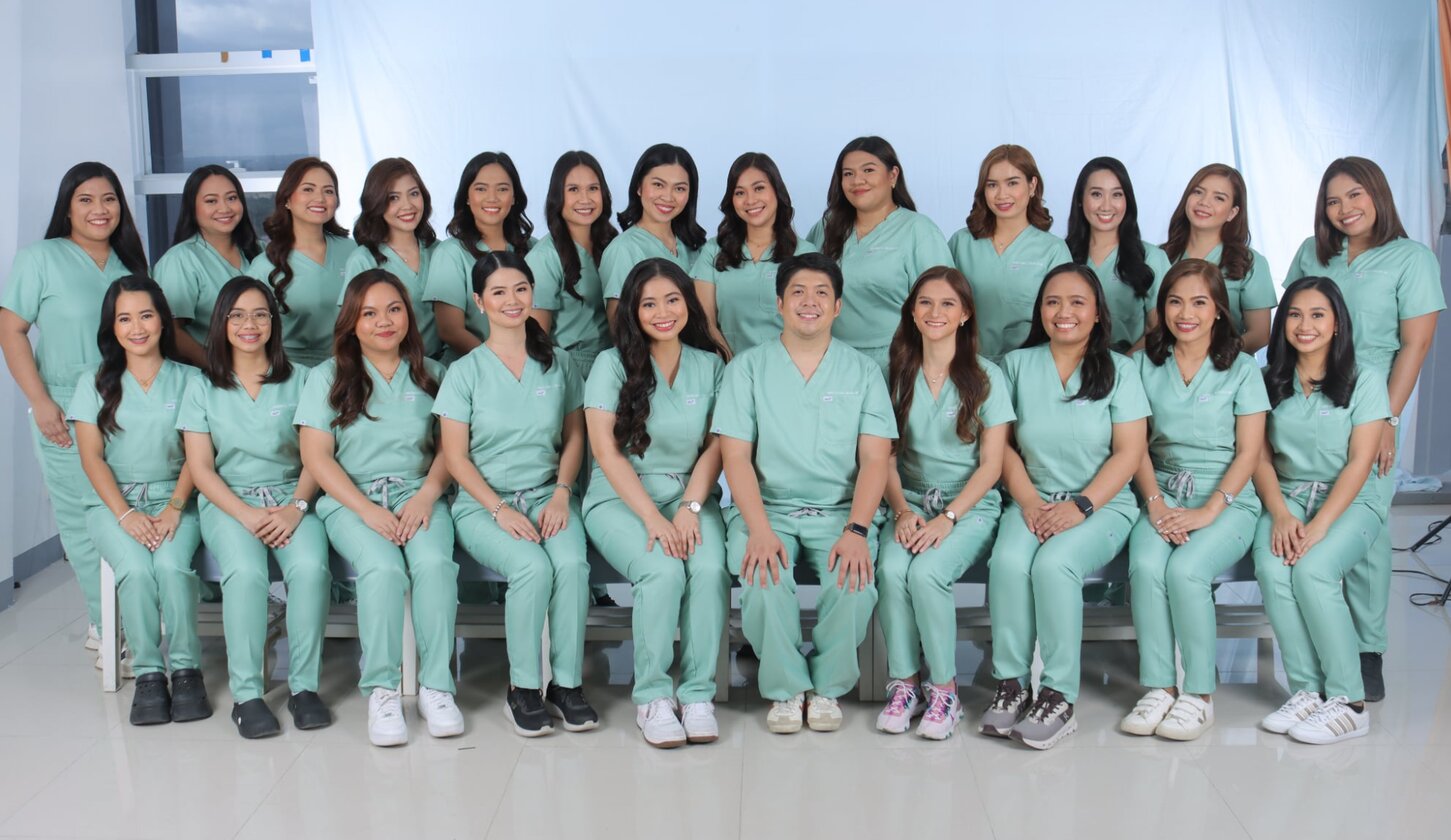
All 23 graduates of Batangas State University’s pioneer Doctor of Medicine batch aced the October 2026 Physicians Licensure Examination on their first attempt. By posting a perfect 100% passing rate, the debut class soared past the national passing average of 93.66%. All were beneficiaries of the government’s Medical Scholarship and Return Service (MSRS) Program under Republic Act No. 11509, or the Doktor Para sa Bayan Act. Among this historic batch are friends Crystal Mae Banta, Nikko Diokno, and Sandrei Kate Almogino, who all navigated the rigors of medical school together with the help of a government scholarship. Now newly licensed physicians, they aim to fulfill their return service commitment to communities with limited access to healthcare. Becoming a doctor Banta, a registered medical technologist from Alitagtag, Batangas, had wanted to be a doctor since childhood — a dream already listed in her kindergarten yearbook. Before medical school, she worked as an echo sonographer (also called cardiac sonographer or echocardiographer) and considered a research job with the Department of Science and Technology. Financial constraints had forced her to set her doctor dreams aside. She learned about BatStateU’s scholarship on her birthday, when her godmother forwarded a post from their mayor announcing that the university was seeking medical scholars. The promise of free tuition pushed her to apply quickly. While some classmates had applied as early as January, Banta submitted her requirements around August, shortly before classes began, and met the deadline. “Kung nawala ‘yung program na ‘yun, siguro hindi rin ako nakapag-med school,” she said. (Without the program, I probably would not have gone to medical school.) For Diokno of Padre Garcia, Batangas, medical school meant leaving an established career. The 31-year-old had spent six years in the workforce, including as a guidance facilitator in his municipality, before a classmate told him BatStateU was opening its medical school. He resigned a week after classes began. “Having access to free medical education alongside allowances and stipend benefits is life-changing for anyone who truly wants to serve,” Diokno said. Without the scholarship, he said, he would have continued in psychology and guidance counseling because financing four years of medical education on his previous income would not have been feasible. Behind the white coat Before medical school, Almogino was already working in healthcare. A pharmacy graduate of the University of Santo Tomas (UST), she was deployed by the Department of Health as a Human Resources for Health (HRH) personnel when the pandemic began. Part of her work was interviewing patients. She liked talking to them, and their gratitude felt genuine to her. “I think this is my calling,” she said. Still, the job alone did not feel like enough. “I need to do more.” Money was the first worry. Medical school at UST had been her dream, but her family could not afford it. She would have been the first doctor in the family. But her younger siblings were still in school, and she even wondered if pursuing medicine was selfish. Then a relative told her about the BatStateU program. After earning the MSRS scholarship, she paid no tuition and received a semestral allowance, which helped cover the cost of equipment such as a blood pressure apparatus. The three scholars were grateful that paying for school was settled, but as they soon learned, getting through it was harder. Classes began online. Almogino had finished college face-to-face, and now home was both classroom and resting place, with no dorm to leave at the end of the day. She often slept only at dawn, then woke early for the next class. At one point, her scores dropped, and a professor warned her she was falling behind. Even with classes held at home, she saw little of her family. Each time they moved up a year, she and her classmates told one another the same thing: “Malayo pa, pero malayo na (There is still a long way to go, but we have come far).” Making history As BatStateU’s first batch of Doctor of Medicine students, they had no seniors in the program to ask about what to expect, so they mostly turned to one another, Banta said. “Lahat ‘yun, pinagdaanan namin nang kami-kami lang ‘yung nagtatanungan, kami-kami ‘yung magkakasama,” she shared. (We went through all of it asking only each other, with only each other to lean on.) The pandemic made it harder. According to Banta, classes stayed online from their first year until the middle of their second, and laboratory work came through lecture videos. It was only on hospital duty that they first handled patients. Over the years, the 23 grew close, almost like family, Almogino said. They also shared a goal, to prove that students from the province could make it, too. But the board exams would be the test of that. When the results came out, Almogino was on her way home from Manila after praying at the churches of Saint Jude and Saint Clare. On the bus, she kept checking the Professional Regulation Commission (PRC) website until she gave up and scrolled through her phone instead. Then a message came from their class adviser congratulating them. She searched for her name, found it, and screamed, then cried to her mother. All 23 in the batch passed. For Banta, the wait had been the hardest part, and she had started crying days before the results came out. “‘Yung waiting season talaga ‘yung pinakamahirap, hindi ‘yung exam,” she said. (The waiting season was really the hardest, not the exam.) Banta described the batch’s achievement as “very historical for the province of Batangas.” Passing the boards, though, was only part of what the scholarship asked of them. The commitment to serve The scholarship behind their degrees comes from Republic Act No. 11509, or the Doktor Para sa Bayan Act, which was signed into law in December 2020. In exchange, scholars must serve in government health offices or hospitals in their hometown, their home province, or an underserved municipality in any province for at least one year for every year of scholarship, with the aim of bringing doctors to remote and geographically disadvantaged areas.The graduates are still awaiting guidance on their placements and confirmation of their oath-taking date, after which their license numbers will be issued. Banta said the Commission on Higher Education (CHED) had given them three options, but the batch was still waiting to learn what the agency would decide. “As much as possible, kung kaya at may opportunity na ibibigay sa amin, siyempre sa Batangas kami mag–return of service,” Banta said, expressing her preference to serve in her home province. (If it’s feasible and the opportunity arises, we would, of course, fulfill our return-of-service obligation in Batangas.) Whether it’s in Batangas or beyond, Banta also hopes to join medical missions in far-flung areas, the kind that health workers do not reach every day. It is something she has wanted to do since medical school. Almogino said they would choose from their top three sites, likely among geographically isolated areas, rural health units (RHUs), and primary and secondary hospitals. She is leaning toward RHUs, drawing on her work as HRH personnel during the pandemic. For Almogino, serving a community starts with asking residents what they actually need. She hopes to work with them as partners, so that they become social mobilizers for their own health, and to help them seek care before their conditions worsen. “Kung ang gagawin ko lang doon, checkup, bigay gamot, reseta, parang nasaan ang growth?” Almogino said. (If all I do there is check up patients, hand out medicine, and write prescriptions, where is the growth?) From opportunity to public service Banta hopes that future doctors will help address the country’s healthcare problems rather than add to them. “Sana ‘yung maging sole purpose ng mga taong mag-aaral ng medicine [ay] para mabago ‘yung sistema ng healthcare dito sa Pilipinas at hindi tayo ‘yung maging reason pa lalo ng pagsama,” she said. (I hope the purpose of studying medicine is to change the healthcare system in the Philippines, rather than become another reason for it to worsen.) Almogino acknowledged that one doctor cannot solve every problem, but said physicians should ask residents what they need rather than prescribe programs they may not be able to use. “You really need to know what the needs of the community are. Sila ‘yung kailangan mong tanungin: Ano ‘yung kailangan nila?” she said. (They are the ones you need to ask: What do they need?) Diokno, meanwhile, sees being part of the pioneer batch that earned a historic 100% passing rate as both an achievement and an obligation. “It carries immense responsibility and pressure,” he said. “We were constantly reminded that the future and reputation of the Doktor Para sa Bayan program at BSU rested heavily on our performance, making this milestone both an honor and a solemn commitment.” The scholarship has helped 23 aspiring doctors earn their licenses. Their return service will show what that opportunity can mean for the communities they are expected to serve. – Rappler.com Dominique Astucia is a Rappler intern studying BA Journalism at the University of Santo Tomas. Arabella Grace Sta. Ana is a Rappler intern studying BA Philosophy at UP Los Baños.
Perfect passing rate: Batangas State U’s pioneer doctors ready for rural service
Full Article
Original Source
Read the full article at Rappler →KhanList aggregates and links to publicly available news content. We do not host full articles from third-party sources. Always verify important information with original sources.