
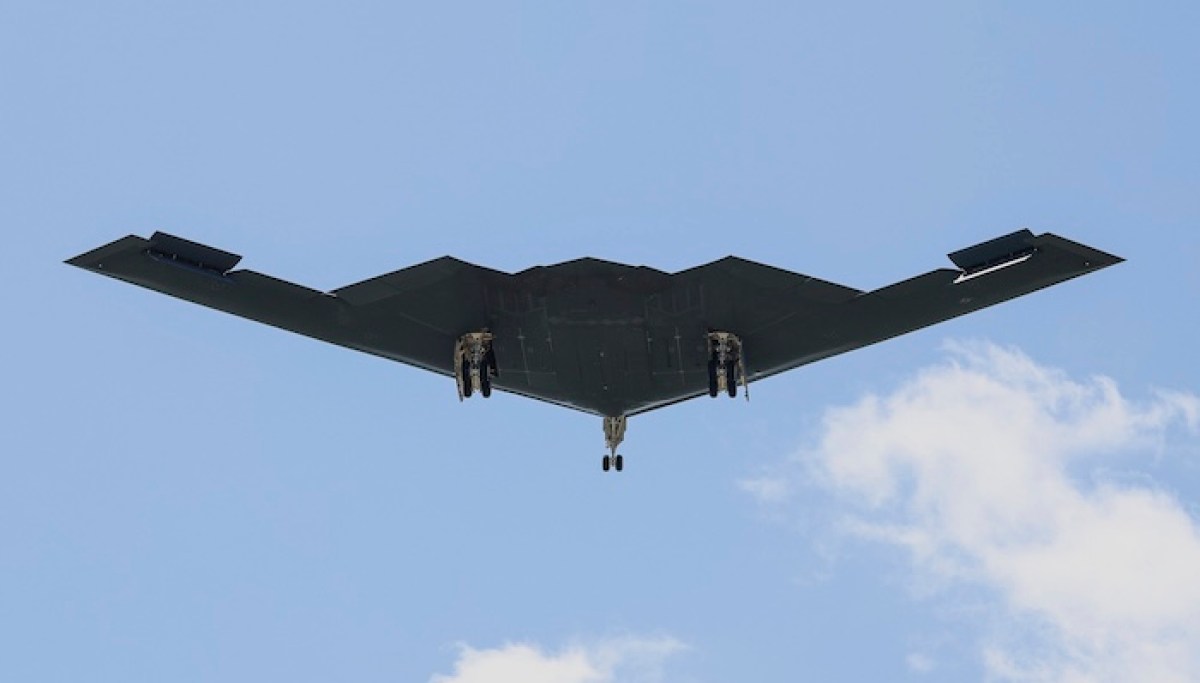
The Pentagon ordered the production of the U.S. Air Force’s first hypersonic missile, just three years after almost axing the program altogether.On Monday, the Department of the Air Force announced a $694 million contract with Lockheed Martin for the production and operation of the AGM-183A Air-Launched Rapid Response Weapon, the Air Force’s first hypersonic missile. The contract itself was signed on Sept. 29, an Air Force press release said, but was revealed Monday. The contract, which formally shifts the weapon from the prototype and testing stage to production and active use, marks a triumph for Lockheed Martin, as in March 2023, the military had formally moved to scrap the program in favor of RTX and Northrop Grumman’s AHM-4 Hypersonic Attack Cruise Missile.“This is a turning point in our advanced weapons roadmap,” Secretary of the Air Force Troy Meink said in a statement. “By moving ARRW from test to production, we’re providing our combatant commanders with a credible, high-speed strike weapon capable of penetrating the most advanced anti-access and area-denial systems.” Chief of Staff of the Air Force Gen. Ken Wilsbach said the missile would provide the Air Force with “a flexible and rapid response option for highly contested environments.”The Department of War awarded Lockheed Martin the contract under its Enterprise-Wide Agile Acquisition Contract.The weapons program reached a low point in March 2023, after several failed tests cast doubt on its feasibility. On March 29, 2023, Air Force acquisition executive Andrew Hunter told the House Armed Services Committee that the Air Force “does not currently intend to pursue follow-on procurement” of the ARRW. It was much more interested in the HACM, an air-breathing hypersonic cruise missile that operates in a different configuration.The HACM stalled, however, and the ARRW soon leapfrogged over it. Successful testing in 2024 proved its value, and by 2026, the Air Force seemed to prefer the ARRW over the HACM, though the latter is still in development.The Air Force’s preference for the ARRW was revealed earlier this year when its 2027 Fiscal Year budget request was unveiled, showing a request for $296 million “to begin [ARRW] [Increment 2] technology efforts such as but not limited to integrating pre-planned product improvements, design, trade studies, hardware upgrades, facilitization, affordability initiatives, and testing.”PUTIN HAS AN INFINITE-RANGE NUCLEAR MISSILE. AMERICA HAS EXCUSESThe ARRW operates differently from cruise, aeroballistic, and ballistic missiles. Launched from either a B-2 or B-52 bomber, the ARRW payload is taken to the upper atmosphere by a rocket booster, then detaches and glides to its target, traveling at a speed exceeding Mach 5. Its trajectory is more shallow than a ballistic missile, but unlike those, it can maneuver erratically, making it more difficult to intercept.The weapon has been almost explicitly framed as an ideal weapon for the Pacific theater, with its ship-killing abilities often touted as providing a vital capability against China in a possible future conflict.
Pentagon orders production of US Air Force’s first hypersonic missile
Full Article
Original Source
Read the full article at Washingtonexaminer →KhanList aggregates and links to publicly available news content. We do not host full articles from third-party sources. Always verify important information with original sources.