
Minnesota’s Department of Human Services made an additional $2.4 million in Medicaid overpayments to the White Earth Nation, of which Lt. Gov. Peggy Flanagan is a member, under the Walz-Flanagan administration in 2019, as a state audit found that millions in additional payments to White Earth and Leech Lake that year were made after DHS determined the payment practice did not comply with state and federal legal requirements. The payments were part of more than $29 million in overpayments made over a decade to the White Earth Nation and the Leech Lake Band of Ojibwe for Medication-Assisted Treatment programs designed to treat opioid addiction. According to the state audit, the programs combine counseling with medication intended to reduce cravings and withdrawal symptoms. Minnesota’s Department of Human Services classified the expenditures as overpayments because the department paid White Earth and Leech Lake the U.S. Indian Health Service “encounter rate” when patients took treatment drugs at home. The initial overpayment calculation included approximately $25 million in payments made through December 2018. The total later increased by another $3.8 million under the Walz-Flanagan administration in 2019, including $2.4 million for White Earth and $1.4 million for Leech Lake. “The increase was mostly due to payments the department made in 2019 after the department had determined that paying tribes the encounter rate for take-home medications did not comply with state and federal legal requirements,” the Office of the Legislative Auditor said in its October 29, 2019, special review. The audit examined the Medication-Assisted Treatment programs operated by White Earth and Leech Lake. White Earth established its program in 2017 and served approximately 595 clients during fiscal years 2018 and 2019. Leech Lake began its program in 2004 and served approximately 162 clients during the same two-year period. The payments involved federal Medicaid funds administered through Minnesota DHS. Flanagan appointed and praised the head of DHS, the agency that has since come under scrutiny amid the broader Minnesota fraud scandal. The overpayments continued even after DHS determined that the payments did not comply with state and federal legal requirements, and an outside inquiry later brought the issue to light, according to the state audit. The state initially told White Earth and Leech Lake that the tribes would be responsible for repaying the money, prompting strong objections from tribal leaders. White Earth criticized the administration over what it called a “lack of meaningful consultation” concerning the repayment issue. “At a bare minimum, we expected actual dialogue between a State agency and a Tribal government as ordered by the Governor. That is manaaji’idiwin – respect,” White Earth Nation said. Flanagan did not publicly lead opposition to the repayment demand, though she described requiring the tribes to repay the money as “unacceptable.” “If we have over 300 White Earth patients that all of a sudden lose access to this medication we are going to have a disaster on our hands. Overdoses will increase. You know Native Americans are already six times more likely to die of an overdose than the general population,” White Earth band member Adam Fairbanks said at the time. The tribes also warned that “paying back tens of millions of dollars would put their treatment programs at risk of closing.” By 2020, White Earth continued supplying take-home doses to patients while “covering the cost with their own resources” for what was described as the “life-saving program.” Walz’s 2020 budget proposal called for returning more than $29 million in overpayments to the federal government. The available information does not show Flanagan playing a public role in crafting that solution. It is unclear whether either tribe was involved in fraud. The state auditor said neither tribe cooperated with the audit, while White Earth disputed that account and said it had cooperated. The issue has resurfaced as Flanagan, the Democratic nominee for U.S. Senate in Minnesota, faces Republican Michele Tafoya in the race to replace Democrat Sen. Amy Klobuchar. Flanagan has also faced questions over her responsibility for the broader fraud scandal that occurred while she served as Walz’s lieutenant governor. Federal investigators have said the potential fraud could total more than $9 billion. Asked recently on MSNOW whether she bears responsibility, Flanagan pointed to Walz. “I would say, the governor says the buck stops with him, more should have been done sooner, and I agree,” Flanagan said. “And now we know that 100 people have been charged, 60 have been convicted,” she added. A 2025 audit covering July 1, 2022, through December 31, 2024, identified 12 findings involving the lieutenant governor’s office, including unresolved findings from a previous 2022 audit. Among the problems identified were overpayments to separated employees, purchasing-card violations, reimbursement errors, missing documentation, and duplicate payments. When auditors asked in April 2025 why the office had not attempted to recover thousands of dollars in overpayments made to former employees, the office said doing so was “not in the public interest.” The audit also found that purchasing-card holders split purchases into multiple transactions, including $7,893 in flowers and $7,343 in furniture purchased in installments that kept each transaction below a $5,000 single-transaction limit. The auditor reported that the cardholders involved had not signed updated use agreements since October 2015. The office also paid incorrect state-airplane invoices and then paid corrected invoices, according to documentation from the Minnesota Department of Transportation. Fourteen of 40 employee reimbursements tested contained errors involving mileage, meals, or arithmetic, while 40 of 41 vendor payments reviewed lacked completed documentation, including missing price quotes, packing slips, or delivery confirmations. “Overpaying employees, losing state property, and stiffing vendors for months—it’s no wonder massive fraud is exploding across state government,” Minnesota Senate Republican Leader Mark Johnson said after that audit. State lawmakers have said a 2022 audit produced six findings, five of which remained applicable later, with four still not fully resolved. On Tuesday, Flanagan again emphasized her White Earth heritage while campaigning for Senate, writing, “My Ojibwe name is Gizhiiwewidamookwe, which means ‘Speaks in a Loud and Clear Voice Woman.’ I’m going to be Minnesota’s voice in the U.S. Senate — not Donald Trump’s.” Her post drew mocking responses on social media, including users altering the translation of her Ojibwe name and another calling the post “beyond cringeworthy.” Flanagan has also faced scrutiny over her associations as the state continues to contend with fraud allegations. She is set to attend a fundraiser hosted by a DHS leader who serves as the state’s Medicaid medical director and has faced questions over fraud-oversight failures. Flanagan previously appeared at a Somali market wearing a hijab and told Minnesota’s Somali community, “we’re with you, we’ve got your back,” while saying she had been friends with Nimco Ahmed for almost 25 years. Ali Gaashaan, also known as Yusuf Ali, also stood with Flanagan during the appearance; he founded Volunteers for Somalia, a nonprofit involved in the Feeding Our Future criminal case that closed after Feeding Our Future was shut down. Flanagan has also called for federal immigration officials to be removed from Minnesota, while Ahmed is now under investigation in connection with autism centers accused of fraud.
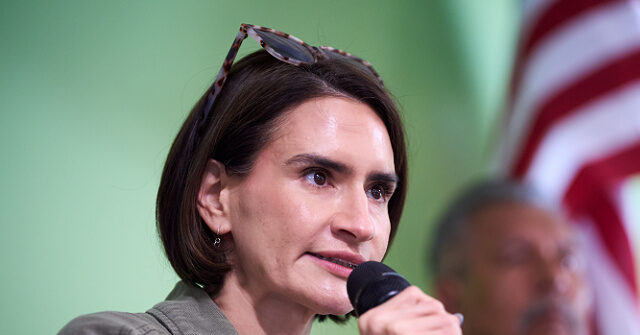
Peggy Flanagan’s Own Tribe Got $2.4M in Overpayments After DHS Found Payments Did Not Comply with Legal Requirements
Full Article
Original Source
Read the full article at Breitbart →KhanList aggregates and links to publicly available news content. We do not host full articles from third-party sources. Always verify important information with original sources.