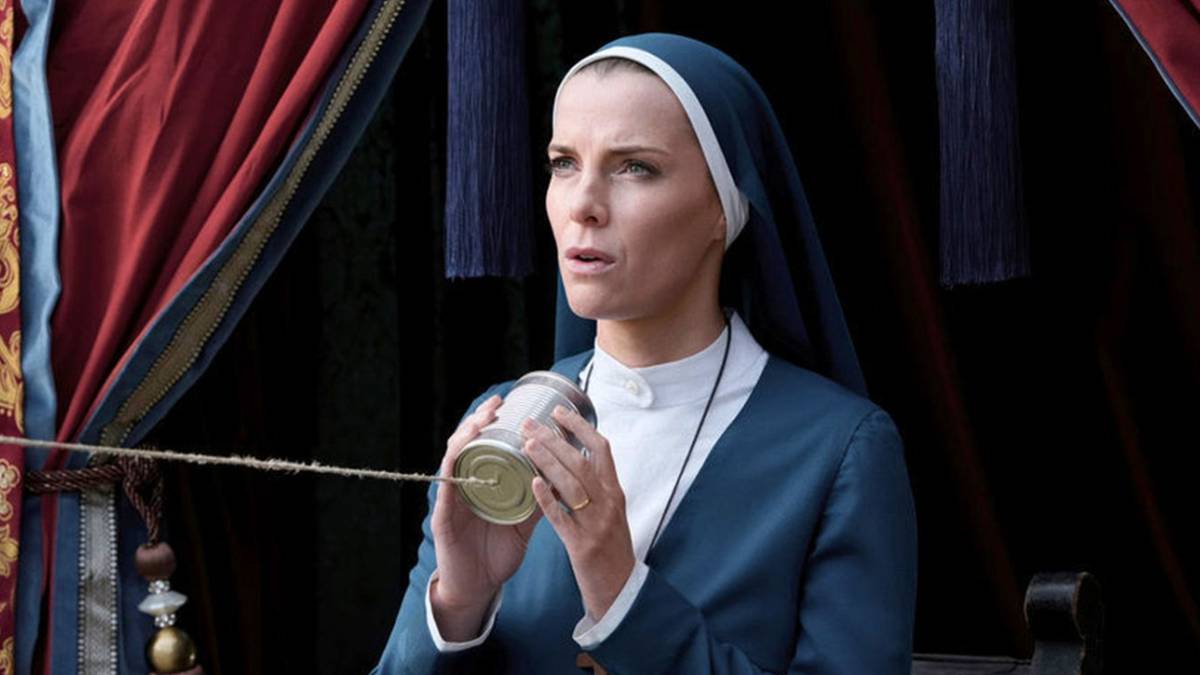
Published Aug 16, 2026, 7:27 PM EDT Jessica is a journalist, editor, TCA critic, and multimedia storyteller with a decade of experience covering pop culture, film, TV, women's sports, lifestyle, and more. She earned her degree in journalism from the University of North Carolina-Wilmington with a focus in creative writing before moving to N.Y.C. and getting her start at The Huffington Post. (She still misses those nap pods.) She's covered multiple film festivals, recapped some of your favorite series, worked too many red carpets to count, and even yapped on a podcast or two. When she’s not interviewing your favorite showrunner or ranking Ryan Gosling's best roles for places like UPROXX, Teen Vogue, Marie Claire, The Daily Beast, and Cosmopolitan, she’s busy being a full-time hype woman to her cat, Finn. You can find her on Bluesky and, sadly, Twitter. When we think of TV shows about artificial intelligence, or tech in general, we think of sad robots longing to feel human, chatbot girlfriends, a Sam Altman stand-in monologuing about the singularity in a Patagonia vest. The tone is always grim or idyllic. Either the machines are coming for our souls, or they are about to cure cancer and unlock the human genome by Tuesday. Prestige drama picks pessimism, tech-industry mythmaking picks optimism, and neither of them gets anywhere near the truth of a technology built by people, which is that AI, like humanity itself, is dumb. Laughably, mind-bogglingly dumb. The one show that understood this landed on Peacock in the spring of 2023, though you probably missed it. Mrs. Davis was an eight-episode sci-fi experiment created by Damon Lindelof and Tara Hernandez back in the early days of ChatGPT's birth, and it's still the only series willing to treat AI as fundamentally ridiculous. Its premise? That an omnipotent algorithm running the planet started life as a Buffalo Wild Wings loyalty app. Its protagonist? A Nazi-fighting nun (Betty Gilpin, at the height of her powers) intent on destroying it... and maybe hooking up with Jesus in a metaphysical falafel shop. Need we say more? Betty Gilpin Gives the Performance of Her Career in Peacock's 'Mrs. Davis' Sister Simone (Gilpin) lives in a beat-up desert convent outside Reno. When she isn't praying, she saddles a horse and rides out to track down freelance stage magicians. When she isn't doing that, she teleports to a falafel shop to have dinner with her boyfriend, who happens to be Jesus. Their relationship is... complicated. And Gilpin, bless her, goes full boar for it. She is furious and funny, physically capable and spiritually earnest, and she flips between those settings, sometimes inside a single line reading. There's tonal range, and then there's what she's doing here, playing a woman so fed up with faith and so devoted to it at the same time. And her ire is totally understandable. The algorithm she's constantly fighting with is called Mrs. Davis, a program that most of the planet cheerfully lives inside, which reaches out to Simone through a proxy who speaks in the voice of a warm kindergarten teacher. It offers her a deal. Find the Holy Grail, break it, and Mrs. Davis will pull her own plug. Simone signs on immediately, because she has been holding a grudge against the AI ever since her magician father Monty (David Arquette) died mid-trick inside a piano. She drags along her ex, Wiley (Jake McDorman), a rodeo cowboy whose personal mantra is "You're a big, strong boy, everybody loves you, you're never gonna die," and the two of them tear across Reno, Scotland, Italy, and the open sea after a cup that refuses to be found. Every Episode of 'Mrs. Davis' Has a Moment That Will Make You Pause the TV The set pieces are joyful nonsense. The pilot opens in fourteenth-century Paris with a group of nuns who turn out to be the Knights Templar, and a bloody, gorgeously choreographed sword fight over the Grail. It plays completely straight for four episodes, then reveals itself as something else entirely, in a rug-pull so brazen you have to laugh. That's the whole rhythm of Mrs. Davis. It sets up something absolutely sincere, holds it long enough that you buy in, then flips it into a punchline that somehow makes the setup work better. And the season only gets bolder as it goes along. There's a Scottish detour built around Wiley and his self-esteem. There's a woman who drinks from the wrong cup and sees her head explode for it. There's a whale, and Simone has to get inside it. Every episode has at least one moment that makes you pause the TV to reassure yourself of what your eyes have just seen. Lindelof and Hernandez trust every actor to attack the material with total commitment. Andy McQueen plays Jesus as unshowy and flawed. Elizabeth Marvel is icy as Simone's mother, Celeste. Margo Martindale is the no-nonsense mother superior and the moral center of the show. Shohreh Aghdashloo turns up as the Virgin Mary. Ben Chaplin is a burnt-out scientist stranded on a desert island. Everyone here is playing an absurd person completely straight, and it works. The AI stuff is part of the fun, but it isn't the whole show. The joke everyone remembers, the one that made every headline when the finale aired, is the reveal of where Mrs. Davis actually came from. It's the kind of punchline you spend eight episodes earning, but it's just one of maybe fifteen equally strong swings the season takes. Lindelof and Hernandez are smart enough to bury it at the end rather than build the whole series around it. When Mrs. Davis aired, AI was still a party trick, and most of the culture was in awe of it. Now that we've all watched the tech promise the world and deliver garbage haikus instead, the joke is even funnier.
Peacock's 8-Part Sci-Fi Series Is So Good, There's Nothing Else Like It in Hollywood
Full Article
Original Source
Read the full article at Collider →KhanList aggregates and links to publicly available news content. We do not host full articles from third-party sources. Always verify important information with original sources.