
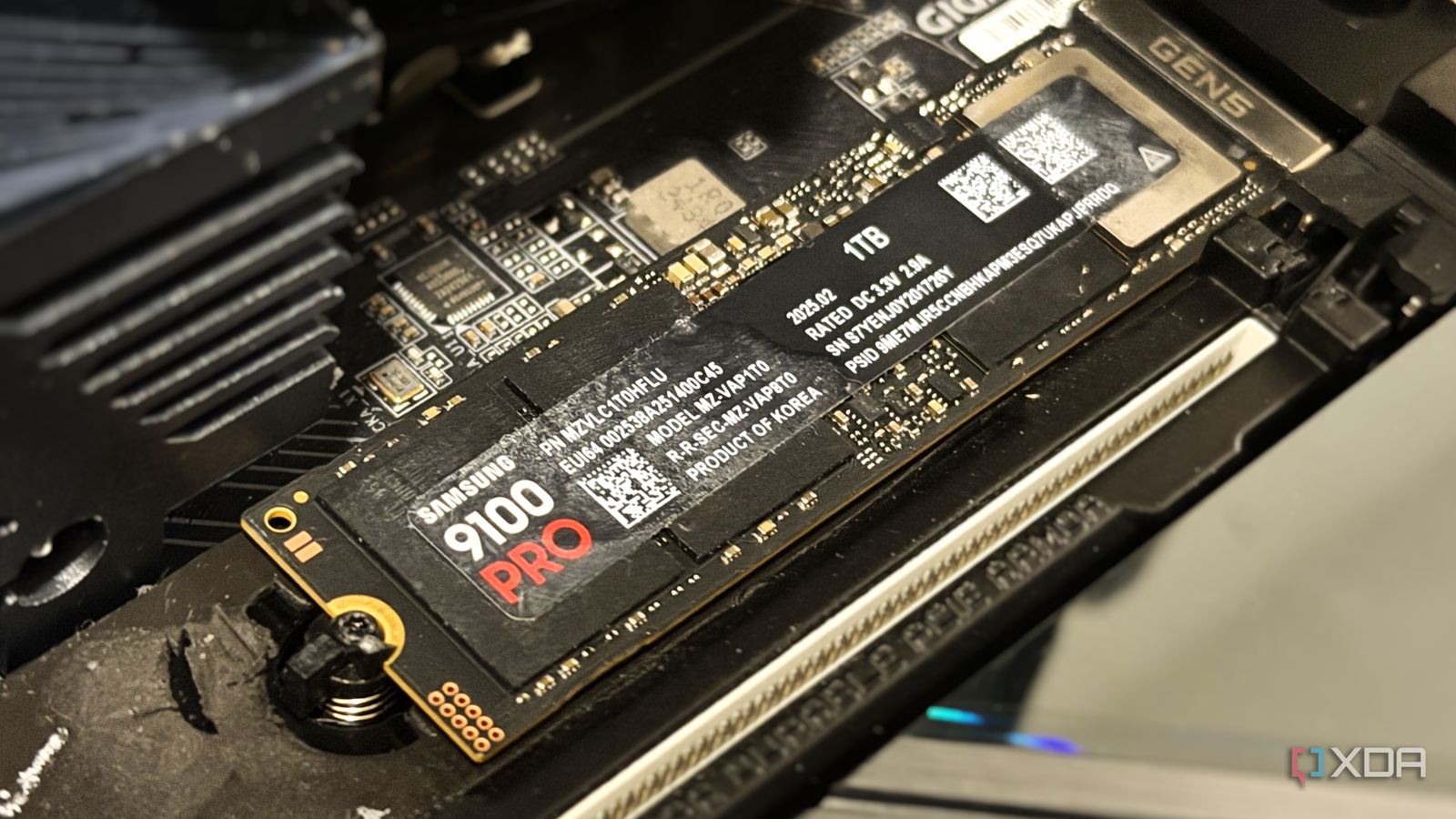
Published Oct 12, 2026, 12:00 PM EDT After a 7-year corporate stint, Tanveer found his love for writing and tech too much to resist. An MBA in Marketing and the owner of a PC building business, he writes on PC hardware, technology, and Windows. When not scouring the web for ideas, he can be found building PCs, watching anime, or playing Smash Karts on his RTX 3080 (sigh). For most of my 26-year journey with desktop PCs, I've used spinning hard drives. I bought my first SSD (a SATA drive) in 2017, and the difference was night and day. Every subsequent upgrade, however, became less and less stark, culminating with the PCIe 5.0 SSD I got last year. I built a gaming PC for my partner before the DRAM shortage really picked up. It now doubles up as our media server, but it doesn't feel any faster than my own PC. Gen5 SSDs are known for their blazing-fast sequential speeds, but most workloads don't care much for that. The average user can struggle to see the difference between a Gen4 and Gen5 SSD unless in a handful of niche workloads. PCIe 5.0 SSDs are 100 times faster than my old hard drive But HDDs aren't the competition here After nearly two decades of using hard drives as primary storage, I switched to a 250GB SATA SSD in 2017. While the performance difference was amazing, the tiny drive forced me to look for an upgrade pretty soon. I wanted to switch to an all-SSD setup, so I bought an affordable Gen3 NVMe drive only around a year later. When I got my existing PC four years ago, I added a Gen4 SSD to my setup, finally reaching a threshold that I didn't feel like upgrading from. Finally, when I was building a gaming PC for my partner last year, I grabbed a 1TB Gen5 SSD from Samsung as I got a sweet deal at the time. The nearly 15,000 MB/s transfer speeds on the drive were a far cry from the 150 MB/s hard drive I bought almost a decade ago. Still, it didn't feel like I was using a high-end SSD. The Gen5 drive was twice as fast as the Gen4 one on my main PC, but that difference didn't translate into anything meaningful. Using a high-end drive should have felt different That's where I went wrong View inconsistency of the same folder when opened via File Explorer and Google Chrome. Whether it was the boot time, game loading times, or navigating the system, my experience on the new system was the same as that on my main PC. Running the same games on my Gen4 drive and my partner's Gen5 SSD didn't improve the loading times or minimize any random stutters. Windows 11 booted equally fast on both systems, and launching apps felt identical, too. Even streaming movies on Plex failed to produce any perceivable difference. Admittedly, I don't transfer large files too often or run demanding productivity workloads on the new system, but that's true for the majority of users. Most people buying the latest Gen5 SSDs aren't pushing them on the workloads they're actually designed for. Sequential speeds don't matter if all you're doing on your PC is work and gaming. The performance-per-dollar of PCIe 5.0 SSDs doesn't make sense for the average user. Even if you're comparing a Gen4 and Gen5 drive that cost almost the same, it might be sensible to pick the latter, considering the other problems associated with PCIe 5.0 drives. Honestly, it's more trouble than it's worth Wasted performance is just one concern Since I bought a non-heatsink model, trusting the motherboard's pre-installed hardware instead, I had to buy a dedicated heatsink soon after. Gen5 drives are infamous for running too hot, even when the system is idle. The internal circuitry is just so complex that the drive is always under more stress than a Gen4 model. Hence, I had to shell out for a separate heatsink. Since then, I have always worried about the operating temperature of the new drive, way more than I do with any other drive I've used. For all the performance of Gen5 SSDs, thermal throttling can easily put a spanner in the works. Instead of enjoying the secondary PC for gaming and streaming, I have to worry about keeping the drive cool under load. I could have invested the premium that I spent on the Gen5 SSD on something else, losing no performance in the process. Even if the difference was small enough, the needless headache that a Gen5 SSD brings with it is sometimes reason enough to avoid it. Unless you can actively benefit from the high-end performance of PCIe 5.0 drives, it's better to pick a Gen4 model and call it a day. Gen5 SSDs were made for a future that is yet to arrive Technologies like DirectStorage didn't take off the way the industry expected, taking a crucial point away from PCIe 5.0 SSDs. While these drives are the fastest ever made, they don't matter for the things most people do on their PCs every day. Until that begins to change, buying a Gen5 SSD for non-professional and non-productivity use won't make sense.
PCIe 5.0 SSDs are the fastest drives I've ever used, yet nothing I do actually got faster
Full Article
Original Source
Read the full article at Xda-developers →KhanList aggregates and links to publicly available news content. We do not host full articles from third-party sources. Always verify important information with original sources.