
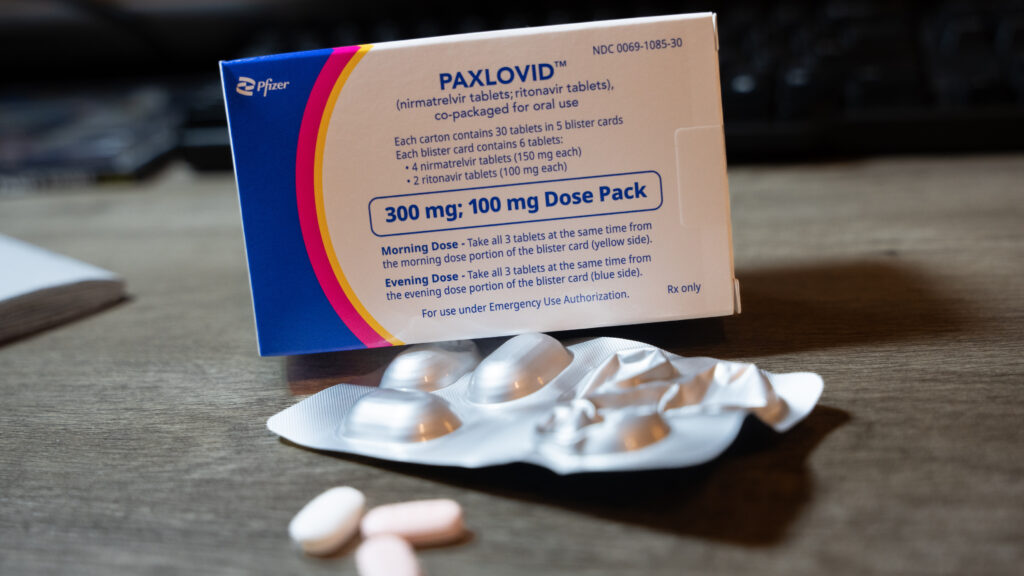
Get your daily dose of health and medicine every weekday with STAT’s free newsletter Morning Rounds. Sign up here. Good morning and happy Allston Christmas to everyone in the Boston area. Below we’ve got all the news you need outside of Storrow Drive. Nine new companies make drug pricing deals President Trump announced the next round of drug pricing deals yesterday, with nine new companies joining the 17 that previously reached agreements with the administration. Companies made pledges to sell new medications to U.S. patients at prices comparable to the lowest prices in peer countries, to offer their drugs to state Medicaid programs at “most-favored nation” prices, and, in some instances, to bolster domestic manufacturing and contribute to the U.S. medical stockpiles. (Keep in mind: The exact details of these deals, including the impact on Medicare, have not been publicly released.) Health secretary Robert F. Kennedy Jr. said during the announcement that the president made clear both he and CMS administrator Mehmet Oz could lose their jobs if they didn’t deliver the deals. Read more from Daniel Payne and Elaine Chen on the result of those “very very emotional conversations.” Study shows Paxlovid won’t treat long Covid fails Results from an ongoing study looking for ways to treat the symptoms of long Covid suggest that Pfizer’s Paxlovid is not an answer. The study, led by researchers at Boston’s Mass General Brigham health system, showed the drug, which is used to treat acute Covid-19 symptoms, did not work better than a placebo when given to people with long Covid. Paxlovid — a combination of the drugs nirmatrelvir and ritonavir — works by stopping the virus that causes Covid from multiplying. The researchers wanted to see whether it could help long Covid sufferers by potentially doing the same to viruses that might be lingering in their bodies. The three-armed trial studied the full drug, and each of the component parts against a placebo, with treatment ranging from 15 to 25 days. (Paxlovid for acute Covid is taken for five days.) “Unfortunately treating viral persistence with this antiviral medication did not show evidence of clinical benefit,” said co-principal investigator Lindsey Baden. The study, funded by the National Institutes of Health, was published in the journal Lancet Infectious Diseases. — Helen Branswell New guidelines on migraine prevention Since the American Headache Society and the American Academy of Neurology last updated their recommendations for migraine prevention in 2012, a host of new treatments have hit the market. There was so much new scientific literature to review that the next set of guidance, on which work began in 2018, was just released yesterday. The new recommendations advise doctors to offer preventive treatment to people who experience at least four migraine or severe headache days per month, or whose migraines interfere with their ability to work or complete daily tasks. Many of the new drugs target the calcitonin gene-related peptide, or CGRP, pathway, which is implicated in migraine. The recommendations are sorted based on qualifications, like whether evidence of efficacy is a top concern versus tolerability or long-term safety. But as some outside experts pointed out, better outcomes for patients depend on their ability to seek and afford the treatment. That may be where the recommendations get trickier. Read more from Isabella Cueto on the latest guidance. MAHA champions nutrition — so where are the dietitians? As the nation increases its appetite for nutrition in health care, long-standing problems saddled with new barriers are combining to make a career in dietetics less appealing and less financially feasible for many potential experts. That may make some of the Trump administration’s more ambitious food goals — like expanding nutrition coaching in primary care and helping chronically ill people eat more fresh produce — harder to achieve. “I would predict that 20 years from now, unless something seriously changes, the role of a dietitian will not really exist,” registered dietitian Jo-Ann Heslin told STAT’s Lauren Chan and Isabella Cueto. Read more from this dynamic duo. It’s the last story from Lauren, who has been STAT’s nimble editorial intern for the summer. She’s a registered dietitian herself, so it’s an issue affecting her directly. A randomized trial on weed edibles and driving A simulated-driving experiment at a Toronto hospital found that people who took cannabis edibles experienced a dose-dependent response in their driving capabilities — specifically in how much they weaved within the (simulated!) lane, their reaction time, and speed. Forty participants were given edibles amounting to either a placebo dose (0 mg THC) or 2 mg, 10 mg, or 20 mg before taking a driving test at two and five hours after taking the drugs. The dose-dependent response was strongest with the higher doses. Importantly, the peak THC concentration among study participants, taken by blood tests at two and five hours post-exposure, were near or below the common thresholds for laws against intoxicated driving. In Canada, that threshold is 5 ng/mL, but the peak concentration of THC for participants after high and medium doses were 3.4 and 1.6 ng/mL respectively. In the U.S., 18 states have similar laws against operating a vehicle with certain amounts of cannabis in your system. The study, published yesterday in JAMA Network Open, was a small one. Still, it shows how important legislation around impaired driving can be, and it highlights the difficulty of measuring said impairment when it comes to marijuana. How do researchers feel about capping grants? Earlier this summer, the NIH proposed limiting the number of grants each individual scientist can have at once. Some scientists felt the idea held promise at a time when first put forward. Now, the agency has received more than 3,300 public comments on the idea, and the perspective is decidedly mixed. The NIH estimates that 40% of the responses opposed the proposal, 27% supported the idea of a cap, and 32% were mixed, STAT’s Anil Oza reports. Read more on what the commenters had to say. What we’re reading The MAHA custody battle, New Yorker New CDC director delays adding Pennsylvania deaths to measles data, Washington Post Opinion: The Trump administration is burying science and health care in paperwork, STAT How bad will this year’s flu season be? New York Times
Paxlovid did not help long Covid, study finds
Full Article
Original Source
Read the full article at Statnews →KhanList aggregates and links to publicly available news content. We do not host full articles from third-party sources. Always verify important information with original sources.