
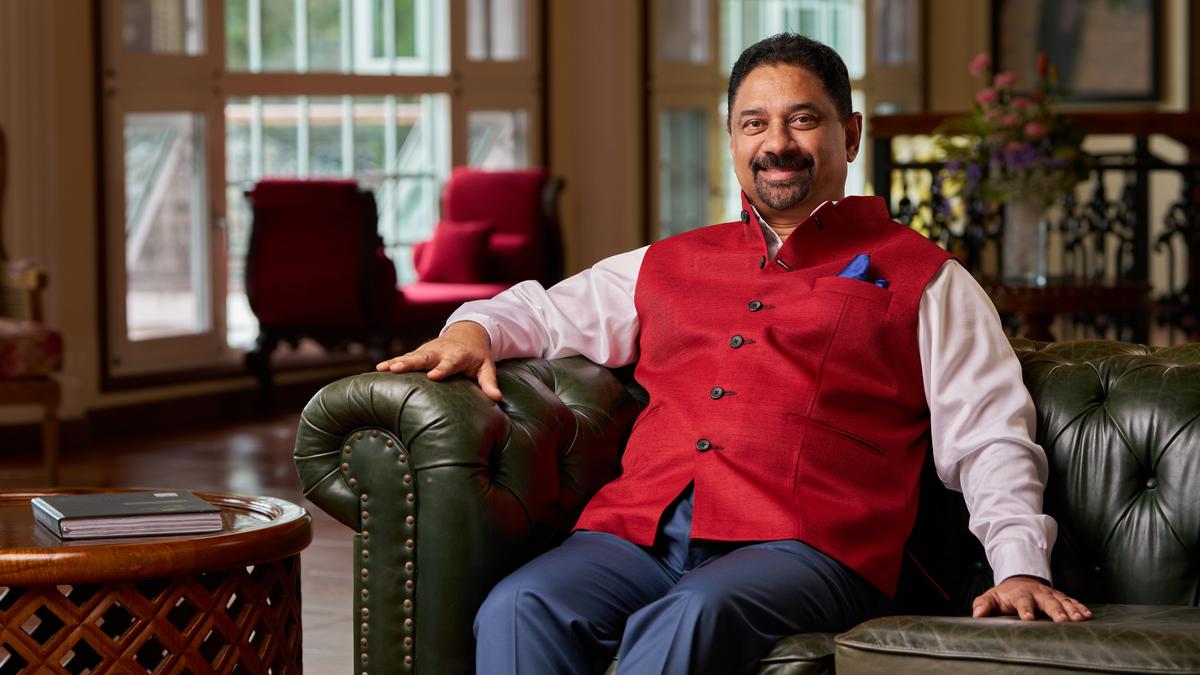
Could a single malt born under Goa’s tropical sun compete with a Scotch shaped by Scotland’s cold, mist-laden climes? When Paul John entered international markets, it set out to challenge a hierarchy, claiming shelf space alongside Scotch while establishing Indian single malt on its own terms, in composition, character and craftsmanship.“When we launched internationally in 2012, people were surprised to know that India was making a single malt,” recalls Paul P John, chairman of the Goa-based whisky maker John Distilleries. “They all had the impression that if it’s a whisky from India, it’s mainly made of molasses alcohol,” he adds. Paul John visitor centre, Goa | Photo Credit: Special Arrangement For the first five years, the brand sold exclusively in international markets, Paul says. Much of the effort went into explaining its production methods and reassuring consumers about its standards. Today, he believes the perception has changed dramatically. Paul John says its portfolio has won more than 400 international awards. Paul John whisky | Photo Credit: Special Arrangement After more than 14 years, Paul John Whisky’s packaging refresh retains its signature elephant motif while adopting a contemporary luxury aesthetic, with expression-specific illustrations inspired by flavour and provenance.The new identity is already visible across Nirvana, Brilliance and Bold, with the Select Casks range set to transition in phases. The liquid remains unchanged, Paul says, while the broader ambition is to foreground Indian craft. The brand exports to 44 countries, with exports accounting for 30–35% of volumes and the domestic market making up the rest. Key overseas markets include the US, France, Japan, South Korea, Singapore, the UK and Germany. The rebrand comes as the company pursues premiumisation and portfolio expansion over the next five years.The prices of Paul John’s 750 ml expressions vary across states. In West Bengal, Bold and Brilliance are priced at ₹4,120 each, while Nirvana costs ₹2,820. In Karnataka, Bold and Brilliance cost ₹3,600 each, and Nirvana is priced at ₹2,600. In Goa, Bold and Brilliance are priced at ₹4,200 each, while Nirvana costs ₹1,850. In Maharashtra, Bold and Brilliance are priced at ₹6,200 each and Nirvana is priced at ₹3,475. Haryana has the lowest prices, with Bold and Brilliance costing ₹3,200 each and Nirvana priced at ₹1,800. Paul John’s Nirvana, Bold and Brilliance | Photo Credit: Special Arrangement Beyond the elephantBut, how does an Indian whisky brand express its cultural identity without reducing it to familiar symbols?Paul traces the elephant motif to India’s historical imagery, including its association with the maharajas. Asa Abraham, head of public relations, digital marketing and communications, Paul John Indian Single Malt Whisky, describes a broader ambition to work with musicians, traditional artists and textile artisans, giving them platforms to showcase their work.“We want to be known not just for being one of the best Indian single malts in the world, but also for being representatives of Indian craft,” Asa says.It is an expansive proposition, but its success will depend on execution. Indian craft encompasses inherited techniques and contemporary practices; it cannot be established through packaging alone. The collaborations Asa describes will need to give audiences a tangible connection to the people and processes behind them.Paul, meanwhile, makes a distinction between cultural influences on the brand and those on the whisky itself. The visitor centre draws on Portuguese architecture, reflecting Goa’s history. The spirit, he insists, is “completely Indian”, from its ingredients and water to its production methods. The exception is peat, imported from Scotland for the peated expressions because the company has not found a suitable Indian source.Would a younger drinker choose it over Scotch?I put a more pointed question to Paul: if the packaging were removed from a bottle of Paul John, would a younger drinker choose it over a Scotch?Paul argues that Indian single malt has made significant strides in the past decade. Awards have helped establish credibility, but their influence has limits.“They create awareness,” he says, explaining that an award gives consumers a reason to try a whisky they might otherwise overlook. Whether they return to it depends on the experience itself.“Every single malt is different,” Paul says. Some drinkers prefer one style, others another. Asa argues that international recognition lends credibility and points to the range of expressions available, from cask-strength and peated whiskies to unpeated variants and different cask finishes. Paul John’s Bold | Photo Credit: Special Arrangement Recognition can secure a place on the shelf, but it cannot guarantee a place in a consumer’s preferences. The more interesting test of Indian single malt’s progress may be whether drinkers begin choosing individual expressions for their character, rather than approaching them primarily as alternatives to Scotch.That also means resisting the temptation to treat Indian single malt as a uniform category. Asa explains that whiskies made in different parts of India develop distinct flavour profiles because of regional differences in maturation conditions and production.The industry is working towards a collective identity. Paul says major producers have come together to form the Indian Malt Whiskey Association, which is developing common standards and an emblem for members to use on their packaging. Such recognition could help consumers identify Indian single malt, while leaving room for the differences between producers.Is tropical maturation an advantage or an industry myth?The question of geography becomes more complicated when the discussion turns to climate. India’s heat and humidity are frequently presented as advantages for whisky maturation. But does a tropical climate simply accelerate the process? Does it alter the interaction between spirit and wood? And has the industry romanticised the advantage?Paul calls it a matter of fact. In Goa, he says, maturation happens “almost four times than what happens in Scotland”. He estimates annual evaporation at around 10%, compared with approximately 2% in Scotland.These are the distiller’s estimates, rather than universal measures of maturation. Temperature, humidity, cask characteristics and warehouse conditions all influence how a whisky develops; faster maturation does not automatically mean better whisky.Paul’s central argument is that “age does not determine quality”. He cites Paul John’s Mithuna, which he says matured for six-to-eight years before being recognised Third Finest Whisky in the World (2021) and Asian Whisky of the Year 2021 by Jim Murray’s Whisky Bible. His point is that a younger whisky can compete with expressions matured for considerably longer.There is also a cost to the tropical climate. Paul says a 200-litre cask may yield only 150 to 160 litres after six years, depending on the conditions and duration of maturation. Evaporation affects the quantity available for bottling, adding to production costs.But if climate is part of the argument for Indian single malt, the industry must explain how it shapes the whisky in each case. Tropical maturation is a condition of production, not a guarantee of quality. The spirit still has to deliver.What does premiumisation actually mean?Paul John’s plans include more exclusive expressions, raising another question: does premiumisation mean higher prices?Paul says some releases will cost more because of the inputs involved. Certain casks can cost around ₹50,000 each, he says, while maturation and elaborate packaging add to the final price. The company is also considering an older whisky in a more exclusive presentation.Yet he insists that accessibility remains central to the business, pointing to Nirvana, a four-year-matured single malt he describes as aggressively priced. Paul John’s Nirvana | Photo Credit: Special Arrangement The tension is clear. Craft can justify a premium when consumers understand what they are paying for: cask selection, maturation, the character of the spirit and the decisions behind its production. But a more expensive bottle or elaborate packaging cannot, by themselves, establish greater value.Paul John wants to represent Indian craft while appealing to younger drinkers, whom Paul says are increasingly exploring whisky and single malt. That offers room for both accessible entry points and more specialised expressions. The challenge is to make the distinction meaningful to consumers. The elephant, long associated with India’s royal past, remains central to Paul John’s visual identity. The packaging refresh is an attempt to give that familiar symbol a contemporary identity rooted in Indian craft and expressed through a single malt that can stand alongside Scotch on the strength of what is in the glass. The elephant remains; what Paul John hopes to change is the story it tells.
Paul John Single Malt Whisky rebrands: What’s changing beyond the bottle?
Full Article
Original Source
Read the full article at Thehindu →KhanList aggregates and links to publicly available news content. We do not host full articles from third-party sources. Always verify important information with original sources.