
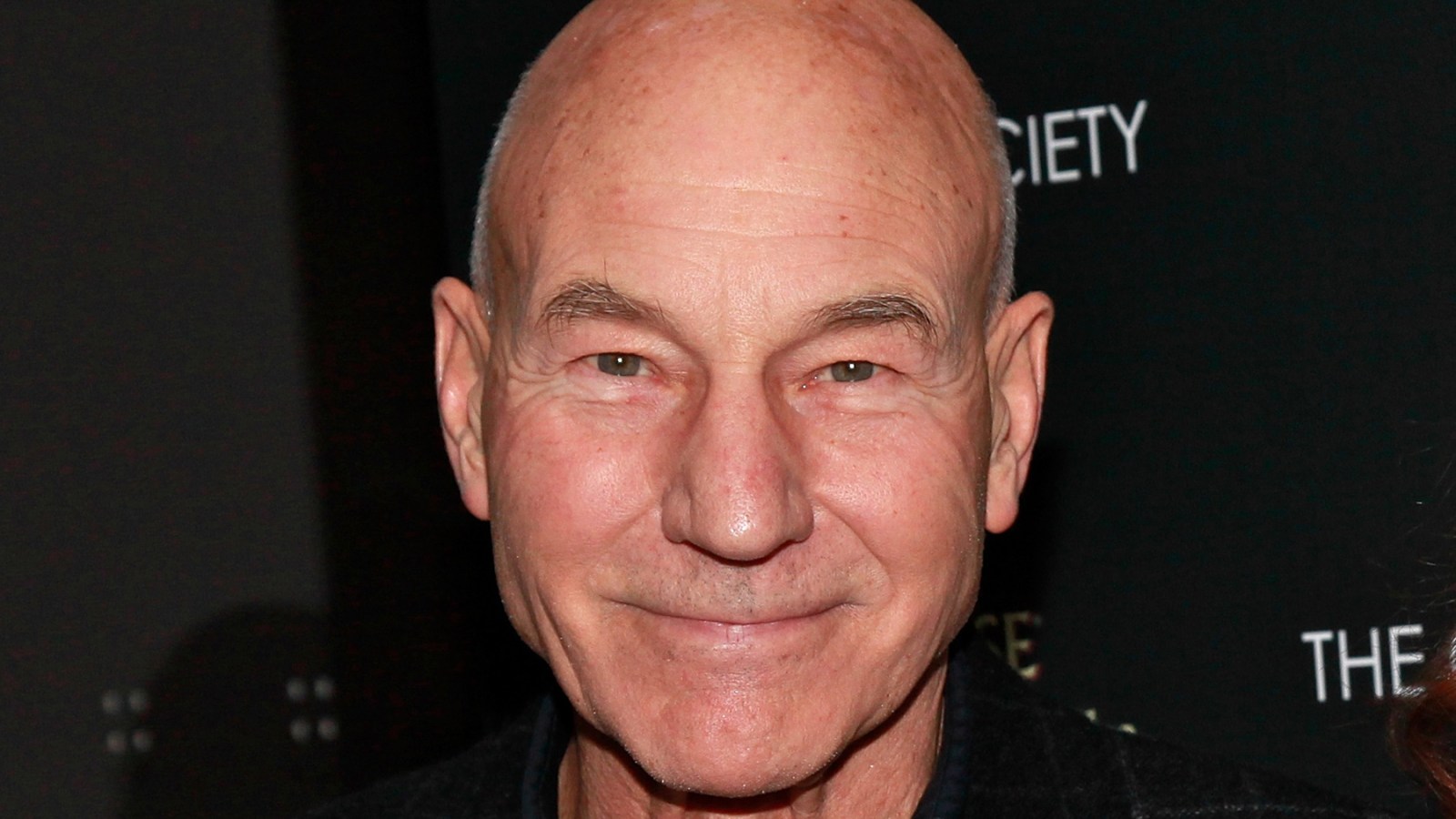
"We will forever cherish the peaceful ease and reflection on his face, an enduring reminder of his invincible grace" Revered English actor Patrick Stewart, the Emmy-winning performer known for his work on stage and screen and beloved for both his amiable persona and roles in popular franchises like Star Trek and X-Men, died Wednesday at his home in Los Angeles. He was 86. Stewart’s death was confirmed by a statement on his social media, which added that the cause was “a brief and poignant journey with Alzheimer’s disease and lewy body dementia.” “He has been held in the warm embrace of family and friends, surrounded by live music, prayer, tears, laughter, and the kind of profound emotion that only he could inspire after a lifetime of devotion to us all,” the statement read. “We will forever cherish the peaceful ease and reflection on his face, an enduring reminder of his invincible grace.” Stewart was adored by his collaborators and the public alike. He was good-natured and friendly, often praised for his down-to-earth sensibility and willingness to bring the best to every project. “He’s not Sir Patrick Stewart for no reason,” Star Trek: Picard creator Akiva Goldsman said. “He’s fun, he’s funny, and he’s great to have a glass of wine with, or two. And he’s a collaborator.” Still, the actor had a larger-than-life persona, particularly for his fans. “Going around with Patrick is like going around with the pope,” McKellen said of Stewart. “Not that people genuflect, but he’s touched so many lives.” Stewart was born July 13, 1940, in Yorkshire, England, in the midst of World War II. He grew up in a poor household in Mirfield with a physically abusive father, something Stewart was refreshingly honest about in interviews. In his hometown, he frequently participated in local theater, a common pursuit for many in Mirfield, and attributed his love of performing to his English teacher, Cecil Dormand, who introduced Stewart to the work of William Shakespeare. “Although many people in my life have had great influence on me, without this man none of it would have happened,” Stewart said when Queen Elizabeth II knighted him in 2010. “He was the one that put a copy of Shakespeare in my hand [and] said, ‘Now get up on your feet and perform.’” Editor’s picks Initially, Stewart began his professional life as a journalist, contributing to the local newspaper. But he quickly realized acting was his true path. “I threw myself into the job, aware that I was very, very lucky to have a job like that,” Stewart recounted to Rolling Stone of his first job. “But I’d become massively involved with amateur theatricals. I loved it. I loved going to rehearsals. For one thing, it got me out of my house. But, there was a problem, which was that all my amateur acting interfered badly with my work as a journalist. I got into trouble. I was dishonest. I made things up. I invented stuff… Because to me, being at the rehearsal was more important than attending a council meeting.” Stewart relocated to Bristol to attend the Bristol Old Vic Theatre School. He made his first professional onstage appearance in a production of Cyrano de Bergerac in 1959 at the Theatre Royal, Bristol. In 1966, he joined the Royal Shakespeare Company, a transformative step in Stewart’s stage career, and he remained with the storied company until 1982. During his tenure at the Royal Shakespeare Company, Stewart performed in numerous productions, including Hamlet, King Lear, and The Taming of the Shrew. He landed his debut onscreen role in 1967, playing a fireman on British soap opera Coronation Street. The actor began to appear more regularly on television in the Seventies, including the TV movie The Gathering Storm, about Winston Churchill, and BBC adaptation I, Claudius. In the 1980s, Stewart’s career trajectory evolved when he was cast as Jean-Luc Picard on Star Trek: The Next Generation, which premiered in 1987 and ran for 178 episodes. Star Trek creator Gene Roddenberry famously disapproved of Stewart’s casting, saying, “What the hell? I don’t want a bald, middle-aged Englishman.” Despite that, the character earned a massive fan following, with Stewart becoming inextricably linked to Picard. The series itself had a vast-reaching cultural impact and cemented Stewart as a full-fledged TV star, including appearances on Saturday Night Live and The Simpsons. Related Content “The Next Generation‘s impact on so many people has been extraordinary,” Stewart said of the series. “It was about truth and fairness and honesty and respect for others, no matter who they were or what strange alien creature they looked like. That was immaterial. They were alive. And if they needed help, Jean-Luc Picard and his crew, his team, were there to give it. In a sense, we were ministers. And I have heard now so many times from individuals who have been honest enough and brave enough to tell me aspects of their life, of their health, of their mental health. And how it was all saved and improved by watching every week.” After Star Trek: The Next Generation concluded in 1994, Stewart shifted to film. He reprised his role as Picard in Star Trek: First Contact and Star Trek: Insurrection, and joined Mel Gibson and Julia Roberts in Conspiracy Theory. In 2000, Stewart was cast as popular Marvel comic book character Professor Xavier in X-Men, one of the flagship superhero movies that heralded the modern-day craze. He continued as Professor X in X2 and X-Men: The Last Stand, and later returned in X-Men: Days of Future Past despite his character’s death in the initial trilogy. It was in these films that Stewart ignited a deep friendship with fellow English actor Ian McKellen, who played his nemesis Magneto. Stewart cited his return as Professor X in 2017’s Logan, a bleak take on the comics, as his favorite of the franchise, although he later showed up briefly in Marvel’s 2022 sequel Doctor Strange in the Multiverse of Madness. “I loved Logan, which will be perhaps dismaying to the X-Men fans, but it was my best experience with any of those movies,” Stewart told Rolling Stone. Being part of the X-Men universe accelerated Stewart’s fame, and it also gave him a platform to discuss real-world issues through entertainment — something he often proclaimed of great importance. “[That] was a strong incentive to be part of this franchise,” Stewart said to Rolling Stone of the films. “Because it was dealing with a contemporary issue. Concerning prejudice, and the treatment of outsiders, or those who are thought to be different, whether by race or gender or sexuality. That people should be allowed to live and express their individuality in their own way. And should not be victimized for being different.” Stewart continued to embrace a broad range of stage and screen roles throughout his career, never differentiating between the ideas of high art and mass entertainment. He voiced multiple characters on animated series like Family Guy, American Dad!, and Robot Chicken, and acted as a correspondent on The Daily Show for several episodes. He continued appearing on stage, notably joining McKellen for Waiting for Godot in 2009 and again in 2014. He returned again to Picard in 2020 in the Star Trek reboot Star Trek: Picard, which ran for three seasons to great acclaim and fan enthusiasm, delighting many as he intoned his famous “Engage” line again. Rolling Stone’s Alan Sepinwall raved about the series, noting that “Stewart returning to the role would be reason enough to watch.” “With all due respect to Shatner, Nimoy, Brooks, Auberjenois, Mulgrew, Bakula, et al., Stewart is far and away the best actor to be a Star Trek regular,” Sepinwall wrote. “He made the dire first two seasons of Next Generation watchable through his sheer presence, and when the writing improved, his work took the series to another level… He has never treated this job like a paycheck, but he seems particularly energized by the challenge of returning to this role at this moment in both his life and Picard’s.” Stewart was indeed highly lauded for his work, both by critics and awards bodies. He was nominated for four Emmys, three Golden Globes, three SAG Awards, one Tony, and three Grammys. (He won the Grammy for Best Spoken Word Album for Children in 1996 for Prokofiev: Peter and the Wolf.) In England, Stewart received five Olivier nods, winning for stage productions of Antony and Cleopatra and Hamlet. In 2001, Stewart was appointed Officer of the Order of the British Empire, known as an OBE, and in 2010 he was knighted for his contributions to the arts. Alongside his acting career, Stewart was a strong advocate for several important causes. He spoke out against domestic violence for Amnesty International, and became a patron of U.K. charity Refuge, which helps abused women. He stood for gender equality, and was a vocal supporter of LGBTQ+ rights. “His professional accomplishments were humbly matched by his philanthropy and activism on behalf of human rights, survivors of domestic violence, global refugees, veterans’ mental health services, and animal welfare, particularly his cherished foster pitties,” the statement announcing his death said. “He’ll be remembered for the dignity, compassion, and humanity he brought to every role — in his art and life.” Trending Stories His memoir, Making It So: A Memoir, arrived in 2023 and honestly showcased the actor’s life and beliefs. More recently, Stewart acted as a patron of Dignity in Dying, actively campaigning for the right to assisted suicide in the U.K. “If someone is in profound misery, and is a person of faith, the way in which I believe their faith can be celebrated is by giving them what they most need: a pain-free ending,” Stewart told Rolling Stone in 2020. “It will give other people a choice to end their life in the way in which they wish to see it end. Of course, I put myself in their shoes, often. I’m 79, and I don’t know what’s going to happen tomorrow.”
Patrick Stewart, Beloved ‘Star Trek’ and ‘X-Men’ Actor, Dead at 86
Full Article
Original Source
Read the full article at Rollingstone →KhanList aggregates and links to publicly available news content. We do not host full articles from third-party sources. Always verify important information with original sources.