
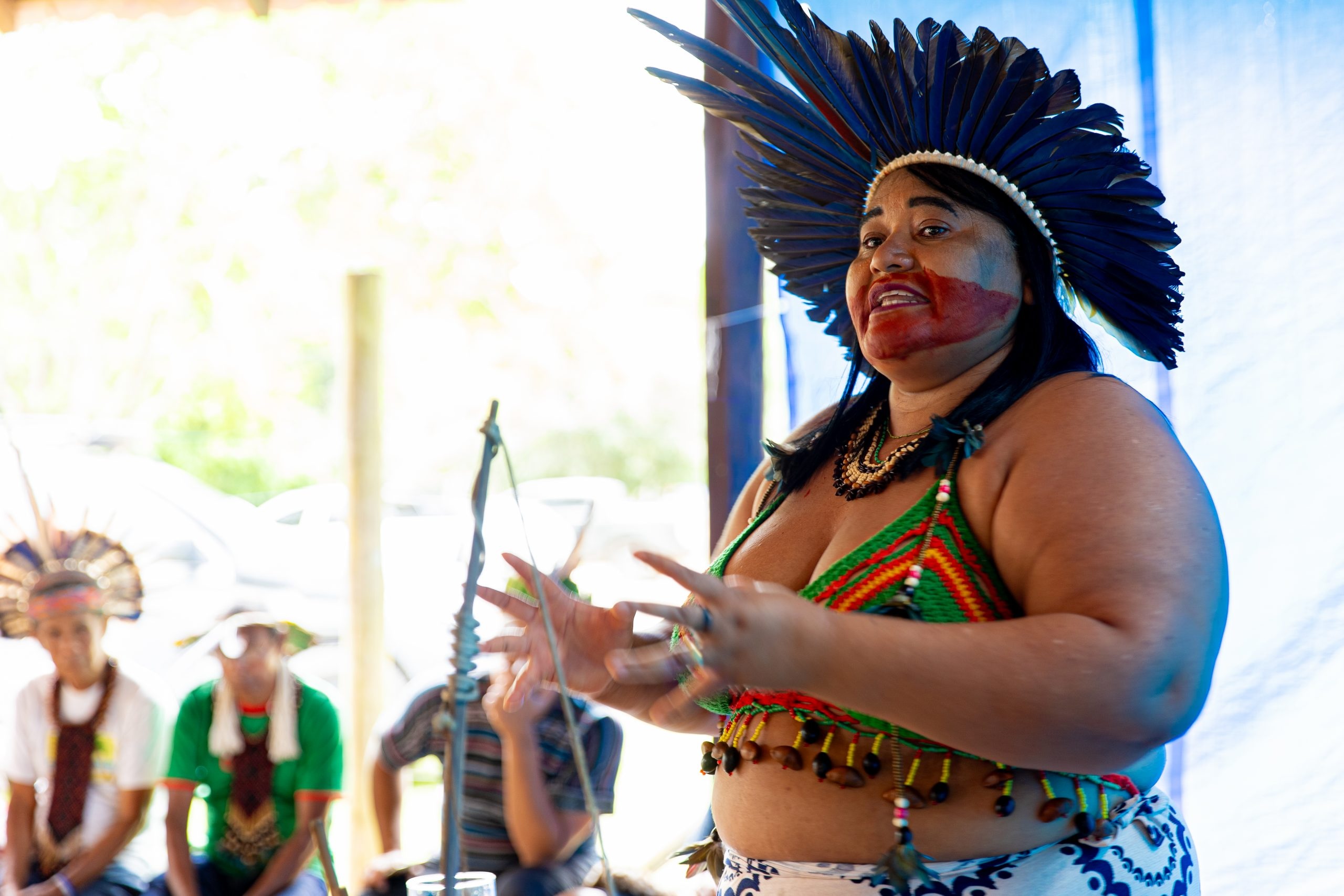
Pataxó Indigenous people occupied the entrance to the Civil Police station in the city of Eunápolis, in the far south of Brazil’s Bahia state on Nov 12. It was a peaceful protest against the arrest of two Pataxó leaders in the Barra Velha Indigenous Territory. Erilsa Braz dos Santos, known as Uruba Pataxó, vice-chief of Barra Velha Mother Village, and communicator Karen Pataxó were arrested on Nov. 11 on suspicion of drug trafficking in the region. The Pataxó deny the accusations. Karen was released, but Uruba remained in custody and was transferred to a prison in the city of Teixeira de Freitas on Nov. 12, sparking outrage and mobilization among Indigenous people on social media. “This is a political accusation, because she is a leader who defends her people and her territory,” a protester said in a video published on Instagram by the Media and Art Research Center (Nupomar) and Barra Velha Village during the Eunápolis demonstration. Uruba and Karen were detained during Operation Barra Velha, carried out by the Civil and Military Police in Bahia’s Porto Seguro municipality. According to Indigenous leader Dário Pataxó, the imprisonment is intended to silence those who speak out against drug trafficking in the territory. “We know that their intention is to stop the movement. Uruba is one of those on the frontline. They’ve already stopped [Cacique] Suruí, who was president of the Barra Velha Council of Chiefs and is facing proceedings under house arrest. And now they want to stop Uruba,” Dario told Mongabay by phone. Pataxó Indigenous protest outside the police station in Eunápolis, Bahia. Image courtesy of the Barra Velha and Comexatiba Indigenous Territories. Uruba is a teacher, regional coordinator of the United Movement of Indigenous Peoples and Organizations of Bahia (Mupoiba), and secretary of the territory’s Council of Chiefs. In a statement, Mupoiba pointed to an “orchestrated engine driven by forces serving predatory large landholdings and rural militias” to persecute land defenders while armed attacks against Indigenous communities are investigated slowly. The organization compared the tactic to the escalation against the Terena and Guarani-Kaiowá peoples in Mato Grosso do Sul state. On Nov. 10, Chief Dione Alcântara Terena, a regional coordinator for Funai, Brazil’s Indigenous affairs, was arrested in Campo Grande on allegations of participating in an organized scheme to invade rural properties in the region. The Articulation of Indigenous Peoples of Brazil (APIB) recorded 40 reports of political violence against 30 Indigenous people in 15 states during the 2026 elections, including seven killings and 11 death threats. The Indigenous Federation of the Pataxó and Tupinambá Nations of Southernmost Bahia (Finpat) said land disputes, which fuels conflicts in the area, fall under the jurisdiction of the Federal Court. The Indigenous Missionary Council (Cimi) is monitoring Uruba’s imprisonment alongside the Public Defender’s Office in Bahia. They said no drugs or weapons were seized during the operation. The defense is preparing a habeas corpus petition. Banner image: Deputy Chief Uruba Pataxó. Image courtesy of the Bahia Court of Justice. Credits Topics
Pataxó Indigenous people protest the arrest of a female vice-chief in Brazil’s Bahia
Full Article
Original Source
Read the full article at News →KhanList aggregates and links to publicly available news content. We do not host full articles from third-party sources. Always verify important information with original sources.