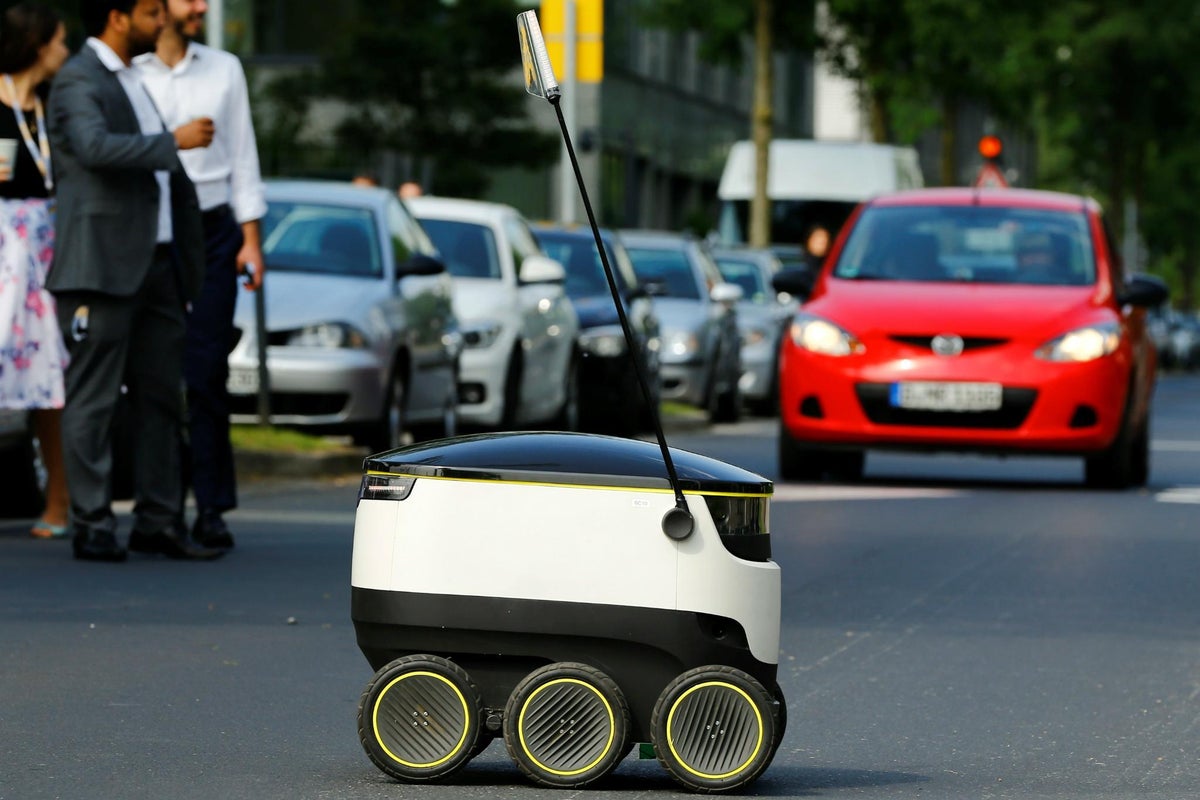
A 73-year-old parking attendant filed a lawsuit against autonomous delivery company Starship Technologies, alleging one of its devices knocked her down at an Arizona State University parking structure in Tempe in late 2023.Trudy Perez claims the collision resulted in permanent impairment and a spinal fracture. The case is scheduled to go before a jury in early 2027, as reported by NBC affiliate 12 News. According to court filings and an Arizona State University Police Department report, the incident unfolded as Perez walked behind the delivery robot. The device initially crossed in front of her before reversing into her, knocking her onto the ground. Police reports state the robot drove away after Perez fell, then reversed back toward her as she lay on the ground. A responding officer documented a cut on her arm.Starship Technologies provided investigators with video footage recorded by the device, according to 12 News. The company declined to comment on the active litigation.A 73-year-old parking attendant has filed a lawsuit against Starship Technologies, alleging one of its devices knocked her down in Arizona in late 2023 (REUTERS/Wolfgang Rattay)In a statement issued by Vrana Law Firm, attorneys representing Perez said she suffered a spinal fracture along with other injuries that caused lifelong physical impairment when the robot suddenly reversed direction. The suit alleges Starship failed to operate the device safely.Under Arizona law, businesses running autonomous delivery devices must maintain minimum liability coverage of $100,000 per unit, enforce reasonable safety precautions for pedestrians and ensure a human operator actively monitors each robot.Legal analysts say personal injury suits involving automated technologies frequently drive companies to tighten safety protocols. Josh Kolsrud, a local attorney not involved in the litigation, told the outlet that liability standards protected both pedestrians and operators, noting that state law set clear requirements for human oversight and financial coverage.“That means that they are responsible for not injuring other people wrongly, and also, you know, if somebody damages the robot, they can be held liable as well,” Kolsrud said.He added that Arizona regulations mandate “having insurance of at least $100,000 on each robot, as well as having a human, a real person that's monitoring the robot itself.”The Independent has contacted Starship Technologies for comment.
Parking attendant, 73, sues robot company claiming delivery drone knocked her down and caused significant injuries
Full Article
Original Source
Read the full article at Independent →KhanList aggregates and links to publicly available news content. We do not host full articles from third-party sources. Always verify important information with original sources.