
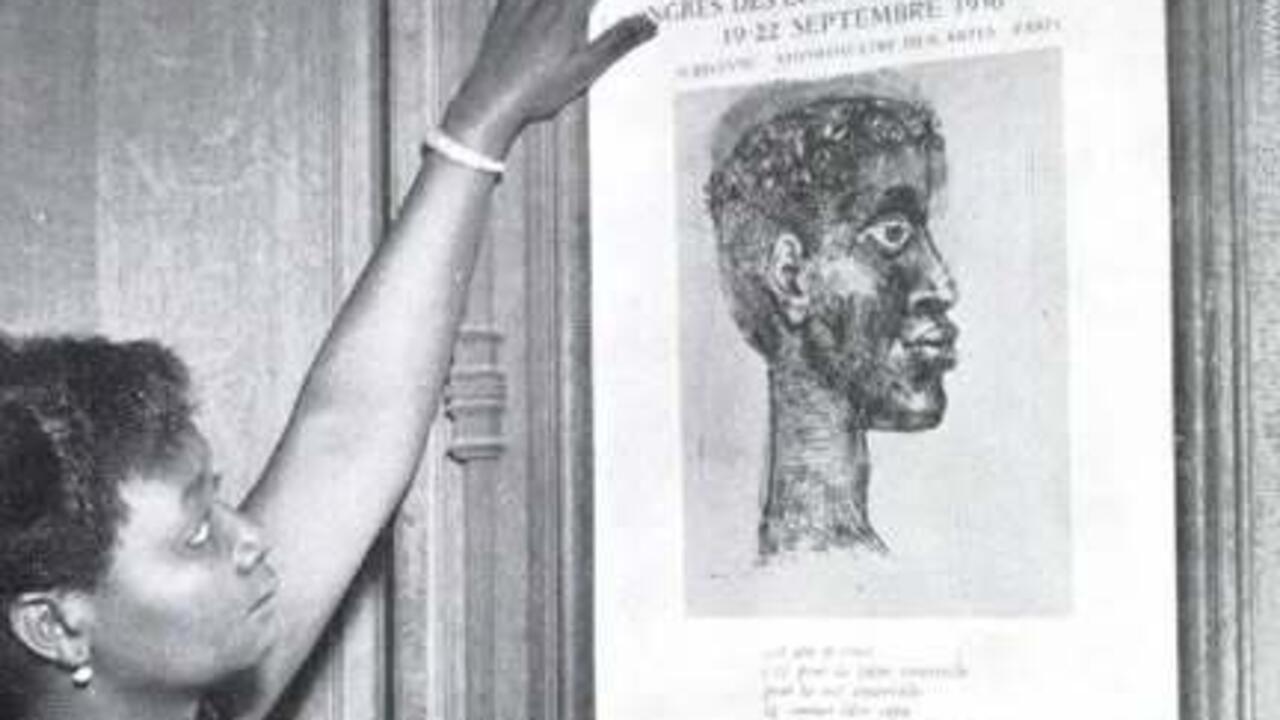
Tuesday marks the 70th anniversary of the landmark 1956 Congress of Black Writers and Artists, held at the Sorbonne university in Paris and aimed at strengthening the Pan-African movement and giving voices to black writers and intellectuals from across Africa, Europe and the United States. Issued on: 22/09/2026 - 15:29 3 min Reading time The congress took place from 19 to 22 September 1956 – a pivotal time following the Second World War, when the Cold War, colonial rule and segregation were shaping world affairs. It brought together leading intellectual figures of the time, including Sengalese intellectual and author Cheikh Anta Diop, Senegal's future president Léopold Sédar Senghor, future president of Martinique Aimé Césaire and African-American author Richard Wright – as well as the event's organiser Alioune Diop, Senegalese writer, politician and founder of the literary journal Présence Africaine and the publishing house of the same name. Diop wanted to hold an event that would draw attention to the long-overlooked contribution to human heritage of Africa and its diaspora communities. The Paris congress was prepared over 18 months by Diop and the editorial team of Présence Africaine, with its organising committee including major literary figures. Jean-Paul Sartre, author André Gide and ethnologist Marcel Griaule also supported the project, while Picasso, a friend of Diop's, drew the poster for the event. Over the four days of the congress, the Sorbonne's Descartes lecture hall drew large crowds. Diop had assembled representatives from 25 African and American countries, alongside numerous young African students from mainland France. The programme listed 42 papers, but only 27 were delivered because the schedule was so full. These covered three broad themes – from an inventory of the riches of African culture to its prospects, and the crisis facing black cultures under racism and colonialism. Pan-African festival invites France to take a fresh look at Africa Heated debates In an event that saw intense exchanges between speakers, the audience and critics from all sides, the first major split emerged after Senghor spoke on “the spirit of civilisation or the laws of Black African culture”. Some listeners backed Senghor’s belief in a unique Negro-African civilisation, while others argued for a more historical understanding of culture, proposing that it be approached as a sum of evolving identities, linked to the diverse circumstances of black communities around the world. Senghor's essentialist stance – according to which the black identity is fixed and characterised by sensuality and intuition rather than an intellectual or analytical dimension – raised questions over abstract analysis of cultural issues at the expense of the historical dimension of those issues. Aimé Césaire, Jacques Alexis and Richard Wright pictured outside the conference at the Sorbonne in Paris, 1956. © Wikimedia Commons A second significant divide in opinion emerged during Césaire’s talk on “culture and colonisation”. Césaire blamed the hardships of African Americans on their political situation, as dominated and colonised people on the same level as Africans or Antilleans. The American writers in the room strongly rejected that comparison, insisting that black Americans were not colonised. The debate became heated, with the Americans preparing to walk out, as Senghor asked whether segregation in the United States was not a legacy of colonisation and the slave trade. 'Paris Noir' exhibition showcases work made in French capital by black artists "It was interesting to see Senghor and Césaire assert loud and clear the unity of the black world, a concept on which there is absolutely no consensus," said Elara Bertho, a literary historian at the French National Centre for Scientific Research. It took all of Diop’s diplomatic skill to secure a compromise by the end of the meeting, allowing the final resolution to affirm the "solidarity" of the oppressed and the need for dialogue between cultures. Despite these divisions, for Senegalese novelist and historian Elgas the congress indisputably left its mark. “Between 19 and 22 September 1956, what was being played out above all was the assertion that we are here, that the world can no longer be made without us." This article has been adapted from the original version in French by Tirthankar Chanda.
Paris congress that helped shape pan-African thought marks 70th anniversary
Full Article
Original Source
Read the full article at Rfi →KhanList aggregates and links to publicly available news content. We do not host full articles from third-party sources. Always verify important information with original sources.