
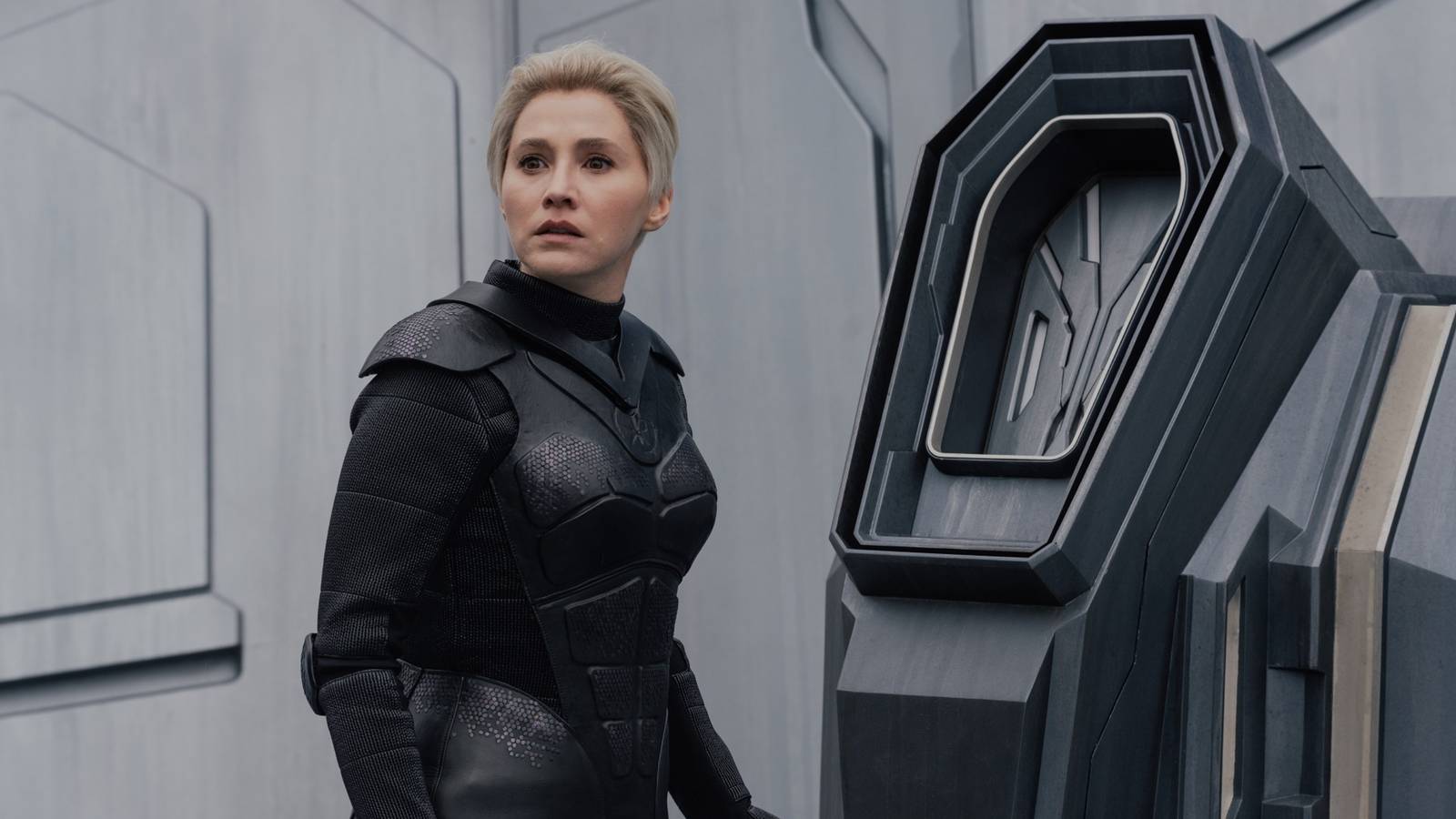
Published Aug 26, 2026, 9:00 PM EDT Tom is a Senior Staff Writer at Screen Rant, with expertise covering everything from hilarious sitcoms to jaw-dropping sci-fi epics. Initially he was an Updates writer, though before long he found his way to the TV and movies team. He now spends his days keeping Screen Rant readers informed about the TV shows of yesteryear, whether it's recommending hidden gems that may have been missed by genre fans or deep diving into ways your favorite shows have (or haven't) stood the test of time. Tom is based in the UK and when he's not writing about TV shows, he's watching them. He's also an avid horror fiction writer, gamer, and has a Dungeons and Dragons habit that he tries (and fails) to keep in check. Over the last few years, video game adaptations have become a reliable source of quality TV, with several ambitious projects like Arcane, Fallout, and The Last of Us earning both critical praise and strong audiences worldwide. Unfortunately, one of the best also became one of the most overlooked. Its early cancellation ended a prestige live-action sci-fi series before it could fully realize its potential, leaving screens just as it had begun to establish its own identity. It's a shame too, because the show tapped into the same kind of interstellar adventure that's made Star Trek and Star Wars so timeless. In 2022, Halo arrived on Paramount+, bringing Microsoft’s breakout Xbox FPS franchise to live action. Like the games, the Halo TV series follows Master Chief Petty Officer John-117 (Pablo Schreiber), a cybernetically enhanced Spartan supersoldier fighting humanity’s war against the alien Covenant in the 26th century. Rather than recreating the games, it reimagines their mythology for television and follows its own scratch-built continuity. Season 2 arrived in February 2024, expanding the conflict and pushing the story toward the long-awaited live-action debut of the Halo ring. Although the game's fandom was initially divided by choices such as Master Chief removing his helmet, Halo worked as a military sci-fi series in its own right. The show reached an impressive 80% Rotten Tomatoes score but, sadly, this wasn’t enough to save it. Paramount+ canceled Halo before its third season could arrive, cutting its narrative momentum just as the live-action adaptation was reaching its stride. The Halo TV Show Established Its Own Timeline When the Paramount+ Halo TV show was first announced, there was understandable trepidation about how the series could adapt such a dense game universe without disrupting established canon. The franchise already had an enormous mythology spanning multiple games and dozens of novels, meaning a direct adaptation that didn’t tweak any established canon was a difficult undertaking. Paramount found a smart solution: rather than forcing the Halo TV show to fit the existing canon, they established a separate continuity known as the Silver Timeline. The TV show’s Silver Timeline differs significantly from the Gold Timeline, which encompasses the Halo games and novels. Familiar events, characters and locations were all substantially reworked to create a cohesive story that worked in the television medium. Some of the big changes include The Rubble surviving, Madrigal never getting glassed, and the Covenant having completely different objectives. Even the timing and circumstances surrounding major events such as the Fall of Reach are totally different in the timeline of the Halo TV series. The decision to set the TV show in a completely different timeline gave Paramount+ Halo series room to become more than a live-action recreation of the games. The series was able to use recognizable concepts and characters while developing its own narrative arcs. Pablo Schreiber’s John-117 not being the Master Chief of the games created opportunities to explore the character from a different angle, while other established franchise names could occupy altered positions within the story. Ultimately, The Silver Timeline protected the core canon of the Halo games while giving the television series space to grow. It used this space incredibly effectively, introducing its own standalone narrative that worked incredibly well as a military sci-fi show in its own right even without the connections to one of modern gaming's most iconic franchises. What Would Have Happened In Halo Season 3 The biggest problem with Halo ending after season 2 is that the story was only beginning to reach its most exciting stage. The season 2 finale finally brought John-117 to the Halo ring, while the arrival of 343 Guilty Spark and the release of the Flood established a clear path toward the events of the original games. The last episode of the Halo live-action series also left multiple characters facing unresolved threats, making the cancellation feel like one of the most abrupt in modern sci-fi television. If Paramount+ hadn’t canceled the show, season 3 could have moved the Silver Timeline closer to the broad story of the Halo games without simply copying them. Master Chief was preparing to explore the Halo ring, while the Flood had already been unleashed on Onyx, with Dr. Halsey and Miranda Keyes caught in the middle. By the conclusion of season 2 of the Paramount+ Halo series, The Covenant, the Flood, and the Forerunners were finally converging, while Master Chief was entering the franchise's most important piece of ancient technology. After spending two seasons establishing the Silver Timeline, Halo was finally in a position to prove it was worth exploring. That is what makes the cancellation particularly frustrating. Halo did not end because its story had naturally reached its conclusion; Paramount+ ended it immediately after the show had laid the groundwork for its most ambitious chapter. A third season could have proved that the Silver Timeline was more than an experiment. Instead, viewers were left hanging just as Halo was finding its stride. Release Date 2022 - 2024-00-00 Network Paramount+ Directors Jonathan Liebesman, Craig Zisk, Dennie Gordon, Roel Reiné, Debs Paterson Cast Pablo Schreiber Master Chief, Spartan-117 / John-117 Natascha McElhone Dr. Catherine Halsey Writers Justine Juel Gillmer Franchise(s) Halo Creator(s) Kyle Killen, Steven Kane
Paramount+'s 2-Part 'Star Trek Meets Star Wars' Sci-Fi Series Deserved At Least 1 More Season
Full Article
Original Source
Read the full article at Screenrant →KhanList aggregates and links to publicly available news content. We do not host full articles from third-party sources. Always verify important information with original sources.