
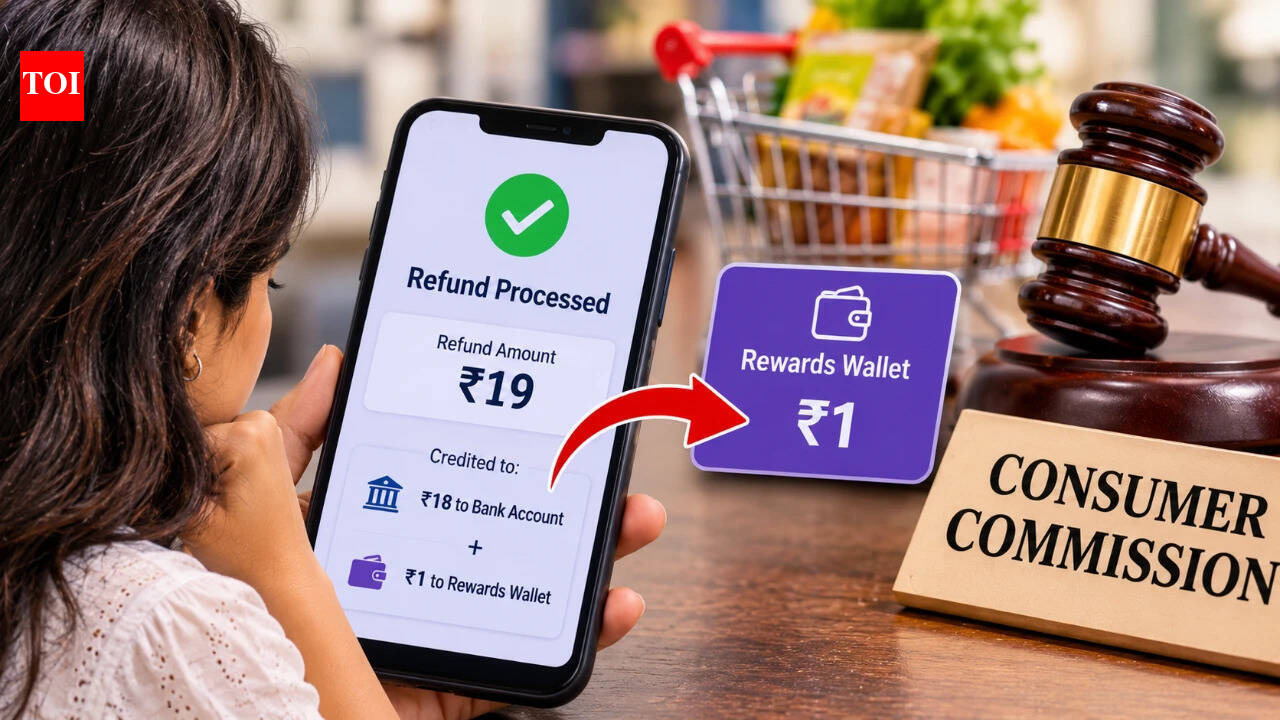
(AI image) A consumer commission in Panchkula directed a retail company to pay Rs 7,500 to Nishtha Raghav.PANCHKULA: A consumer commission has directed a retail company to pay Rs 7,500 after finding that it diverted Re 1 from each of two grocery refunds into a digital rewards wallet instead of returning the entire amount to a customer's bank account.Flagging the practice as a potential ‘dark pattern’, the commission observed that such wallet credits could encourage consumers to revisit the platform and make further purchases to utilise their money.The District Consumer Disputes Redressal Commission, Panchkula, allowed a complaint filed by 24-year-old Nishtha Raghav, holding the opposite parties jointly and severally liable for deficiency in service and unfair trade practice.The commission awarded her Rs 2,500 as lump-sum compensation and directed the opposite parties to deposit another Rs 5,000 as punitive damages with the Free Legal Aid State Commission, Haryana. The order was passed on October 28, 2026.Two orders, two incomplete refundsAccording to the order, Raghav placed a grocery order worth Rs 319 on January 23, 2026, for herself and her brother. The order included a Munch Max Chocolate bar weighing 38.5g, which was subsequently found unavailable.She placed another order worth Rs 116 on January 25, which also included the same chocolate. The product was unavailable on this occasion too.On both occasions, the platform communicated that Rs 19 would be refunded to her original mode of payment. However, only Rs 18 from each transaction was credited to her bank account, while the remaining Re 1 was adjusted against her digital rewards wallet.Raghav alleged that she had neither consented to the adjustment nor been informed that part of the refund would be credited to the wallet instead of her bank account.She raised a written complaint through the shopping application on February 3, but her grievance was marked resolved without the relief sought. She subsequently sent a legal notice by email and speed post on February 14. The local store received it on February 16, while the retail company's registered office received it on February 17. However, the issue remained unresolved.Why commission flagged a dark patternThe commission observed that a bank account and a rewards wallet were distinct modes of holding and utilising monetary value. A consumer could not be compelled to accept wallet credit instead of a refund to the original payment method, particularly when the company had represented that the money would be returned through that mode.It noted that the opposite parties had failed to produce any evidence establishing that Raghav had consented to the adjustment or accepted a disclosed refund policy permitting such a practice.In its order, the commission said diverting Re 1 from the refund into a restricted rewards wallet effectively retained part of the consumer's money within the digital rewards ecosystem. Such a credit could create an incentive for the consumer to return to the same platform and undertake another transaction to utilise the balance.The commission said the repeated practice, without the consumer's informed consent, raised concerns about manipulation of consumer choice and autonomy. Referring to the Central Consumer Protection Authority's Guidelines for Prevention and Regulation of Dark Patterns, 2023, it observed that such practices could constitute unfair or deceptive trade practices.The order also noted that the opposite parties had appeared through a lawyer but failed to file their written statement despite being given several opportunities. Their defence was consequently struck off on June 26, 2026. However, the commission clarified that this did not automatically entitle the complainant to the relief sought and examined her affidavit and documentary evidence on their merits.Holding that the repeated diversion of refund amounts could not be treated as a mere inadvertent accounting error, the commission allowed the complaint and directed the opposite parties to comply with the order within 45 days of receiving its communication.
Panchkula panel orders Rs 7,500 payout over Re 1 refund diverted to wallet
Full Article
Original Source
Read the full article at Timesofindia →KhanList aggregates and links to publicly available news content. We do not host full articles from third-party sources. Always verify important information with original sources.