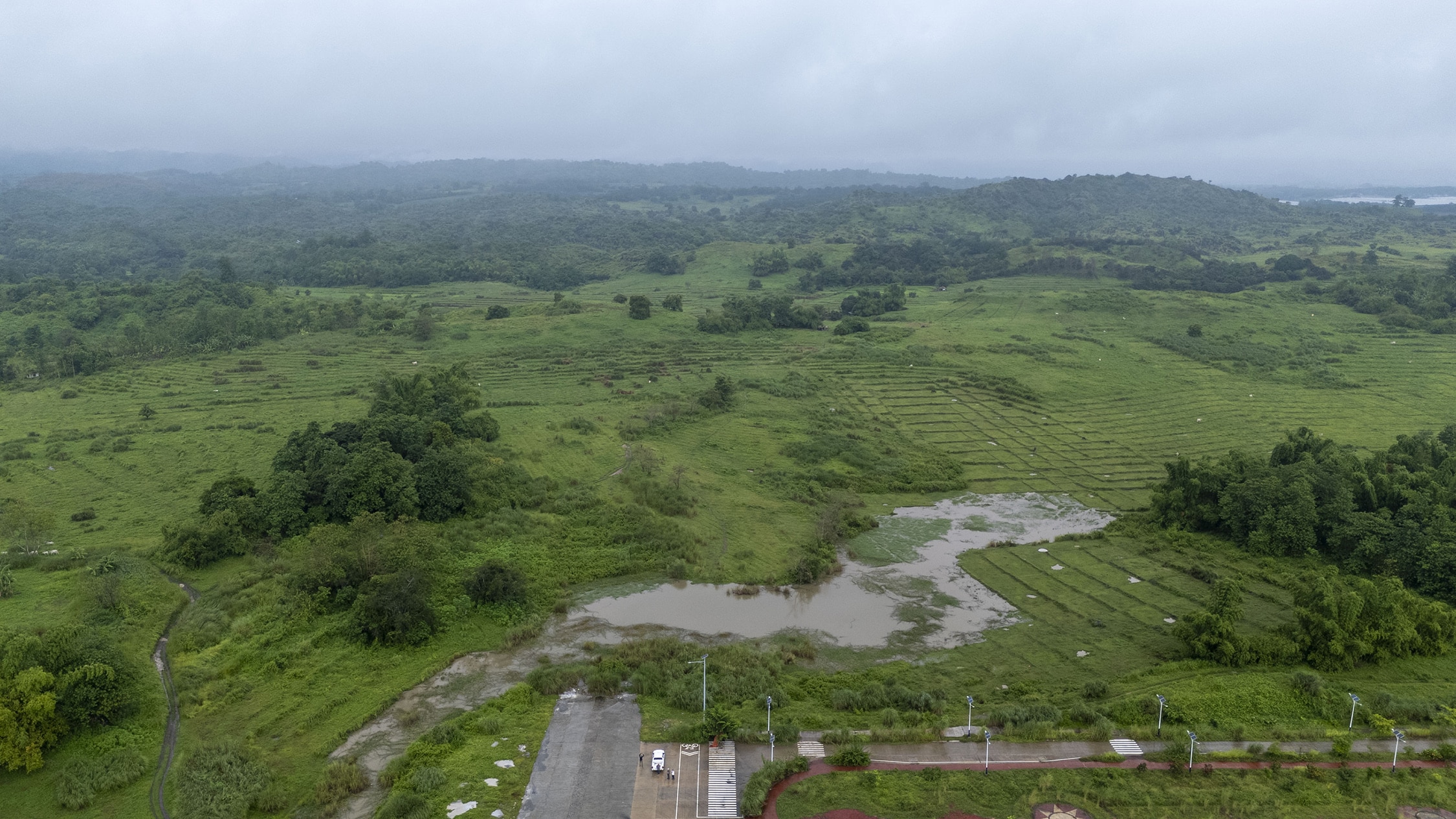
St. Scholastica’s Academy in San Fernando, Pampanga, has called for greater transparency and a temporary halt to the proposed Pax Silica project in Capas, Tarlac, until key environmental, social, and governance concerns are addressed. INQUIRER PHOTO / GRIG C. MONTEGRANDE MABALACAT CITY—A Roman Catholic school in Pampanga has called for greater transparency and a temporary halt to the proposed Pax Silica project in Capas, Tarlac, until key environmental, social, and governance concerns are addressed. On Saturday, St. Scholastica’s Academy (SSA) in the City of San Fernando issued an official statement on the proposed 1,620-hectare Pax Silica hub in New Clark City, saying that while it recognizes the project’s potential to spur economic growth, its environmental and social consequences must not be overlooked. READ: Makabayan warns Pax Silica’s Subic-Clark plan could hike power costs Article continues after this advertisement “We firmly believe that no development project—regardless of its projected economic benefits—should proceed without full transparency, meaningful public participation, and clear guarantees regarding its environmental, social, and national implications,” it said. Although government agencies have claimed that the project could attract $40 billion to $70 billion in investments and generate more than 130,000 jobs, many fundamental questions remain unanswered, SSA said. “There is still no publicly available and comprehensive Environmental Impact Assessment, no complete disclosure of the project’s long-term water and energy requirements, and no full accounting of its effects on host communities and neighboring provinces, including Pampanga,” the Benedictine educational institution said. Growing concerns The school added that requests filed under the government’s Freedom of Information (FOI) program for project maps and detailed plans had been denied because negotiations and master plans were still ongoing. Article continues after this advertisement It also pointed out that Pampanga is already facing challenges related to water quality and security, urban congestion, and environmental degradation. “Data centers and AI-related infrastructure around the world are known to consume enormous amounts of electricity and water for cooling and operations,” it said. Article continues after this advertisement SSA said Filipinos deserve clear answers before thousands of hectares of strategically located land are committed to the project. “Where will the power come from? What will be the impact on the water table of Central Luzon? How will agricultural sustainability be protected? What safeguards are in place should the project fail to deliver its promised benefits? Who ultimately controls the technologies, resources, and governance structures within Pax Silica?” it asked. READ: Pangasinan environmental groups join opposition to Pax Silica Citing the Rule of St. Benedict and Pope Francis’ encyclical Laudato Si’, the academy emphasized that economic development must uphold human dignity, protect ecosystems, and promote the common good. SSA urged the government to immediately release all environmental, social, and economic impact studies related to the project and to conduct meaningful consultations with affected communities, Indigenous peoples, civil society organizations, educational institutions, and local government units. It also called for independent scientific assessments of the project’s projected water and energy consumption. The academy further urged full transparency on agreements involving land use, national sovereignty, and foreign participation, appealing for a moratorium on the implementation of the Pax Silica project until these concerns have been adequately addressed. Last week, Bases Conversion and Development Authority (BCDA) president and chief executive officer Joshua Bingcang debunked issues raised against the proposed Pax Silica hub. BCDA manages the New Clark City and the Clark Special Economic Zone. Pax Silica to comply with PH laws In a press briefing aired by the state-owned Radio Television Malacañang (RTVM) on July 23, Bingcang said the Pax Silica project will comply with Philippine environmental laws and regulations. He said it will have sustainable water management and its own clean and green energy production. Bingcang said the hub will not use groundwater. He said water to be used by Pax Silica manufacturers and processing centers will come from surface water harvesting, storage, treatment, and recycling. “Our target is to rely on surface water or rainwater harvesting, all the more that we are now under the rainy season when huge amounts of downpour fall in that area,” he said in Filipino. READ: Pax Silica hub to bring P180B in gov’t income, 190,000 jobs – BCDA Bingcang said the hub is expected to consume between 65 million liters and 90 million liters of water daily. He claimed that the storage system they designed can store 120 million liters to 300 million liters of rainwater per day. He said the project will not displace indigenous people, as it will be situated in an area outside of titled ancestral domains. Bingcang said the hub will be an “embedded power plant,” with its own clean and green energy generation facility. He said Japanese and Korean companies have already expressed interest in investing in energy projects in the hub. Your subscription could not be saved. Please try again. Your subscription has been successful. It was reported that the hub will need 3 to 5 gigawatts of electricity per day, which is about half of the daily electricity requirement in Metro Manila./coa
Pampanga school questions Pax Silica project
Full Article
Original Source
Read the full article at Newsinfo →KhanList aggregates and links to publicly available news content. We do not host full articles from third-party sources. Always verify important information with original sources.