
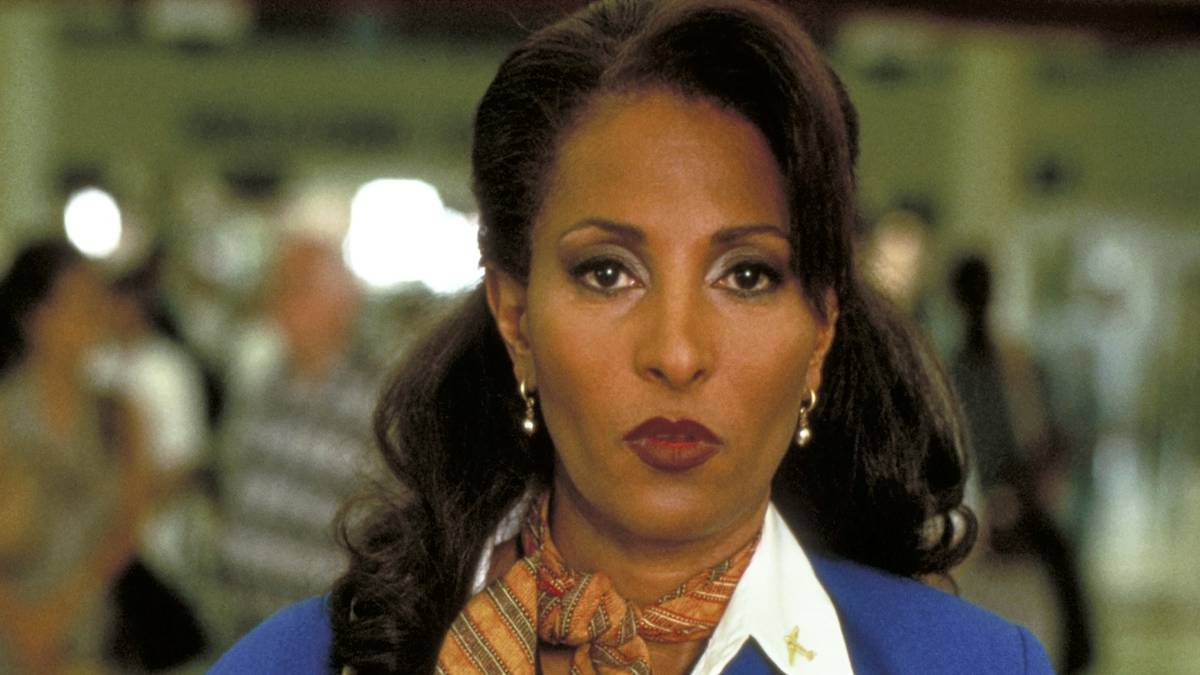
Image via Miramax Published Aug 9, 2026, 4:47 PM EDT William likes taking edibles, watching movies with his dogs, and then writing about those movies. He doesn't have social media so if you want more of his unhinged opinions or another place to comment hurtful things, you can check out his Letterboxd. Sign in to your Collider account Pam Grier. Her name may not get mentioned (often) among the likes of Meryl Streep or Cate Blanchett, but the Queen Bee of B movies has a carved out a film career that is all her own. After moving to Hollywood in the late 60s, Grier quickly rose through the ranks at American International Pictures, first starring in a number of women-in-prison movies, like The Big Doll House and Black Mama White Mama, before becoming the lead in several successful blaxploitation films. The subgenre has had an incredible impact and influence, both positive and negative, across pop culture, from music to movies to video games, and Grier was one of its biggest stars. When the subgenre declined in popularity, so did Grier's career, especially through the 80s and 90s when there were precious few roles on offer in Hollywood for actresses of color. Despite the lack of opportunities, Grier would persist, appearing in a number of notable cult classics, including Something Wicked This Way Comes, Mars Attacks! and Escape From L.A. Directors like John Carpenter, Tim Burton and Larry Cohen would all cast Grier in their films, but it was Quentin Tarantino who gave the actress her best role to date as the titular character in Jackie Brown. The film would earn Grier the first awards recognition of her career, including a Golden Globe nomination. However, she was unjustly snubbed by the Oscars, and what should've been the beginning of a major career resurgence was only a momentary glimpse of the greatness that Grier could've offered audiences for years to come. Regardless of Hollywood failing Grier on multiple occasions, her cinematic legacy is iron-clad thanks to these three classic movies. 3 'Foxy Brown' (1974) Image via American International Pictures Director Jack Hill is often credited with the discovery of Grier, who had played a bit role in Beyond the Valley of the Dolls, sang backup vocals for performers like Bobby Womack and Sly Stone and worked a variety of odd jobs before he cast her in The Big Doll House. While crediting Hill minimizes Grier's own role in her success, grinding through Hollywood to play a lead role in her second film, there's no discounting that the films the two made together represent some of the best work of both. Their final collaboration would be the highly influential Foxy Brown. Referenced in dozens of parodies and homages to the subgenre and far beyond it, the film has also inspired debate, as all blaxploitation has, regarding its perpetuation of stereotypes against its progressiveness for starring a Black woman as an action hero. Foxy Brown begins with a stylish credits sequence featuring a funky theme song that presents her character as the blaxploitation answer to James Bond. Beyond showcasing Grier as the major movie star she should have been outside the subgenre, the Bond-esque credits sequence is apt for the film. It was originally intended to be a sequel to Grier and Hill's prior film, Coffy, before the plot was changed. Foxy Brown still follows the basic structure of its predecessor, featuring Grier as a badass woman avenging a loved one and going undercover as a sex worker. Here, the loved one is Brown's boyfriend, played by Terry Carter, a government agent who is killed by a dangerous criminal syndicate, setting Foxy down the warpath of revenge. Of course, the film is sexually explicit and violent in a way that Bond could only ever imply. In comparison to the gritty revenge of Coffy, though, Foxy Brown is a far more elegant affair, though it's still way nastier than the PG-rated, and more deliberately Bond-coded, Cleopatra Jones starring Tamara Dobson. Even with the way the film objectifies Grier, including in scenes involving sexual assault, there's an undeniable star power in her presence. Watching her take down a white collar criminal syndicate is undeniably exhilarating. It's still an exploitation movie through and through, for better or worse, but Grier is a goddamn star in it. 2 'Coffy' (1973) Image via American International Pictures The success of Coffy led directly to Foxy Brown. As the third collaboration between Hill and Grier, following two women-in-prison movies, the film was made to beat Cleopatra Jones to theaters, and in doing so became the first blaxploitation action film to feature a female lead. It was a big hit at the box office, but beyond its financial success, it would become one of the subgenre's most totemic films, and Grier's character is still her most iconic. Coffy led to Foxy Brown led to Sheba, Baby led to Friday Foster, but even without those follow-ups, Grier's place in film history was assured. All the exploitation elements are front and center in the film from its first scenes, but they're also layered over a socially conscious story about the drug trade's destructive effect on Black communities, political corruption and even the corrosiveness of violent vengeance. Those things may be reflective of the culture at the time, and were certainly salacious enough to make a proper exploitation film, but the emphasis placed on them in Coffy are half of what makes it one of the best blaxploitation movies ever made. The other half is Grier's commanding performance. Coffy enters the film as a sex worker who quickly turns the tables on a client by blowing his head off with a shotgun. In the subsequent scene, we discover she also works as a nurse in the daylight hours. Coffy is already well down her road to revenge, inspired by her sister's hospitalization from heroin addiction. There's plenty of flesh and blood throughout the movie, especially in the mid-film brawl between Coffy and a group of sex workers, lest the movie be mistaken as highbrow, but it's still got Grier to anchor it with her indignant rage. The same as every other blaxploitation movie, Coffy is frozen in the amber of its era and the attitudes of it, but Grier is what transcends it. Blaxploitation worked within the confines of the genres where Black creators and actors were able to remain independent, but within those confines many of them were able to play characters with more power and autonomy than they had historically been able to. Coffy is one of those characters and Coffy is the revenge thriller that properly launched the career of an icon. 1 'Jackie Brown' (1997) Image via Miramax The impact that blaxploitation had on Quentin Tarantino is obvious, often uncomfortably so. The director has been taken to task for his appropriation, and even fetishization, of Black culture, particularly his seeming affinity for using racial slurs in his films. Jackie Brown was not immune to that criticism, as the film featured what many, including Spike Lee, considered to be an excessive use of the N-word. It's a valid criticism, particularly when the novel on which the film was based, Rum Punch by Elmore Leonard, features almost no instances of that kind of racially-charged language. There are few solid defenses of Tarantino's use of racial slurs, and there will likely always be debate over its use in this film, Django Unchained and The Hateful Eight. In the case of Jackie Brown, the strongest argument in its favor is that it's Tarantino's most nuanced film about race, and it gives Grier the best role of her career. Aside from the aforementioned language, the more explicit elements of blaxploitation are largely absent from the film. There is violence, but it's far less bloody and portrayed in a more shocking, realistic manner, and the only sex scene in the film is brief and played as a joke. That's because Jackie Brown isn't an exploitation movie. It's a crime caper that's been relatively faithfully adapted from Leonard's novel, with a notable change in the lead character's name and race. By making Jackie, the middle-aged flight attendant who moonlights as a smuggler for a gun runner in Los Angeles, a Black woman, the film quietly highlights the lack of opportunities available to them. The film also gives Grier a complex character to play who outwits the police and criminals in equal turn, and has a legitimate romantic subplot. The relationship between Jackie and bail bondsman Max Cherry, played by Robert Forster, is the emotional spine of the film. While Forster was rightly nominated for an Academy Award for his performance, Grier was egregiously overlooked. She gives an absolute perfect performance and Jackie Brown solidifies her cinematic legacy. Jackie Brown Release Date December 25, 1997 Runtime 154 minutes
Pam Grier’s Cinematic Legacy Is Iron-Clad Thanks to These 3 Classic Movies
Full Article
Original Source
Read the full article at Collider →KhanList aggregates and links to publicly available news content. We do not host full articles from third-party sources. Always verify important information with original sources.